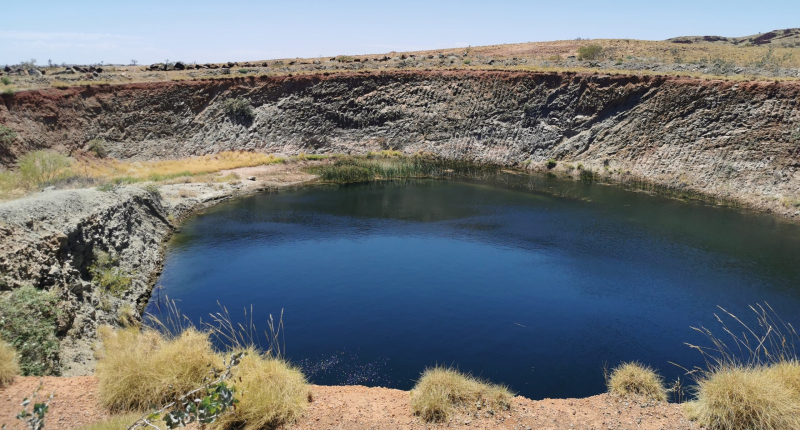
Raiden Resources (ASX:RDN) fell 25% to 0.3 cents after announcing a binding agreement to sell an 80% interest in the Mt Sholl Ni-Cu-PGE Project in Western Australia to London-listed Forgent PLC. The headline consideration – up to A$2.25 million in scrip – is not cash in hand. The structure of the deal, not the asset itself, drove the sell-off.
The agreement gives Forgent an exclusive five-month option to acquire the stake. If exercised, total consideration is A$2.8 million plus a A$100,000 option fee, all in Forgent shares. Raiden retains a 20% interest, free-carried through up to A$4 million in direct project expenditure. If either party's interest drops below 10%, the free-carry converts to a 1% Net Smelter Royalty (NSR).
Practical rule: When a junior explorer accepts scrip from a foreign-listed buyer, discount the headline consideration by the liquidity premium of the buyer's stock. The -25% drop in RDN is the market's estimate of that discount.
Why the Market Baked In a 25% Haircut
The naive read: Raiden is divesting a non-core asset, cutting management costs, and focusing on its Crixás gold tailings project in Brazil. That logic should be positive. The better market read: the deal's structure introduces liquidity risk and valuation uncertainty that a cash sale would not carry.
The Scrip Liquidity Trap
All payments are in Forgent shares, not cash. Raiden's shareholders now hold an asset (Forgent stock) that may trade at thin volumes on the London exchange. Converting that scrip to cash without a price impact is not guaranteed. The A$2.8 million consideration is a paper claim – if Forgent's shares drop after the deal, the realised value shrinks immediately.
Raiden has completed several small non-core data divestments since 2023, totalling about A$695,000 in stock, cash, and royalties. Those were small enough to absorb the scrip risk. The Mt Sholl deal is larger, and the scrip structure concentrates risk in a single foreign counter-party.
The Option Period Adds Uncertainty
The five-month option means Forgent can walk away with no obligation beyond the A$100,000 option fee (again in scrip). Raiden has taken a 25% share price hit without certainty of the full payment. The market is discounting the probability of exercise: if Forgent declines, Raiden retains 100% of a project it wanted to sell, plus a small scrip amount that is negligible.
The Free-Carry Mechanics and the NSR Trigger
Raiden's retained 20% interest is free-carried through up to A$4 million of Forgent's project expenditure. That means Forgent pays for exploration and development, preserving Raiden's stake without cash outlay. This is a standard structure in junior-mining joint ventures.
The conversion threshold to a 1% NSR is set at a 10% interest. If Raiden's ownership falls below that level – either through dilution in future capital raises or a further divestment – the free-carry ends and a royalty applies. A 10% stake is easy to breach if Forgent raises equity for project funding. The NSR then replaces what was a carried interest with no guaranteed revenue stream.
Key insight: The low conversion threshold means Raiden has limited protection if Forgent needs to raise capital. The free-carry is valuable only as long as Raiden's interest stays above 10%.
What the Deal Signals About Management's Capital Strategy
Raiden's corporate statement says the agreement is