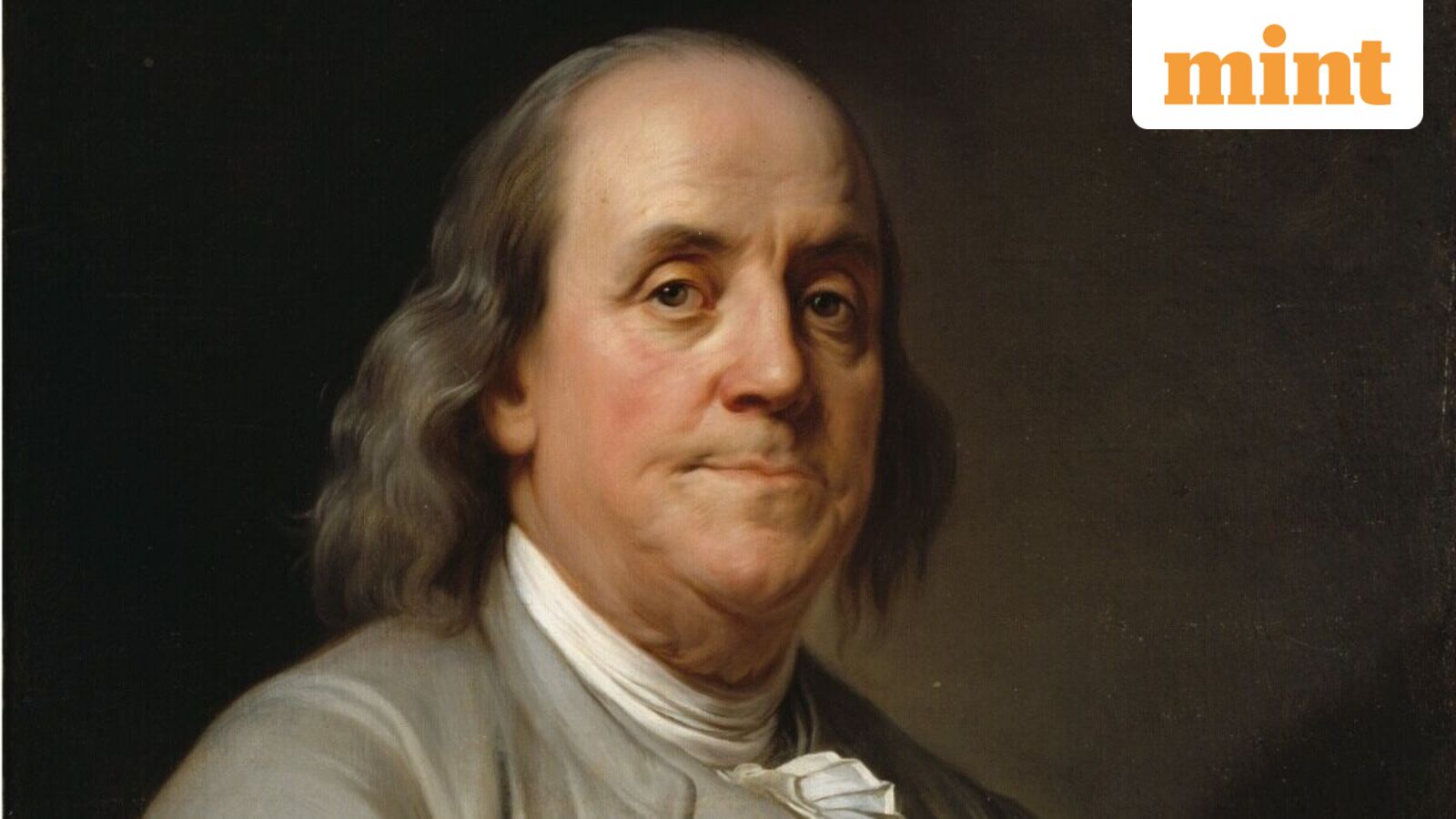
Benjamin Franklin's line, “You may delay, time will not”, holds across centuries. The printer, scientist and Founding Father knew procrastination costs more than time: it costs the moment already here.
Benjamin Franklin’s line – “You may delay, time will not” – has held its edge across three centuries. People can postpone decisions, avoid responsibilities, put off goals. The clock keeps moving. Every second is gone whether used well or not.
Franklin was born in Boston on Jan. 17, 1706. He left school at 10 and taught himself through books. He became a printer, a writer, a scientist, an inventor, a diplomat. He helped draft the Declaration of Independence and later helped shape the U.S. Constitution. His experiments with electricity – including the kite flight in 1752 – led to the lightning rod, bifocal glasses, the Franklin stove. Much of his practical wisdom appeared in Poor Richard's Almanack, which he published from 1732 to 1758.
The quote cuts against the modern excuse machine. Social media, streaming services, notifications – all of them eat hours without notice. Students cram the night before exams. Professionals delay learning new skills until the market leaves them behind. Entrepreneurs wait for the perfect moment while a competitor ships first. Franklin’s point is not simply that procrastination costs time. It is that time costs nothing – it passes regardless – and the only resource that matters is the moment already here.
Delaying action does not stop the passage of time. A person may postpone a difficult conversation, a business decision, a health goal. The weeks roll past. Circumstances shift. People move on. Opportunities vanish. Waiting for ideal conditions is often the same as waiting for regret.
Franklin died on April 17, 1790, in Philadelphia. He was 84.
Drafted by a large language model from the source reporting linked above, then screened by automated publishing checks. It is not read by a journalist before publication. Some articles cite our Alpha Score. Verify prices and figures against the original source. Educational coverage, not personalized advice.