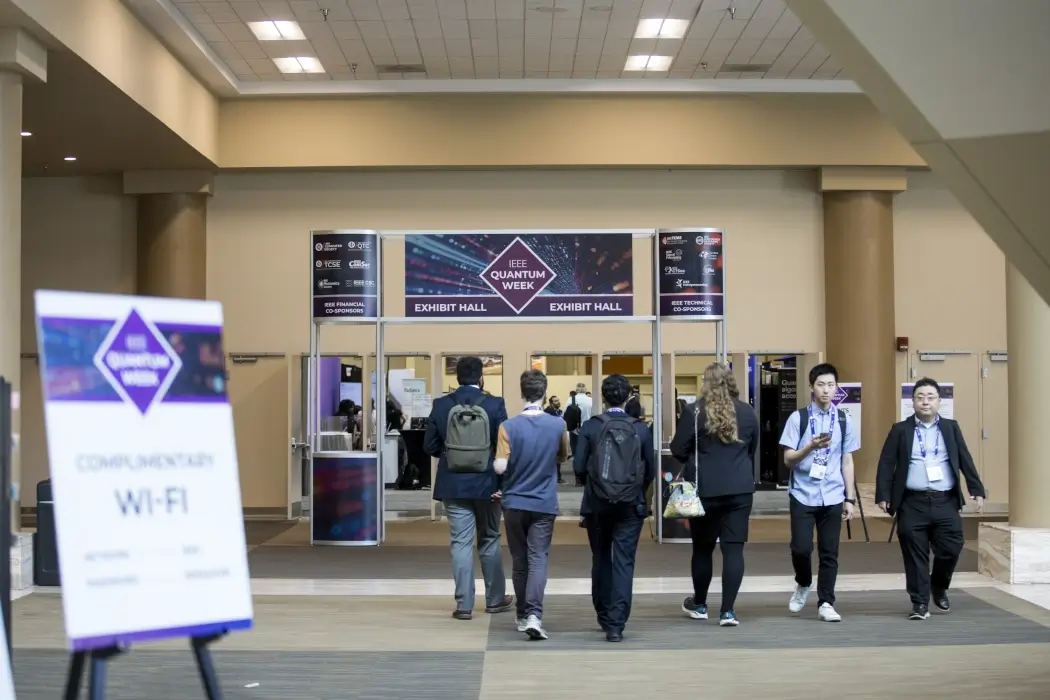
The list of keynote speakers for IEEE Quantum Week 2026 reads like a who’s who of the quantum-computing industry. Nvidia, Microsoft, IBM Research, IonQ, Quantinuum, Xanadu, and national labs all have people on stage when the conference runs Sept. 13–18 in Toronto. That mix is exactly the point.
“All of our keynote speakers are absolutely world-class,” Hausi Müller, the conference’s general chair and a computer science professor at the University of Victoria, told Betakit.
The event expects roughly 2,000 delegates from 50 to 60 countries. Across six days attendees can hit 10 keynotes, 48 tutorials, 47 workshops, 372 technical papers, 22 panels, and nearly 195 posters. Müller said the breadth shows how far quantum has moved from pure theory toward commercial evaluation.
Keynote Lineup Covers the Quantum Stack
Krysta Svore (Nvidia), Matthias Troyer (Microsoft), Ali Javadi-Abhari (IBM Research), Travis Humble (Oak Ridge National Laboratory), Alán Aspuru-Guzik (University of Toronto), Christian Weedbrook (Xanadu), Rajeeb Hazra (Quantinuum), Lisa Lambert and Mihir Bhaskar (IonQ), Niels Bultink (Qblox), and Gilad Ben-Shach (Quantum Machines) round out the main-stage program. That group covers hardware, software, algorithms, and cloud access – every layer of the stack.
Nvidia and Microsoft are already selling quantum-platform services. IonQ and Quantinuum ship hardware to paying customers. IBM runs a fleet of superconducting systems over the cloud. The keynote selection reflects an industry that is building for deployment, not just research.
Among the technology companies involved, Nvidia carries an Alpha Score of 73 (moderate), Microsoft scores 71, and IBM sits at 49. The differences in score mirror their varying exposure to quantum revenue today versus long-term platform bets.
Where the Sector Impact Will Hit First
Quantum networking is one of the fastest-growing tracks. Müller said paper submissions on the topic rose from roughly 20–30 in the conference’s early years to about 150 for 2026. That surge matters directly for telecom equipment makers and network operators.
“It’s tricky to make the right move at the right time,” he said. Move too early and hardware may become obsolete. Wait too long and competitors and customers could race ahead.
End-user industries also have a stake. Mining companies can use quantum for difficult optimization problems. Health-care firms may tap it for drug discovery. Telecom providers need to evaluate quantum-safe cryptography. Müller stressed that organizations need employees who understand both the domain and the technology.
“You need to build what we call ‘quantum champions’ in these companies,” he said.
The conference itself doubles as a recruiting pipeline. Companies set up booths and hold career fairs. Tutorials and workshops help attendees build the skills the sector needs. Müller noted that workforce capacity is now a “critical foundation” for further progress.
The event runs Sept. 13–18 at the Metro Toronto Convention Centre. Register and full agenda are available on the IEEE Quantum Week website.