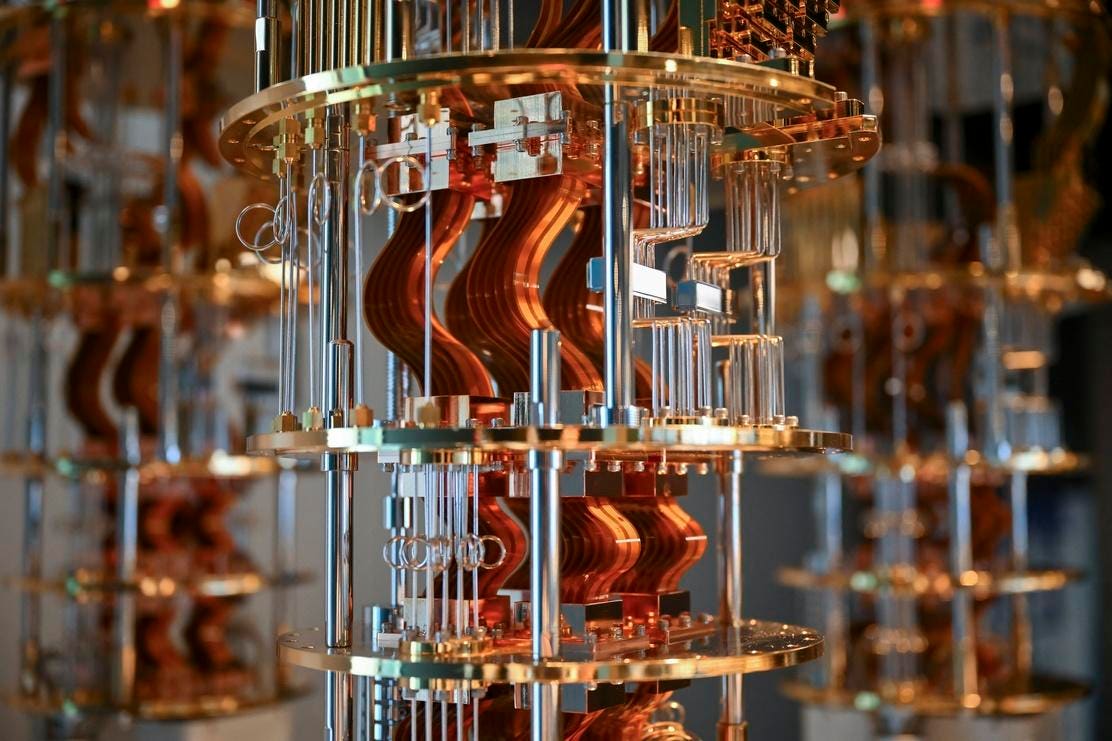
Quantum Art has secured an additional $40 million in funding, bringing its total Series A round to $140 million. This capital injection follows the company's initial $100 million raise just four months ago. The oversubscribed extension signals sustained investor appetite for hardware-focused quantum computing ventures that prioritize scaling qubit counts over theoretical research.
The Path to Thousand-Qubit Architecture
The primary objective for this capital is the development of a 1,000-qubit quantum computer. While the quantum sector has seen various approaches to error correction and qubit stability, Quantum Art is positioning its hardware roadmap to reach this specific capacity threshold. The company intends to use the funds to accelerate its engineering timeline, moving beyond current prototype limitations to address the physical infrastructure required for high-qubit systems.
Scaling to 1,000 qubits represents a transition from experimental devices to machines capable of executing complex algorithms that exceed classical computing limits. The speed of this funding round suggests that the company is attempting to shorten the development cycle for its proprietary hardware stack. Investors are betting that the firm can overcome the cooling and coherence challenges that typically plague large-scale quantum systems.
Sector Read-through and Hardware Scaling
The broader technology sector is currently navigating a shift where capital is increasingly concentrated in companies that provide tangible hardware milestones. As seen in the stock market analysis of high-growth tech firms, the ability to demonstrate physical progress is becoming a primary differentiator for private startups. Quantum Art's ability to pull forward its funding suggests that the market is placing a premium on firms that can bridge the gap between laboratory physics and industrial-scale computing.
This development highlights a divergence in the quantum space. While some firms focus on software-defined quantum cloud services, Quantum Art is doubling down on the physical assembly of its machines. The success of this round indicates that institutional capital is willing to fund the high-burn, high-reward nature of quantum hardware development, provided the company maintains a clear trajectory toward the 1,000-qubit mark.
AlphaScala Data and Market Context
For investors monitoring the broader tech landscape, the capital intensity of quantum hardware provides a useful benchmark for other emerging technologies. While companies like ServiceNow Inc. maintain a different risk profile with an Alpha Score of 52/100, the focus on scaling infrastructure remains a common theme across the technology sector. Similarly, established communication entities like AT&T Inc. operate with an Alpha Score of 58/100, reflecting the stability of legacy infrastructure compared to the speculative nature of quantum hardware.
The next concrete marker for Quantum Art will be the disclosure of technical performance data from its latest hardware iterations. Observers should look for updates regarding qubit coherence times and error rates, as these metrics will determine whether the 1,000-qubit goal translates into usable computational power. The company must now demonstrate that its increased capital efficiency can match the aggressive timelines promised to its investors.