Quadruped Firefighting Robot Breaks Payload-Mobility Trade-Off
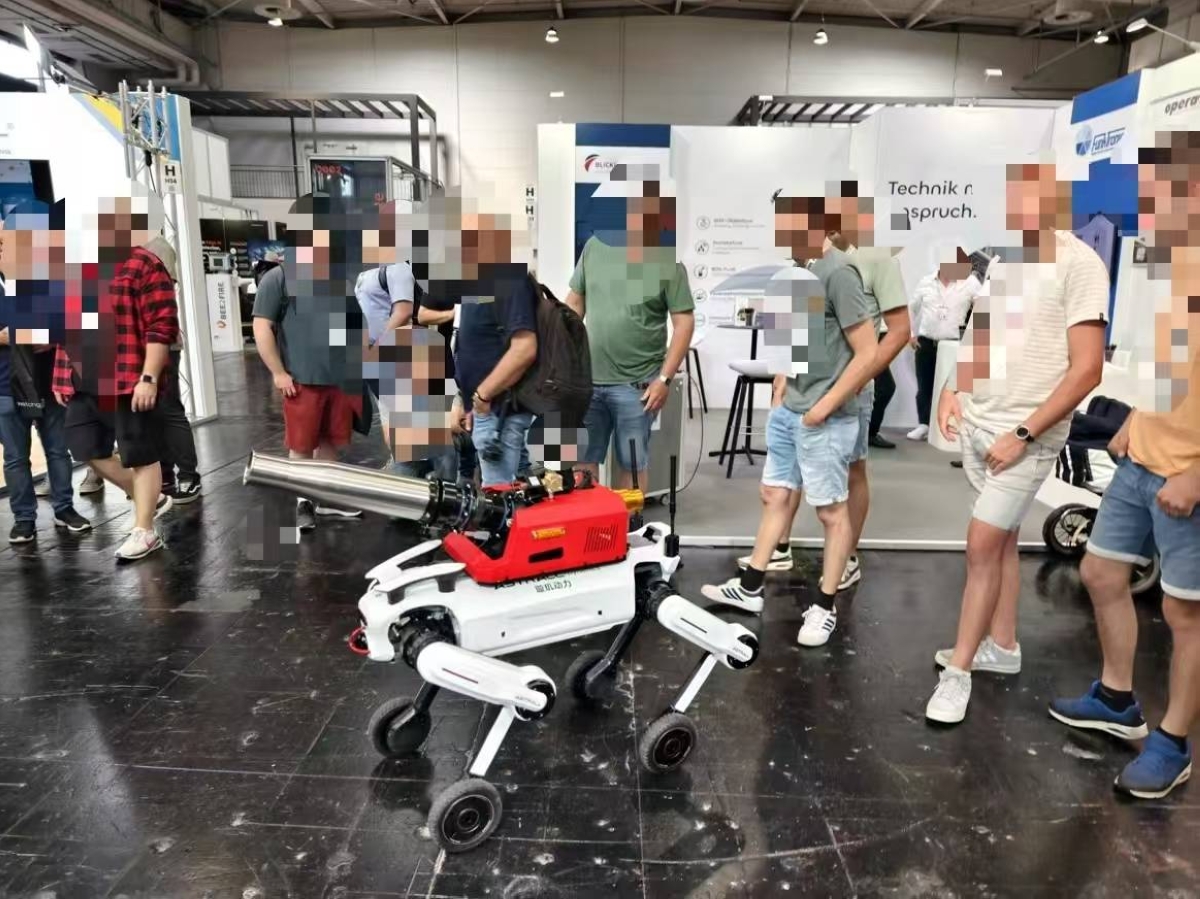
Astrall Dynamics' Hypertron-T01 quadruped firefighting robot carries an 80kg payload and climbs 45-degree slopes. Bulk delivery to China Southern Power Grid is complete, and global orders are open.
Alpha Score of 42 reflects weak overall profile with weak momentum, poor value, weak quality, moderate sentiment.
Astrall Dynamics unveiled its Hypertron-T01 heavy-duty quadruped robot at INTERSCHUTZ 2026 in Hanover, Germany, on June 7. The robot is a complete unmanned firefighting solution designed to enter hazardous zones – high temperatures, toxic gases, structural collapse risks – for active suppression and reconnaissance. This is not a prototype. The company has already completed bulk delivery to China Southern Power Grid and is accepting global orders.
For a trader or investor tracking the robotics sector, the Hypertron-T01 is a concrete signal that Astrall Dynamics has moved from concept to commercial deployment. The question is whether the robot’s technical specs translate into real adoption in fire departments worldwide.
The Payload-Mobility Bottleneck in Firefighting Robotics
Most existing firefighting robots force a critical trade-off. Tracked vehicles can carry heavy water cannons and hose lines but struggle with stairs, rubble, and narrow passages. Smaller quadrupeds offer terrain agility because they cannot deliver meaningful suppression flow rates. The result is that fire departments either accept limited mobility or limited firefighting capability.
Astrall Dynamics’ product development team includes frontline firefighting veterans. That design input is visible in the Hypertron-T01’s specs. The robot carries an 80kg dynamic payload – enough for a high-pressure water cannon and heavy supply hoses – while maintaining quadruped mobility. It can climb 45-degree slopes and navigate narrow chemical pipelines. The integrated water cannon delivers 20L/s flow with a 60-meter range and a 120-degree projection angle.
How the Hypertron-T01 Breaks the Trade-Off
The mechanism is straightforward: the quadruped platform provides the terrain access, and the payload capacity provides the suppression power. An advanced body stabilization system keeps the cannon effective while the robot moves on uneven ground. IP67 protection allows operation in rain, mud, and wet environments. The operating temperature range of -20°C to 55°C covers most real-world fireground conditions.
8-hour runtime prevents the unit from becoming stranded mid-operation – a common failure mode in earlier firefighting robots. Integrated thermal imaging, gas detection, and 3D LiDAR give remote operators continuous situational awareness. The robot is controlled via secure remote methods from a safe distance, keeping human firefighters out of the most dangerous zones.
What Confirms the Thesis
A product launch at a trade show is a catalyst, not a conclusion. The confirming factors for the Hypertron-T01’s market viability are already visible in the press release.
- Bulk delivery to China Southern Power Grid – a real customer with a real operational need. Power grid fires involve high-voltage equipment, confined spaces, and toxic byproducts. That deployment validates the robot’s utility in a demanding industrial setting.
- Global orders open – the company is not limiting itself to a single market. INTERSCHUTZ is the world’s leading trade fair for fire and rescue services, giving Astrall Dynamics direct access to procurement officers from fire departments worldwide.
- Pre-A round industrial venture capital backing – the company has institutional capital to scale production and support international sales.
- Core team from a leading Chinese drone manufacturer – that pedigree suggests experience in mass-producing complex electromechanical systems.
Invalidating factors
- No published pricing or total cost of ownership – fire departments operate on tight budgets. If the Hypertron-T01 costs significantly more than tracked alternatives, adoption will be slow.
- No certification from major fire standards bodies – robots used in life-safety applications often require NFPA, EN, or equivalent certification. The press release does not mention any.
- Limited track record – one bulk delivery to a single customer is not a proven track record. Fire departments will want references from multiple deployments.
- Service and support network – a robot that breaks down in a burning building is worse than no robot. Astrall Dynamics must demonstrate a global service infrastructure.
Next Catalyst: Global Fire Department Integration
The global rescue robotics market is growing as fire departments integrate robotic systems into standard equipment frameworks. INTERSCHUTZ 2026 is the immediate catalyst for Astrall Dynamics to convert trade-show leads into purchase orders.
The next concrete markers to watch are:
- Announcements of additional customer deliveries, especially in Europe or North America.
- Certification from a recognized fire safety standards body.
- Partnerships with established fire equipment distributors.
- A follow-on funding round (Series A) that would indicate investor confidence in scaling.
For a trader evaluating the robotics sector, Astrall Dynamics is a private company, so there is no public equity to trade. The Hypertron-T01’s specs and early commercial traction make it a company to track for future IPO potential or as a benchmark for publicly traded robotics firms. The key question is whether the payload-mobility trade-off is truly resolved at a price point that fire departments can afford.
Astrall Dynamics is based in Shenzhen and specializes in embodied intelligence. The company’s ability to execute on global orders will determine whether the Hypertron-T01 becomes a standard tool or a trade-show curiosity.
Drafted by a large language model from the source reporting linked above, then screened by automated publishing checks. It is not read by a journalist before publication. Some articles cite our Alpha Score. Verify prices and figures against the original source. Educational coverage, not personalized advice.