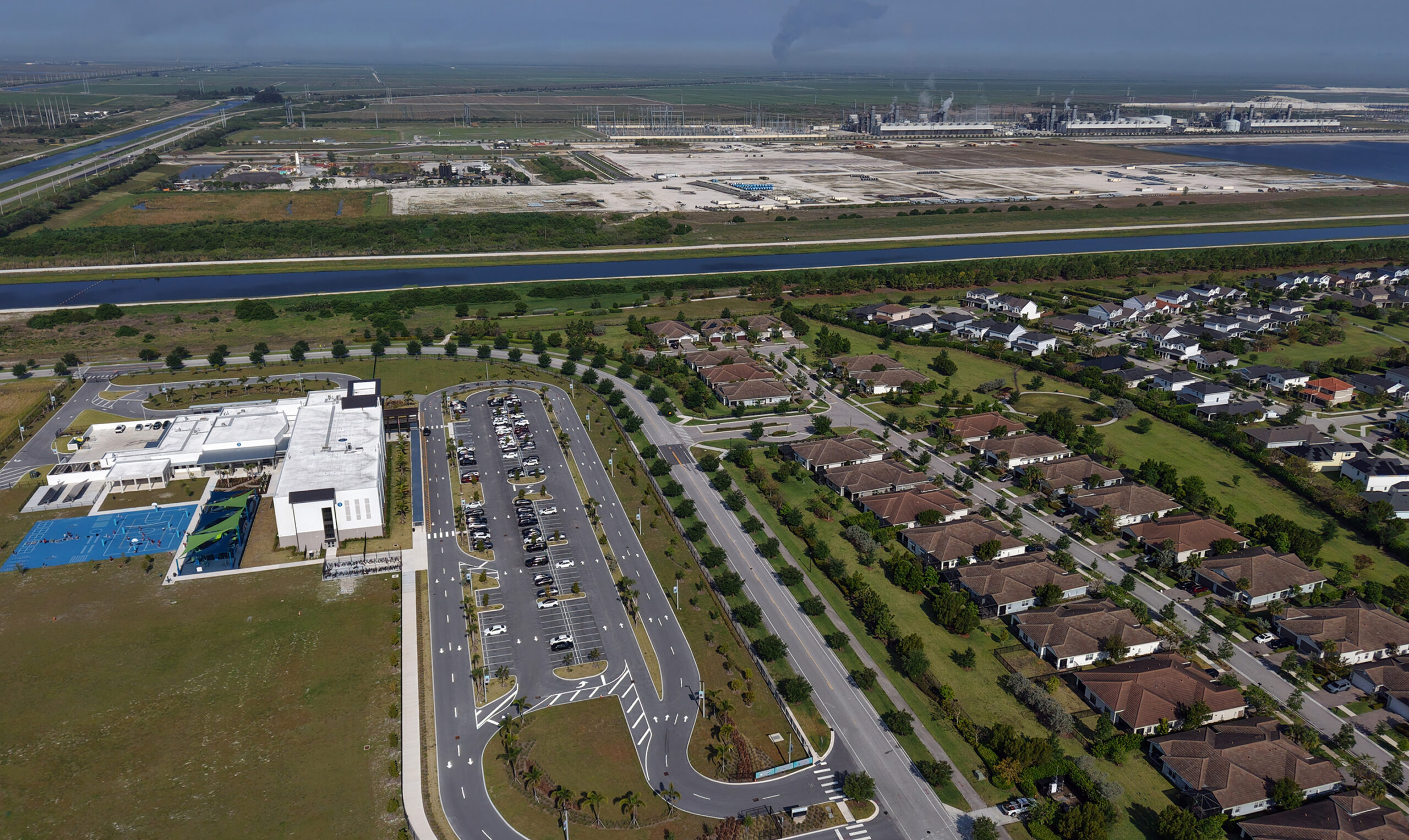
Palm Beach County commissioners vote Wednesday on Project Tango, a massive AI data center planned 20 miles from President Donald Trump's Mar-a-Lago club. The decision will show whether Florida's new law, signed by Governor Ron DeSantis, gives local governments real power to restrict large data centers from passing utility costs onto ratepayers.
Residents near the proposed site, which would fill dozens of acres, have organized petition drives, hired lobbyists and packed public hearings. They fear the center will spike power and water bills, generate noise and heat for nearby homes and a public elementary school that opened last year.
"Everybody is going to urge them to shut down the whole project," said Rachel Smith, who lives a few miles from the site and created the website NoToProjectTango.com.
The backlash in Palm Beach County mirrors a national trend. At least 75 data-center proposals were blocked or delayed in the first three months of this year across the U.S., according to the advocacy group Data Center Watch. Local opposition has stopped projects in Indiana, North Carolina, Virginia and Tennessee. New York Governor Kathy Hochul imposed a statewide moratorium on hyperscale data centers Tuesday, giving state officials time to craft more regulations.
States are acting despite a Trump executive order aimed at thwarting state-level AI regulation. Some AI advocates argue a patchwork of rules could hamper industry growth and leave the U.S. trailing China in a strategic competition.
Ernie Cox, manager of Project Tango, said the company understands community concerns. "We clearly understand the concerns, and they are legitimate concerns," Cox said in an interview. He added that surging demand for AI requires data centers. "The reality is that data centers are critical infrastructure for the state and the county."
PBA Holdings, the entity seeking approval, redesigned the site to point the data center and its noise away from the school. The changes got a mixed reception. The Palm Beach County Zoning Commission voted unanimously this month against recommending approval. The county commission's staff backed the plan based on the noise mitigation.
If built, Project Tango would rank among the largest operating U.S. data centers by power usage, according to a Bloomberg Intelligence analysis of DC Byte data. The site is near a development with about 2,000 homes, pickleball courts and a five-acre community farm.
Florida's new data-center law gave localities more power to restrict or even stop construction. On July 7, county commissioners voted 6-1 to place a one-year moratorium on new data-center applications. Project Tango is exempt because it was already in review.
Data centers have become a rare area of bipartisan consensus in Florida. "This is an issue that transcends party lines. Democrats and Republicans have really come together on this," said Anna Eskamani, a Democratic state representative from Orlando who has pushed for regulation.
The issue has also entered the race to succeed DeSantis, who is finishing his final term. Republican frontrunner Representative Byron Donalds, endorsed by Trump, has taken fire from GOP and Democratic rivals for accepting millions in tech industry contributions. Donalds has promised utility customers will not bear data-center costs. "Byron has made his position on this clear: he stands with Trump and DeSantis to protect ratepayers and local communities," campaign spokesman Gates McGavick said in a statement.
The industry pushed back on some aggressive components of the original bill. That version sought to force developers to reveal tech-company identities and restrict AI providers from targeting children or selling personal data. "The question is who benefits from this boom? These are being built by billionaires for some of the most profitable companies in the world," said Eskamani.
Cox declined to say which companies might use Project Tango's capacity, citing nondisclosure agreements.
Some economic development advocates see upside. Kelly Smallridge, president of the Business Development Board of Palm Beach County, said the project could bring in $460 million in annual property-tax revenue if fully built out. That could offset a potential major reduction in taxes for many homeowners. "At a time when cities and counties are trying to figure out how do they make up lost revenue, this could be a very large contributor to Palm Beach County's tax base," she said.
Business leaders are watching the vote closely. "The vote will certainly be watched by many in the tech and innovation world," said Smallridge. "I do believe it would lead to more tech and innovation companies. Would it run them off if the vote was a no? I think it depends on the nature of what they would be wanting to bring to this county."