The geopolitical risk premium in global energy markets faces a recalibration as the United States initiates "Project Freedom," a military-led operation designed to clear civilian vessels from the Strait of Hormuz. Following the announcement on Sunday, oil prices retreated, reflecting a shift in market expectations regarding the duration and severity of the waterway's closure. West Texas Intermediate (WTI) futures for July delivery declined 0.59% to $101.34 per barrel, while Brent crude futures slipped 0.27% to $107.88 per barrel. This immediate price reaction suggests that the market is pricing in a reduction of supply-side disruption risk, provided the U.S. military can successfully execute the extraction of non-aligned civilian vessels.
Operational Scope and Military Deployment
The U.S. Central Command has confirmed the scale of the operation, which includes the deployment of guided-missile destroyers, over 100 land and sea-based aircraft, and multi-domain unmanned platforms. With 15,000 service members involved, the logistical footprint is significant. For traders, the key variable is not just the initial clearing of the strait, but the potential for escalation if Iranian forces perceive the operation as a direct challenge to their regional posture. While the market initially interpreted the news as a cooling mechanism for energy prices, the presence of such a large military contingent introduces a binary outcome: either a successful de-escalation of maritime trade bottlenecks or a further hardening of regional hostilities.
Asia-Pacific Index Positioning
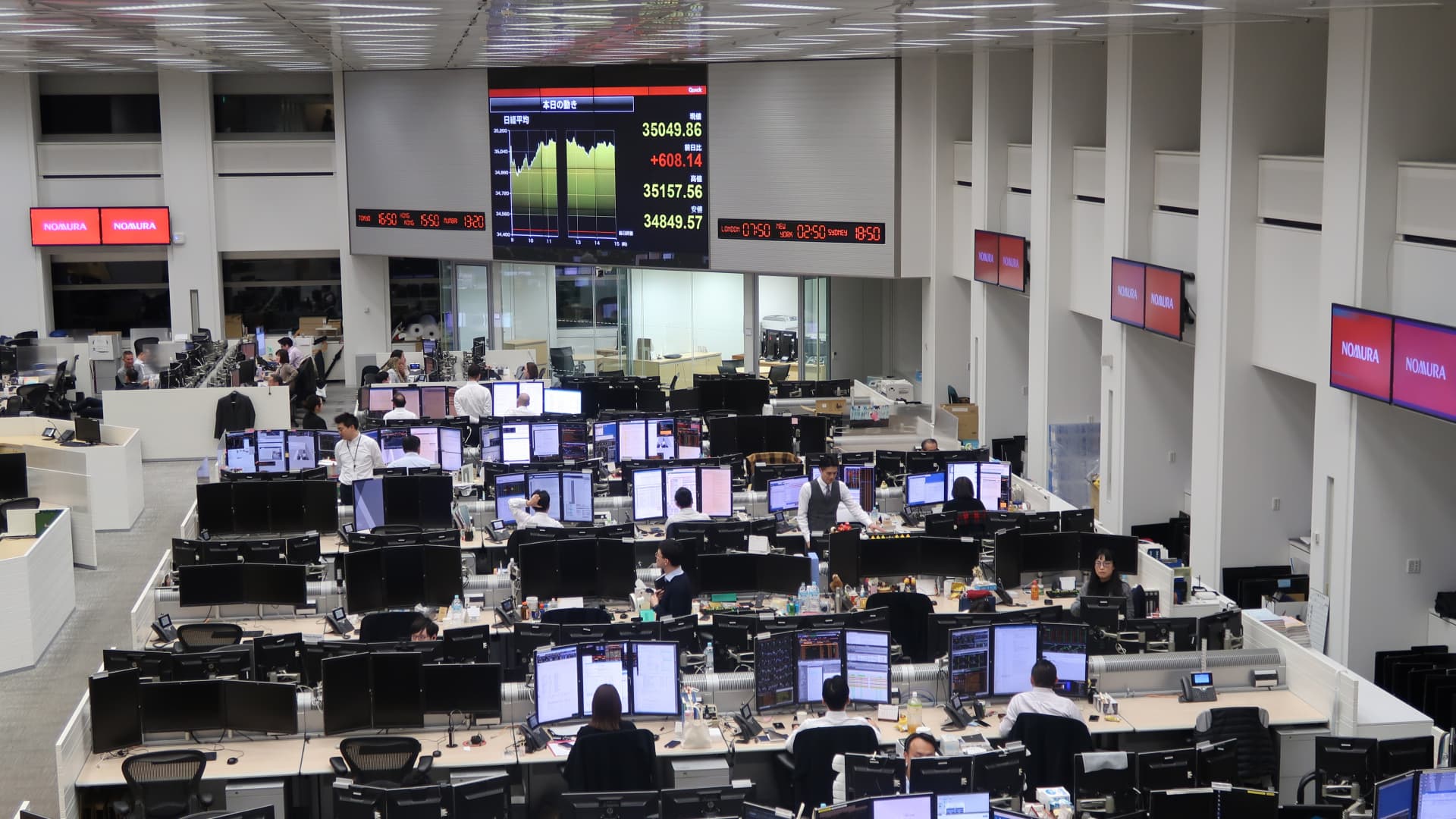
Equity markets in the Asia-Pacific region are navigating this news with caution, as evidenced by mixed futures pricing. Hong Kong’s Hang Seng index futures are indicating a potential opening around 25,992, showing a slight premium over the index’s last close of 25,776.53. Conversely, Australian markets appear more subdued, with S&P/ASX 200 futures at 8,727, nearly flat against the previous close of 8,729.80. With major exchanges in Japan and China closed for public holidays, liquidity is likely to remain thin during the early sessions. This lack of depth often exacerbates volatility, meaning that even minor headlines regarding the progress of Project Freedom could trigger outsized moves in regional indices.
Sectoral Read-Through and Dow Performance
Materials and industrial sectors, which often serve as proxies for global trade health, remain sensitive to these developments. For instance, DOW stock page currently holds an Alpha Score of 52/100, reflecting a mixed sentiment profile that mirrors the broader uncertainty in the materials sector. The Dow Jones Industrial Average itself has shown recent weakness, slipping 152.87 points, or 0.31%, in the previous session, even as the S&P 500 and Nasdaq Composite reached new all-time highs. This divergence suggests that while tech-heavy indices are driven by growth narratives, the industrial components of the Dow are more susceptible to the immediate costs of supply chain disruptions and energy price volatility.
Technical Context and Execution Risk
Market participants should focus on the delta between the stated goals of Project Freedom and the actual flow of maritime traffic. If the operation succeeds in restoring transit for civilian ships, the current "war premium" embedded in crude prices may continue to unwind, potentially providing a tailwind for consumer-facing sectors. However, if the operation stalls or results in a kinetic engagement, the resulting spike in energy costs could reverse the recent gains seen in broader equity indices. The current setup is one of wait-and-see; the flat performance of U.S. stock futures—with the S&P 500 and Nasdaq 100 both adding 0.1%—indicates that investors are currently unwilling to commit to a directional trend until the operational success of the first 24 hours is confirmed. For those engaged in stock market analysis, the primary risk is not the initial announcement, but the potential for a "first-touch" reaction to be invalidated by subsequent developments in the Middle East. Traders should prioritize monitoring the actual transit data from the Strait of Hormuz rather than relying solely on the rhetoric surrounding the project's launch.