Crypto▲ Bullish
Pro-Crypto Warsh Confirmed to Fed Board, Chair Vote Wednesday
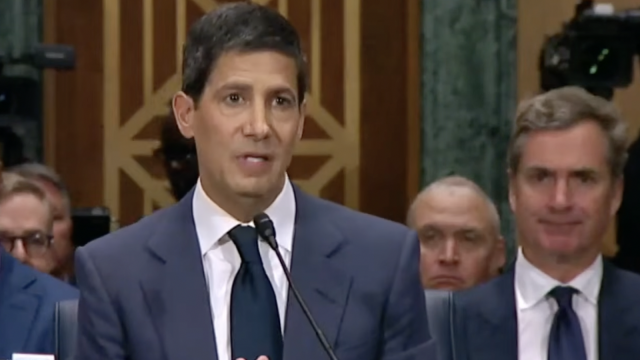
Senate confirmed Kevin Warsh to the Fed Board 51-45, with a Chair vote expected Wednesday. He calls Bitcoin 'new gold for under 40s' and holds stakes in over 20 crypto-linked entities.
Continue with
The Senate confirmed Kevin Warsh to the Federal Reserve Board in a 51-45 vote Tuesday, placing him a single procedural step from the central bank's top job. A separate vote to confirm Warsh as Federal Reserve Chair is expected as early as Wednesday. He would succeed Jerome Powell, whose term expires this Friday.
The confirmation removes the last major obstacle to a leadership change that will directly reshape monetary policy and digital-asset regulation. Warsh has publicly called Bitcoin (BTC) the 'new gold for under 40s' and described digital assets as 'part of the fabric of our financial services industry.' Financial disclosures show he holds stakes in over 20 crypto-linked entities.
Traders now face a compressed timeline. The Chair vote, Powell's exit, and Warsh's first public remarks as the likely new head of the Fed will arrive within days. The immediate question is not whether Warsh is pro-crypto. It is how his well-documented hawkish instincts interact with his recent signals that he wants to lower interest rates.
Senate Confirms Warsh to Fed Board, Chair Vote Wednesday
The 51-45 vote fell along party lines with one exception: Pennsylvania Democrat John Fetterman crossed over to support the nomination. The margin was narrow, yet the outcome was never in serious doubt after Senator Thom Tillis (R., N.C.) agreed last month to back Warsh. Tillis had previously hesitated because of a Justice Department criminal investigation into Powell. That probe was dropped by U.S. Attorney Jeanine Pirro, clearing the path.
The Fetterman Crossover and Tillis Pivot
Fetterman's vote gave the confirmation a veneer of bipartisanship without altering the underlying dynamic. The real signal was Tillis's earlier decision. It removed the only credible threat of a Republican defection that could have stalled the nomination. With the Board seat secured, the Chair vote becomes a formality unless a new, unexpected objection surfaces before Wednesday.
Powell's Term Expires Friday, Clearing the Path
Powell's term as Chair ends this Friday regardless of the confirmation schedule. If the Senate does not confirm Warsh as Chair by then, the Fed would operate with an acting chair, creating a temporary vacuum. The base case, however, is that the vote proceeds Wednesday and Warsh takes the gavel immediately. That timeline compresses the window for positioning around the policy shift.
Bitcoin as 'New Gold for Under 40s' – The Policy Shift
During his confirmation hearings, Warsh stated that digital assets are already 'part of the fabric of our financial services industry.' He has also referred to Bitcoin as the 'new gold for under 40s,' framing the largest cryptocurrency as a legitimate macro asset rather than a speculative gamble. That language matters because it signals a departure from Powell's more cautious, hands-off approach to crypto.
Warsh's Crypto Holdings and Public Statements
Financial disclosures reveal Warsh holds stakes in over 20 crypto-linked entities. The exact composition is not public. The breadth alone suggests a personal conviction that goes beyond policy talking points. A Fed Chair with direct exposure to the asset class changes the regulatory tone. It does not guarantee looser rules, yet it removes the assumption that the central bank views crypto as a threat to financial stability by default.
Dalio's endorsement highlights the dual expectation: a Chair who can navigate both monetary policy and political pressure. For crypto markets, the relevant variable is whether Warsh's pro-innovation stance translates into concrete regulatory clarity or remains rhetorical. A Fed Chair who views crypto as part of the financial fabric could pressure other regulators to adopt a more constructive framework. The Senate is already working on the Clarity Act (see Senate Clarity Act Draft Drops, Crypto Markup Set for May 14), and Warsh's confirmation would add momentum to legislative efforts.
From Hawkish Reputation to Rate-Cut Signals
Warsh's nomination was widely cited as a reason for Bitcoin's crash in early 2026. His reputation as a hawk created an immediate headwind for risk assets. Recently, he has expressed a desire to lower interest rates. That pivot, if sustained, would reverse the very dynamic that pressured crypto prices when his name first surfaced.