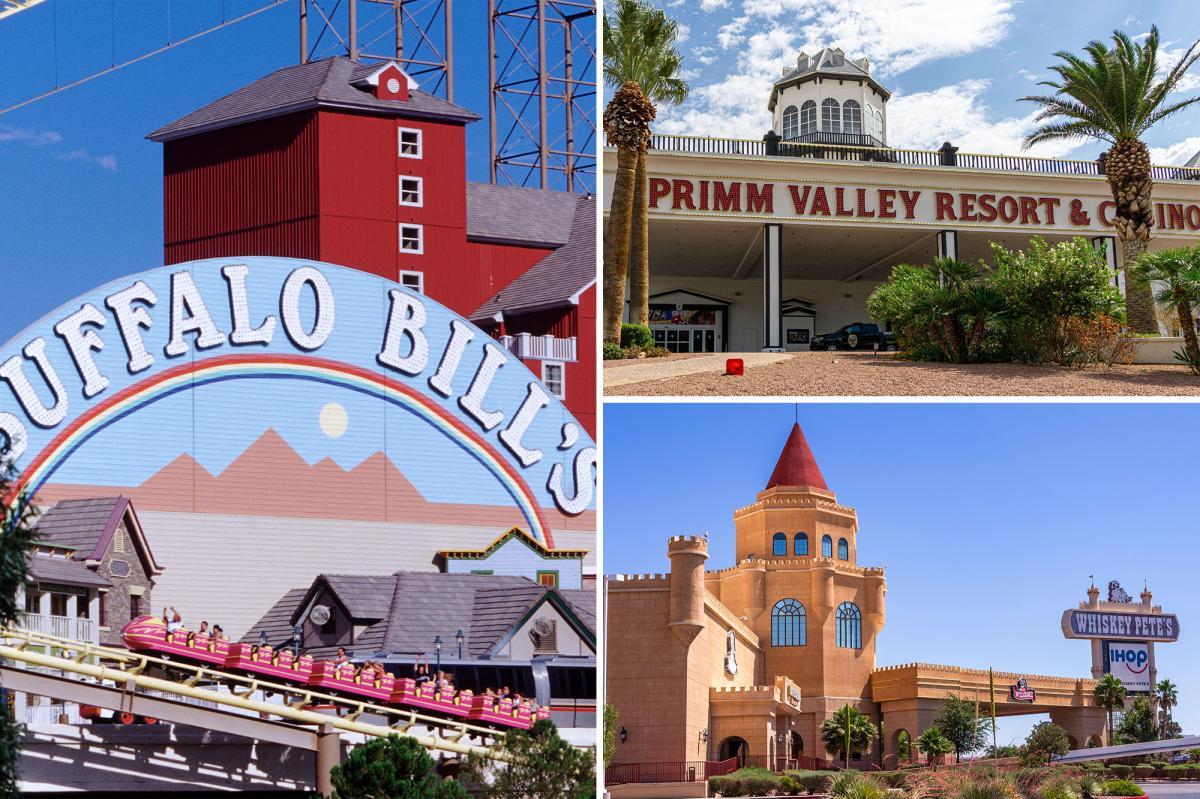
The permanent closure of Primm Valley Resorts marks the final chapter for the gambling corridor that once defined the California-Nevada border. According to a termination notice dated May 5, operations at Primm Valley Resort, Buffalo Bill’s, Whiskey Pete’s, the Primm Center, and the Flying J truck stop are ceasing entirely. This move effectively clears the landscape of the last full-time casino presence in the town formerly known as State Line, a location that served as the primary gateway for travelers moving between Southern California and Las Vegas along Interstate 15.
Operational Liquidation and Workforce Displacement
The scale of this shutdown is absolute. Affinity Gaming, the parent company, has confirmed that all employees at these locations face permanent termination, with separations expected by July 4. The company has stated that these workers are not expected to be recalled, signaling a total exit from the market rather than a temporary restructuring. Beyond the immediate workforce, the company has issued notices to tenants residing in the Desert Oasis Apartments—employee housing tied to the casino operations—mandating that all residents vacate their units by July 6. This secondary action confirms that the company is not merely pausing gaming operations but is actively liquidating its footprint in the region.
The Erosion of the Border-Town Business Model
For decades, Primm operated on a simple value proposition: convenience and cost. It offered Californians a chance to gamble without the additional hours of driving required to reach the Las Vegas Strip. However, the business model faced a structural decline as the regional gaming landscape shifted. The rapid expansion of tribal casinos throughout California’s Inland Empire, San Diego County, and Central California eroded Primm’s geographic advantage. As these local alternatives became more sophisticated, the necessity of the border-stop casino diminished.
In a 2024 letter to Clark County officials, Affinity Senior Vice President and General Counsel Erin Barnett provided a candid assessment of the underlying economics. She noted that post-pandemic traffic patterns had become heavily weighted toward weekends, creating a revenue profile that was insufficient to support three full-time casino properties. The company had previously attempted to manage this decline through staggered closures, such as the December 2024 shutdown of Whiskey Pete’s and the scaling back of Buffalo Bill’s to event-only operations. These measures proved to be insufficient to stabilize the assets, leading to the current total closure.
Asset Valuation and Future Development Risks
The closure raises significant questions regarding the future of the physical assets remaining in the desert. The area is home to the Desperado roller coaster, once recognized as the world’s tallest, and the Bonnie and Clyde “death car” display. While Affinity Gaming had previously signaled that future development—specifically the proposed Southern Nevada Supplemental Airport near Ivanpah—could serve as a long-term catalyst for the area, the current decision to vacate suggests that the timeline for such infrastructure projects is too distant to justify the holding costs of the existing properties.
Investors looking at the broader stock market analysis should view this as a case study in the obsolescence of regional gaming hubs that rely on transient traffic rather than destination status. The shift away from Primm is not an isolated event but a reflection of how localized competition can cannibalize the revenue of border-dependent businesses. While the gaming sector remains a core component of the Nevada economy, the specific segment of "first-stop" casinos is facing an existential threat from the proliferation of gaming options closer to major population centers.
Market Read-Through and Structural Shifts
This shutdown serves as a reminder that even established infrastructure can become a liability when the underlying consumer behavior shifts toward convenience-based alternatives. For those monitoring the financial health of regional gaming operators, the primary risk is the continued dilution of market share by tribal entities that are not subject to the same tax and regulatory structures as traditional commercial casinos. The inability of Affinity Gaming to pivot the Primm properties toward a sustainable model despite years of operational adjustments highlights the difficulty of competing against the convenience of local, state-sanctioned gaming.
As the neon lights in Primm go dark, the focus shifts to the potential for land repurposing or the complete abandonment of the site. With no expectation of recall for employees and a strict timeline for vacating housing, the company has signaled a clean break. The next concrete marker will be the final status of the physical assets and whether any third-party developers see value in the location once the current gaming operations are fully stripped away. Until then, the corridor remains a cautionary example of how shifts in regional infrastructure can render legacy business models unviable.