Stocks● Neutral
Praggnanandhaa’s Norway Chess Win Resets Rating Hierarchy
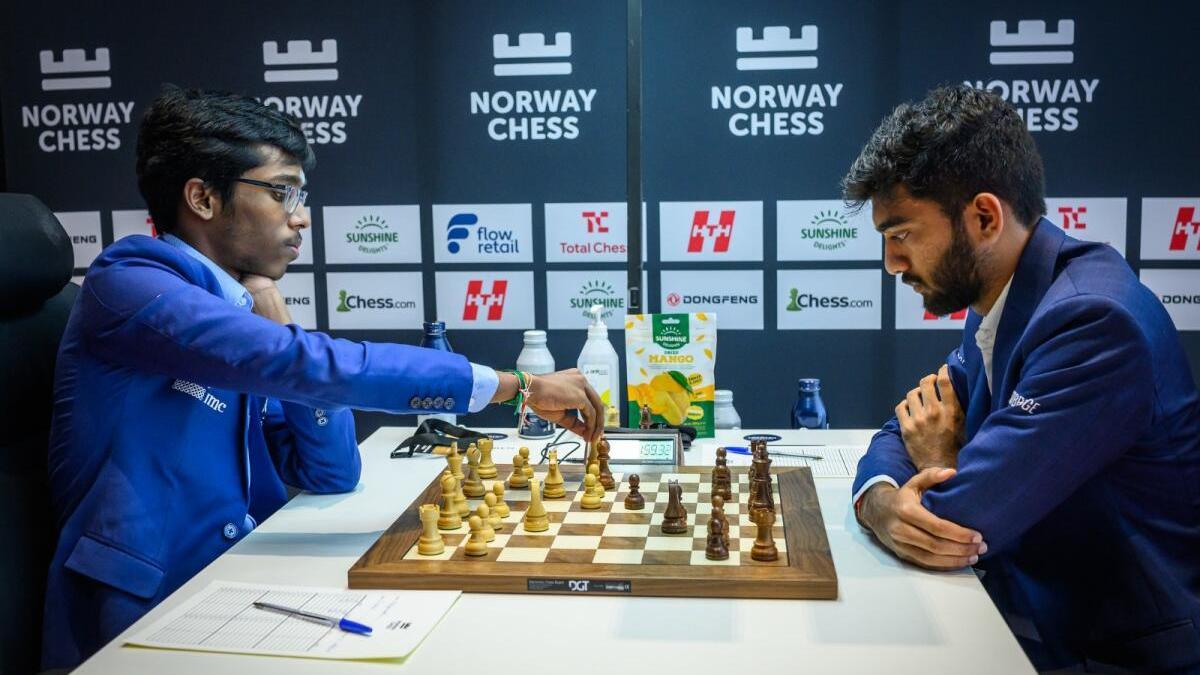
Praggnanandhaa beat Carlsen twice, won four straight games, and became the first Indian to win Norway Chess. Next data point: the World Rapid Team Championship in Hong Kong on June 16.
Continue with
The Catalyst: Norway Chess 2026 Win
R Praggnanandhaa, the 19-year-old Indian Grandmaster, won the Norway Chess 2026 tournament on May 7, 2026. He became the first Indian to win the event since its debut in 2013. The victory included two classical wins over Magnus Carlsen, the world No. 1 and seven-time defending champion. The win caps a campaign where Praggnanandhaa recovered from a poor start with four consecutive wins.
Why Field Strength Magnifies the Achievement
Average Rating Over 2750
The Open section of Norway Chess 2026 had one of the highest average ratings ever assembled in a classical tournament. All six players were rated above 2700, with Carlsen at 2840. Praggnanandhaa himself said after the final round: “Here it’s just the top players.” He compared it to the Tata Steel Chess tournament he won in 2025, which included players in the 2600s. Every match at Norway Chess required a near-maximum performance.
The Simple Read vs. The Better Market Read
Simple read: An Indian teenager won a strong tournament and beat the world No. 1 twice.
Better market read: Praggnanandhaa won by stringing together four consecutive wins against a field with no weak entries. The first three of those wins came against opponents who had beaten or held him earlier in the event. The fourth was a must-win final-round game against Vincent Keymer while a Wesley So win on the other board would have denied the title. So and Alireza Firouzja drew, sending So into an Armageddon tie-break where he gained only 1.5 points. Praggnanandhaa then beat Keymer to close at 18 points.
The field strength converts a tournament win into a career-defining signal. The win resets the ceiling for what competitors and sponsors expect from Praggnanandhaa’s future results. He is no longer a rising contender who can win selective events with a soft field. He has now won the hardest classical tournament outside the Candidates cycle.
The Mechanism: Time Management Turnaround
Endgame Conversion Under Time Pressure
Praggnanandhaa described a conscious change in his tactical approach: he made a deliberate effort to play faster and avoid time trouble. In chess, time pressure is the single largest driver of blunder rates. Out-of-time positions force instinctive moves instead of calculated ones. Praggnanandhaa said, “I had more time than my opponents in most of the games.” That edge compounds over four consecutive wins against world-class opponents, translating into decisive endgame positions.
The So-Firouzja Draw Was Necessary, Not Sufficient
Praggnanandhaa needed the So-Firouzja draw to stay in contention for the title. That result was outside his control. The only variable he controlled was his own game against Keymer, and he executed. In tournament chess, winning when external conditions must also align is a separate skill. Praggnanandhaa showed he can maintain focus on his own board while the table shifts around him.