Prafulla Chandra Ray: the chemist who built a company
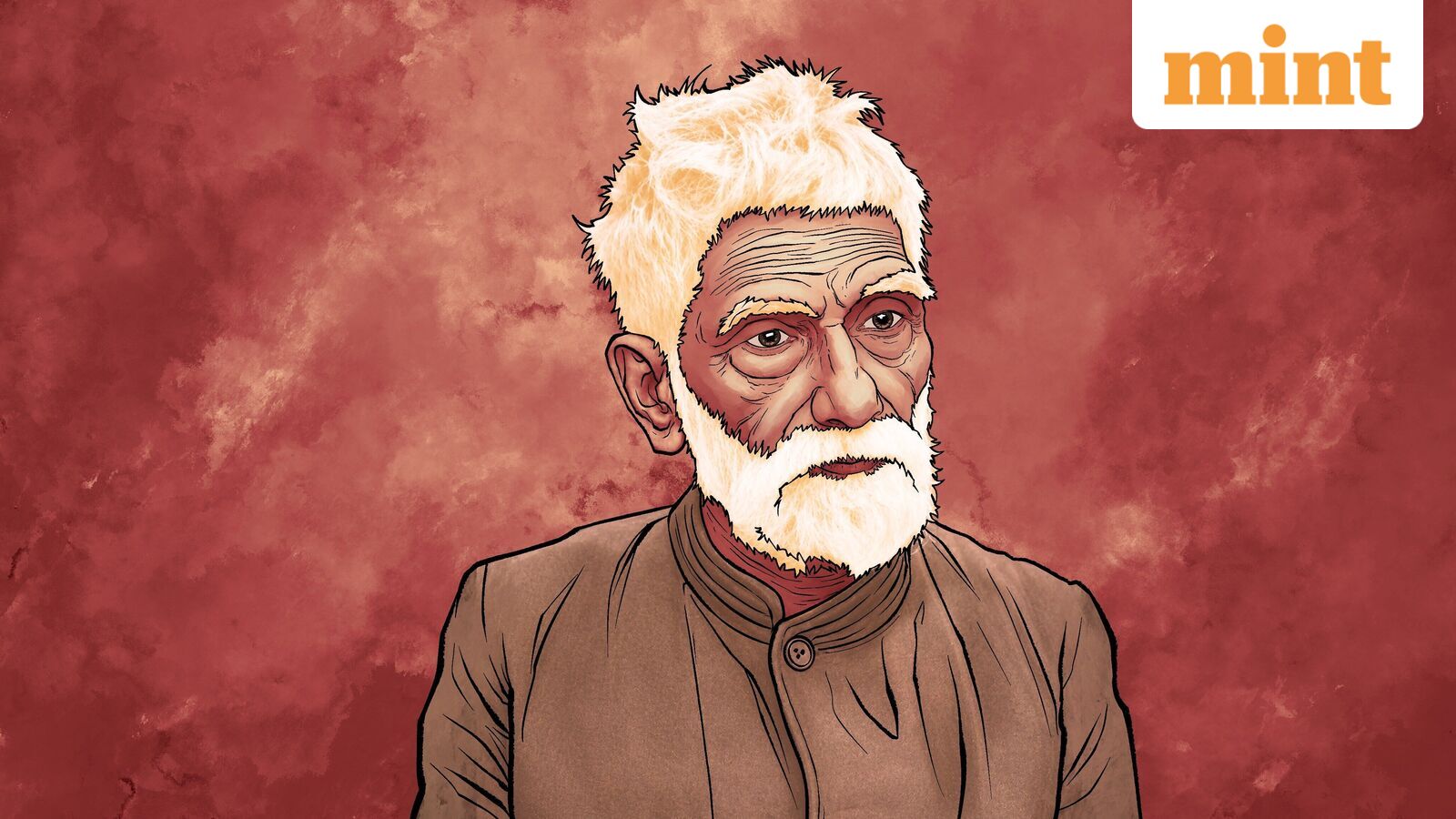
Prafulla Chandra Ray turned a ₹700 home lab into Bengal Chemical and Pharmaceutical Works. His career shows why scientific independence without manufacturing fell short.
Prafulla Chandra Ray’s disagreement with the British went beyond politics. He wanted to beat them at the thing that mattered to a rapidly industrialising world: making things.
It was a radical idea in late nineteenth-century India. Indians could study and excel at science. They could teach it, write papers about it and win international recognition. But manufacturing medicines, chemicals or consumer products was deemed to be the preserve of the British.
Ray was one among a handful of Indians who turned that thinking upside down. He belonged to an extraordinary generation of Bengali scientists that included men like Jagadish Chandra Bose, CV Raman, Satyendra Nath Bose and Meghnad Saha. The difference was that Ray wanted science to go beyond the laboratory.
Born in 1861 in Raruli, now in Bangladesh, he was the son of Harish Chandra Raychowdhury, a prosperous zamindar with liberal intellectual interests. Ill health disrupted his schooling, but gave him time to teach himself Latin and French and read voraciously. His first love was literature, but chemistry, which he encountered almost by chance at Presidency College, eventually won.
In 1882, he won the Gilchrist Scholarship and went to Edinburgh, where he studied under the eminent chemist Alexander Crum Brown. After obtaining his B.Sc. in 1885 and D.Sc. in 1887, he returned to India in 1888.
At Presidency College, he established his reputation as a scientist, particularly through his work on mercurous nitrite. He was also an exceptional teacher, with Meghnad Saha and Shanti Swarup Bhatnagar among the scientists influenced by him.
Yet Ray increasingly found pure science insufficient. India, he believed, was producing educated men who knew science but could not translate it into industry. He once described the “college-bred youth” as a “hopeless failure” because they lacked the “driving power” to become businessmen or “captains of industry”.
With barely ₹700, he began making chemicals and medicines in a small laboratory at his Calcutta home. His objective was to manufacture in India what was being imported from Britain. He started with basic chemicals and pharmaceutical preparations like sulphuric acid, sodium carbonate, ferrous iodide syrup and other compounds.
The first battle was not with chemistry but with the market. Indian druggists were reluctant to stock his products because customers wanted medicines from Britain. Ray persisted even as nationalist doctors including RG Kar, NR Sarkar and SP Sarbadhikari supported his products. His medicines, made to the best pharmaceutical standards, competed on quality.
In 1901, the fledgling enterprise became Bengal Chemical and Pharmaceutical Works, and soon the little laboratory turned into a successful industrial venture as sales rose swiftly.
Ray was not content with making medicines alone. Bengal Chemical produced chemicals, disinfectants, soaps, toiletries, glycerine and naphthalene balls, and eventually even hospital instruments and fire extinguishers. It was an early demonstration that an Indian company could manufacture a wide range of products rather than simply trading in imported ones.
Some of the products, like Cantharidine Hair Oil, became household names. The name came from cantharides, the blister beetle, better known as Spanish fly, whose preparations had long been used in hair treatments as a stimulant. It sounds an unlikely product for a pioneering chemist, but that was precisely the point. Ray saw no hierarchy between respectable chemistry and products people actually bought.
Business success didn’t change his attitude to wealth. He lived austerely and poured his earnings into education and research. In 1921, on turning 60, he donated his salary for the remainder of his university service to the chemistry department. He also wrote A History of Hindu Chemistry, seeking to recover an Indian scientific tradition that colonial histories had largely dismissed.
Honours followed, including a knighthood in 1919 and honorary doctorates from Indian and British universities. But Ray's most important achievement was neither his scientific research nor his titles. It was the proposition embedded in Bengal Chemical that a colonized country could not become scientifically independent merely by learning science. It had to learn to manufacture the things that science made possible.
Ray died in 1944, but Bengal Chemical survived him, prospered into the early 1950s and eventually declined before being nationalized in 1980.
His experiment, however, had already succeeded. The Bengal Renaissance had taught Indians that they could produce knowledge. Prafulla Chandra Ray added the more subversive idea that they could produce high-quality things too.
Drafted by a large language model from the source reporting linked above, then screened by automated publishing checks. It is not read by a journalist before publication. Some articles cite our Alpha Score. Verify prices and figures against the original source. Educational coverage, not personalized advice.