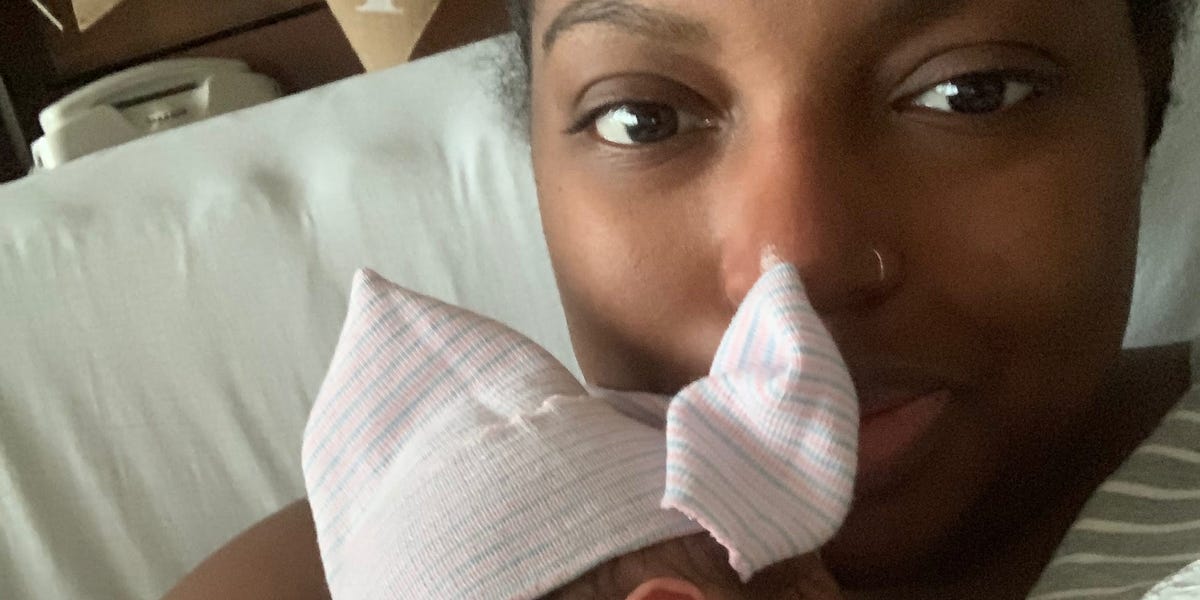
Ayana Lage stayed on medications through pregnancy and thought she was prepared. Days after giving birth, she declared herself a prophet. A 17-day hospital stay followed.
Ayana Lage knew the risks. Diagnosed with major depression and anxiety in college, she stayed on medications through her pregnancy and worked with a psychiatrist. She thought she was prepared.
Her daughter arrived early, via emergency C-section, in the middle of the pandemic. Lage felt elated at first – energetic, convinced everything was exactly right. The warning signs came fast: no sleep, erratic social media posts, an argument with her grandmother. Then the crash. Euphoria one moment, crying in the fetal position the next. She didn't want her husband or mother near the baby. She was the only one the child was safe with, she believed.
Her husband reached out to her psychiatrist. The doctor told him that if she got worse, she might need to go to the hospital. Her husband decided Lage should not be left alone with the baby.
Then came the morning she sat up in bed and told her husband that God was talking to her. She was a prophet, she said. Their daughter was Jesus. Her husband looked terrified. Her parents looked even more terrified. Lage was frustrated – she was elated, and no one believed her.
Within hours, she told her husband she needed to go to the hospital or she would die. In the emergency room, visual hallucinations began: doctors and nurses looked strange and cartoonish. She was transferred to a psych ward and stayed 17 days.
When her husband picked her up, she rode home in the backseat with their daughter. Heavily medicated, she remembers thinking maybe she could still have a normal life. She was a mother with her baby – how it should be.
Four years later, after recovery and with her medical team's oversight, Lage had a son. Her psychiatrist and a high-risk OB managed the pregnancy. Her family watched for signs. She experienced some postpartum anxiety with her son, but nothing like the first time. She remembers feeding him a bottle, grateful for those ordinary moments.
"Too often, moms with postpartum psychosis are vilified," Lage said. "Before it happened to me, I would have assumed there was some way to bring myself back to reality or maintain some control. It was very scary and humbling to experience being entirely disconnected from reality, with no way to bring myself back."
Her memoir, "Missing Me: A Memoir of Postpartum Psychosis and the Long Road Back," details the experience.
Drafted by a large language model from the source reporting linked above, then screened by automated publishing checks. It is not read by a journalist before publication. Some articles cite our Alpha Score. Verify prices and figures against the original source. Educational coverage, not personalized advice.