Stocks● Neutral
Pope Leo's 1M Madrid Mass: Soft Catalyst for Spain Stocks
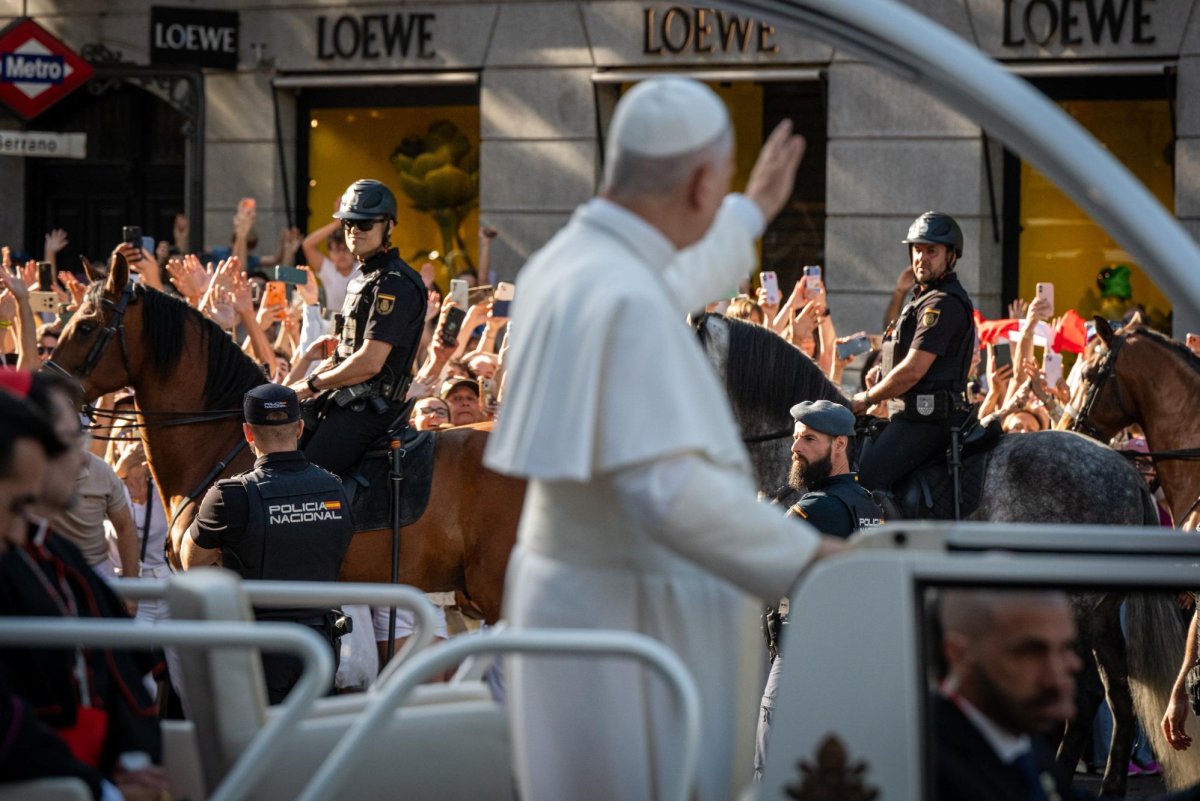
Pope Leo drew 1.2 million to a Madrid mass. The parliament address on Monday and a Canary Islands migration visit create volatility potential for Spain-linked assets.
Continue with
Pope Leo drew more than one million people to an open-air mass in Madrid on Sunday, launching his first papal visit to Spain in 15 years. The crowd, estimated at 1.2 million, filled Plaza de Cibeles and overflowed into surrounding streets. For traders monitoring Spanish assets, the gathering compresses several political and social narratives into a short window, creating volatility potential for Spain-linked equities and sovereign debt that would not otherwise exist.
Madrid Hospitality and Retail Demand Signal
A single-day influx of over one million people into central Madrid triggers a measurable intraday spike in spending on food, beverages, transport, and accommodation. Hotels along the procession route likely saw near-full occupancy, and short-term rental pricing data for the weekend will be worth tracking. The Pope's arrival coincided with the feast of Corpus Christi, which typically draws domestic travelers. The combined multiplier effect could show up in Madrid's monthly retail sales or hospitality employment figures.
For the Spanish tourism recovery narrative, this event provides a high-visibility proof point that large-scale gatherings are returning without major logistical disruptions. Every percentage point of occupancy above historical norms lifts margins for hotel operators and restaurant chains with concentrated Madrid exposure. The practical question is whether this single-day demand translates into sustained bookings or fades once the papal visit ends.
Parliament Address and Political Risk Premium
On Monday, Pope Leo is scheduled to address the Spanish parliament, a gridlocked institution that reflects the country's rising political polarization. Tight election margins and coalition fragility have kept a risk premium priced into Spanish sovereign bonds and the IBEX 35 financial sector. Any papal signal encouraging compromise or highlighting social cohesion could modestly reduce that premium. A pointed critique of political dysfunction, however–restructured from the original conjunction–could amplify existing governability concerns.
A single speech from a religious leader rarely moves markets directly. The crowd size gives this address outsized media weight. If the Pope introduces specific policy suggestions or criticism of particular parties, expect a volatile session for Spanish government bonds and the IBEX 35 index. A conciliatory tone leaves the base case of continued fragmentation unchanged, and the market reaction should be muted.