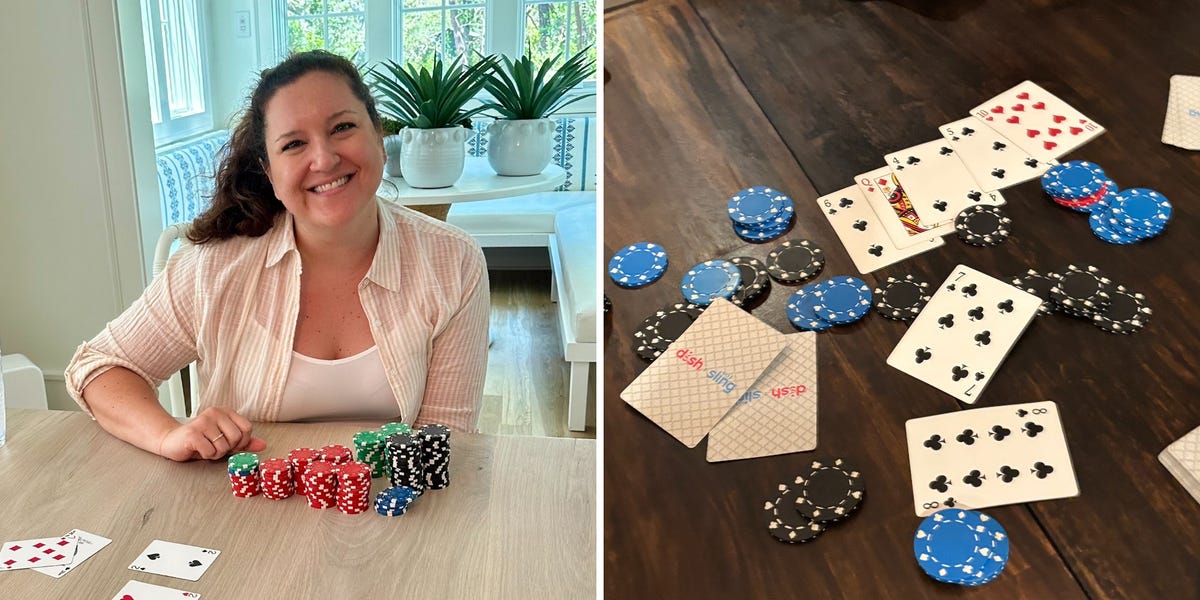
An advertising executive says learning Texas Hold 'Em improved her decision-making under uncertainty and built professional connections that translate to stock picking.
An advertising executive who learned poker to build her network says the game trains her to make decisions under pressure with incomplete information – a skill that translates directly to stock market analysis.
"I've realized Texas Hold 'Em is analogous to the business I navigate every day," she wrote in a first-person account. "Senior advertising executives like me manage large teams and often make decisions under pressure with incomplete information. Poker trains me how to do just that."
She had been excluded from her family's poker games as a child. Decades later, she signed up for an all-women poker night through a networking organization. The room was warm, the instructors taught probability and betting strategy, and she won several hands while chatting with eight other women at the table.
After that night, a handful of the group committed to a monthly game. Two years later, she now hosts 23 women at her office. The conversation ranges from promotions to job interviews, all while placing bets and counting chips.
In poker, when she loses a hand, she doesn't cower from betting on the next one. Each hand is a fresh start, like a new day of the workweek. The same logic applies to picking stocks: no single loss should freeze the next decision.
Reading opponents at the table – scanning for reactions when they look at their cards – is the same skill as reading faces in a boardroom or gauging market sentiment. The game also teaches risk management: knowing when to check, bet, raise, or fold mirrors the discipline of setting stop-losses and taking profits.
Her group calls itself "She Runs The Table," a counterpoint to cultural messages that tell women to shrink their bets. At their table, they ante up and raise the stakes.
She recently connected with a first-time player moving from London to Chicago and introduced her to a human resources contact. The network built over poker has led to real professional opportunities.
The executive's story underscores a broader point: skills from outside finance – reading a room, probabilistic thinking, emotional control – can sharpen investment decisions. The next time a trader sits at a table, they might be practicing for the market.
Drafted by a large language model from the source reporting linked above, then screened by automated publishing checks. It is not read by a journalist before publication. Some articles cite our Alpha Score. Verify prices and figures against the original source. Educational coverage, not personalized advice.