Stocks● Neutral
Pittsburgh's $1B Sewer Tunnel: Urban Tunneling Risk on Display
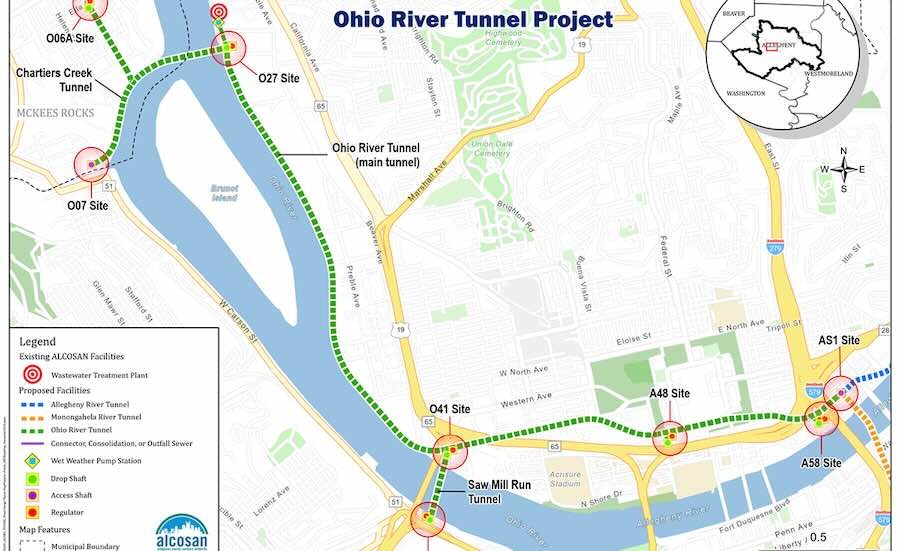
A JV wins the first $1B segment of ALCOSAN's 16-mile tunnel program. Execution in mixed geology under an urban river is the key risk. Start later this year.
Continue with
A joint venture of Lane Construction Corp. and Brayman Construction Corp. has been selected for the Ohio River Tunnel project in Pittsburgh. The $1 billion contract is the first major component of the Allegheny County Sanitary Authority’s long-term program to reduce combined sewer overflows and protect regional waterways.
Work is scheduled to start later this year with a five-year timeline. The contract covers construction of nearly 5 miles of deep tunnels that will channel wet-weather flows to a new pump station at ALCOSAN’s North Side wastewater treatment plant. For Lane (the U.S. subsidiary of Webuild Group) and Brayman, the award adds a large, multi-year backlog. For investors tracking infrastructure spending, the project tests whether large urban tunnel boring work can stay on budget in a rising cost environment.
The Tunnel Scope Under the Ohio River
The main tunnel will be 18 ft in diameter, excavated by a tunnel boring machine at depths of 118 to 150 ft along a 3.8-mile route under the Ohio River. Two secondary tunnels – 14 ft in diameter, measuring approximately 4,500 ft and 500 ft – will feed into the main line. A 600-ft dewatering tunnel at the treatment plant completes the underground network.
Above ground, the scope includes eight deep shafts ranging from 25 to 70 ft in diameter, ten flow regulator structures, two technical buildings, and a new river outfall. Once operational, ALCOSAN says the system will capture excess wet-weather flows and reduce combined sewer overflows by approximately 7 billion gallons annually. The infrastructure is designed for a 100-year service life.
Who Bears the Execution Risk?
Lane Construction leads project management and major tunneling operations. Brayman, headquartered in Pittsburgh, oversees heavy civil work and shaft construction. For Webuild Group, the contract adds significant North American tunneling backlog in an environment of rising federal infrastructure spending. For Brayman, it reinforces its position in deep excavation and shaft construction in its home market.
Neither company publicly discloses project-level margins. Large-diameter tunnel boring contracts typically carry wider margin variance than surface construction due to geology risk, equipment downtime, and labor challenges. The joint venture structure spreads the risk. A significant cost overrun or delay would hit both partners.