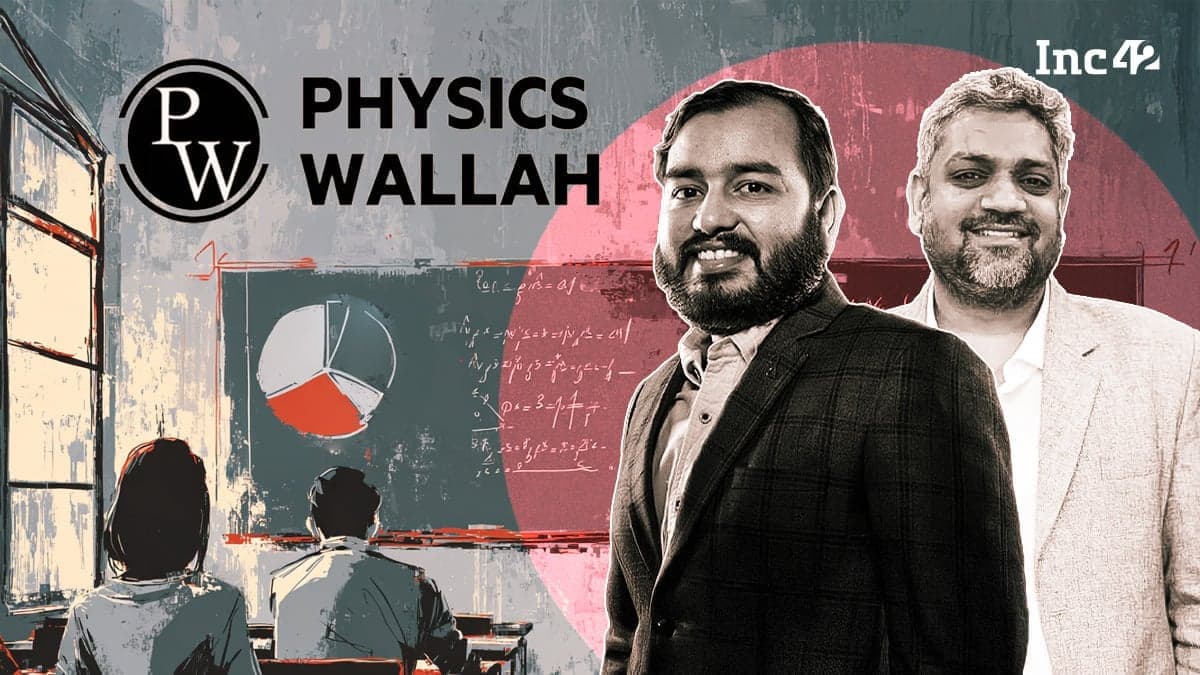
Edtech firm PhysicsWallah scraps direct student lending via NBFC FinZ Finance, shifting to third-party partnerships. Stock surges 17.8% as balance-sheet risk drops. Next catalyst: partnership scale and execution.
PhysicsWallah has scrapped its plan to extend student loans through its wholly owned NBFC subsidiary, FinZ Finance, and will instead partner with regulated third-party NBFCs. Shares of the edtech firm surged as much as 17.8% to an intraday high of ₹108.45 on the BSE following the announcement.
The reversal addresses a risk that had been weighing on the stock since last week, when the company disclosed a ₹120 crore infusion into FinZ Finance. Shareholders reacted negatively to that move, citing the edtech sector’s troubled history with direct student lending – including high default rates and regulatory scrutiny. The simple read is that the market rewarded a quick course correction. The better market read is that PhysicsWallah removed a balance-sheet overhang that was pricing in potential credit losses and regulatory friction.
The company stated that the decision “materially reduce[s] balance sheet and credit related risks.” Instead of originating loans on its own books, PhysicsWallah will now channel student financing through multiple regulated third-party NBFCs. Co-founder Prateek Maheshwari said the firm received feedback from partners that its core strength lies in building communities and its online business, not in underwriting loans. “Our lending business is best left to regulated third-party NBFCs who have created robust underwriting capabilities,” he added.
This marks a full reversal from the strategy announced just days earlier. The original plan – to lend directly via FinZ Finance – had raised concerns about capital adequacy, collection infrastructure, and the risk of regulatory action in a sector where the Reserve Bank of India has tightened norms for digital lenders.
The ₹120 crore capital commitment to FinZ Finance represented a material deployment of PhysicsWallah’s cash reserves. For a company that went public in 2024, balance-sheet exposure to unsecured student loans carried asymmetric downside. The stock’s decline last week reflected that concern. Today’s surge suggests investors view the third-party model as a lower-risk way to capture the same revenue opportunity without accumulating loan book risk.
Affected assets include PhysicsWallah’s equity (traded on the BSE) and, indirectly, the broader edtech peer group. Any company in the space considering in-house lending may now face heightened scrutiny from investors who observed this episode.
The risk-reduction triggers are clear: PhysicsWallah eliminated direct credit exposure, shed regulatory responsibility for loan origination, and signaled willingness to listen to market feedback. The stock’s 17.8% rally confirms that the market considers this a net positive.
What would worsen the setup? First, if the partnership model fails to scale because third-party NBFCs impose tighter credit criteria than PhysicsWallah expected, the revenue uplift from lending could disappoint. Second, any residual litigation or regulatory investigation from the brief period of direct lending could create overhang. Third, the broader edtech sector’s reputation for student lending losses is not erased by one company’s reversal – macroeconomic stress on student repayment remains a secular risk.
Investors will focus on the details of the NBFC partnerships: fee structures, default-sharing arrangements, and whether PhysicsWallah retains customer relationships or becomes a pure lead generator. The company’s next quarterly report should show whether the asset-light model can deliver similar revenue to the direct-lending plan without the balance-sheet strain. Until then, the stock’s re-rating depends on execution, not intent.
Prepared with AlphaScala research tooling and grounded in primary market data: live prices, fundamentals, SEC filings, hedge-fund holdings, and insider activity. Each story is checked against AlphaScala publishing rules before release. Educational coverage, not personalized advice.