Stocks● Neutral
Pets at Home Fresh Dog Food Launch Targets Retail Margin Shift
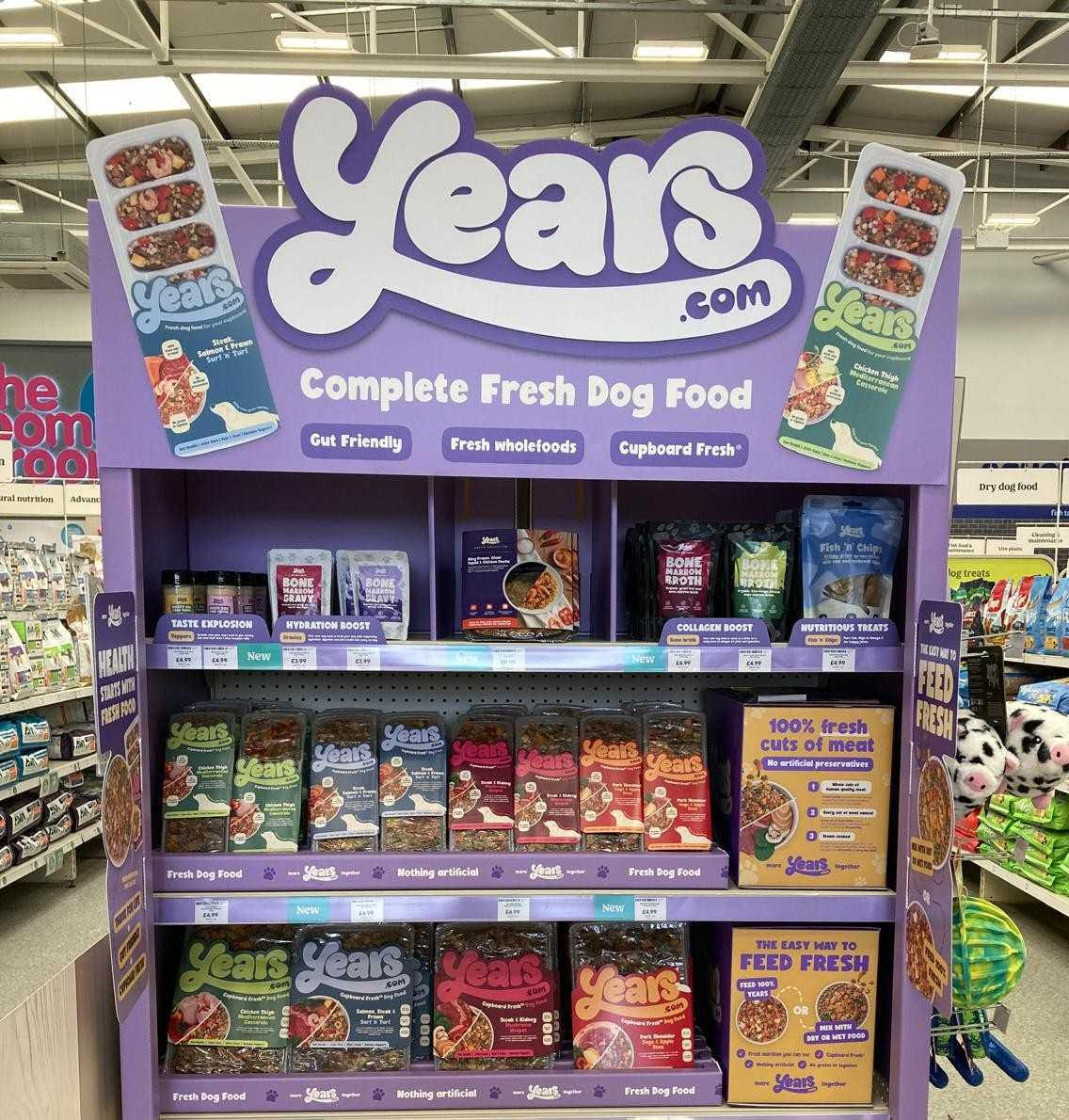
Pets at Home adds Years fresh dog food to nationwide shelves, testing margin expansion in the premium human-grade pet nutrition segment as competition heats up.
Continue with
Pets at Home is rolling out Years fresh dog food across its UK stores. The partnership places the brand into the retailer's physical aisles after Years built a direct-to-consumer subscriber base. For Pets at Home, the decision adds the fastest-growing segment of pet food – fresh, human-grade nutrition – to its shelf mix.
The fresh dog food market has expanded as owners shift toward wet, refrigerated diets for their pets. This category commands higher average selling prices than dry food, and because products are perishable, they encourage repeat purchases more reliably than shelf-stable alternatives. For a retailer like Pets at Home, adding Years creates a revenue stream with potential margin upside compared with standard pet food.
Why Fresh Dog Food Changes the Margin Calculation
Traditional pet food is a low-margin volume business. Shelf-stable brands compete on price, and retailers carry large inventories that tie up working capital. Fresh dog food changes the equation. Products like Years are made from whole ingredients, often sold in portioned pouches that command premiums of 50% to 100% per serving over conventional brands. Because the product must be delivered chilled, it incentivizes subscription models that lock in recurring purchase behavior. That recurring revenue has higher lifetime value for both the brand and the retailer.
Pets at Home's partnership model reduces its risk. Instead of developing a proprietary fresh food line, the company lets Years handle production, logistics, and brand marketing while Pets at Home provides distribution and store placement. The retailer collects a wholesale margin without bearing the fixed costs of manufacturing or the spoilage risk of unsold perishables. If Years manages its supply chain well, Pets at Home gains margin on incremental sales with low capital commitments.
Pets at Home's Distribution Advantage
The rollout covers the retailer's nationwide footprint, offering Years a distribution scale it lacked as a DTC business. Pets at Home operates over 450 stores and an online platform, giving the brand exposure to customers who may not have encountered it through digital ads or subscriptions. For the retailer, exclusive access to Years in physical retail strengthens its grocery-like positioning: it can offer products that differentiate its pet food aisle from supermarkets and discounters.