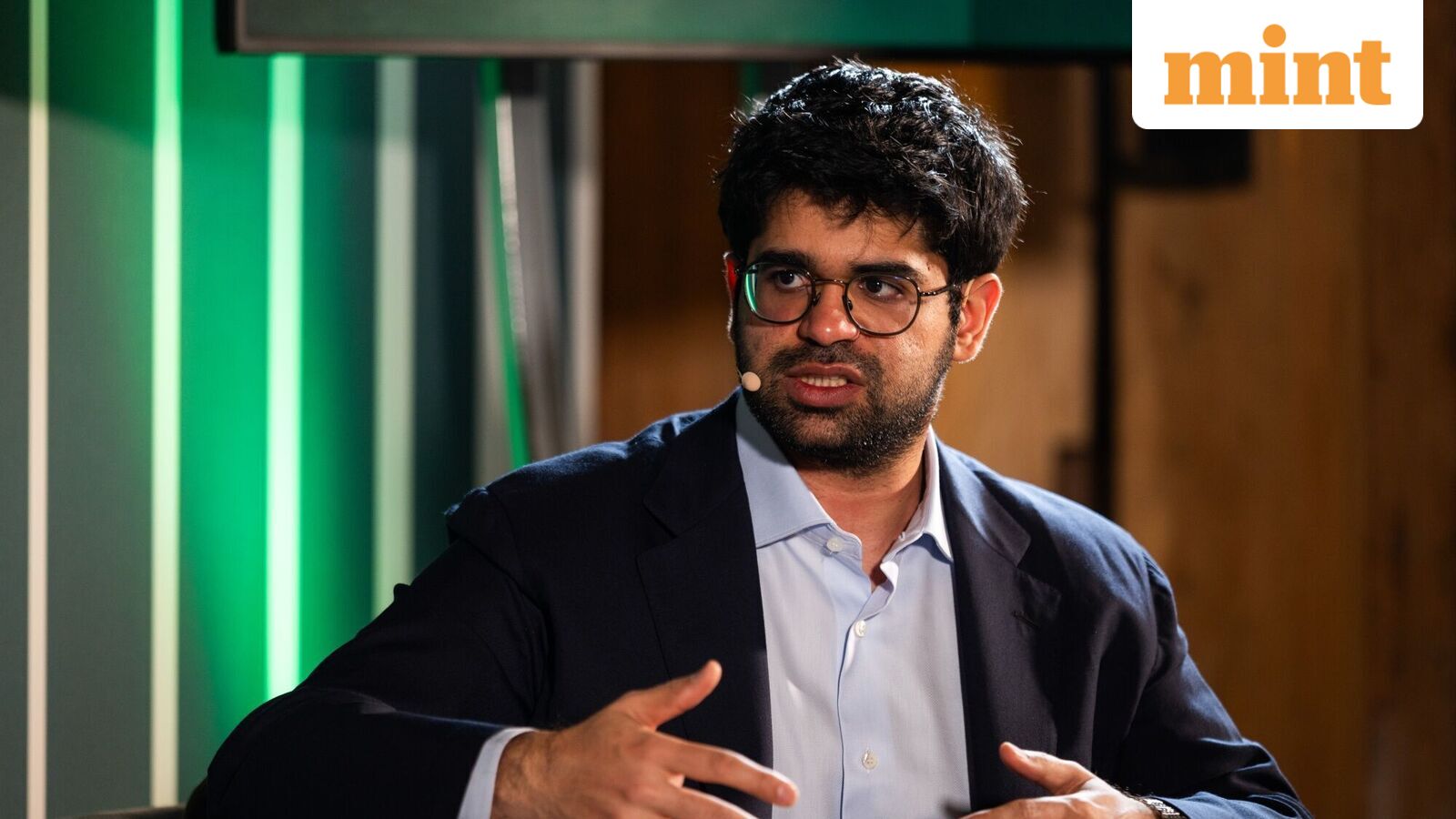
Perplexity CEO and co-founder Aravind Srinivas said the United States remains the best destination for entrepreneurs, even as tighter immigration policies under the Trump administration stir debate about the country's openness to foreign-born founders.
Speaking on the July 1 episode of "The Joe Rogan Experience," Srinivas said America's startup ecosystem is unique because it rewards risk-taking and original thinking over deference to authority.
"I always thought America's the only country where you can come here and have an idea, and people listen to you and encourage you to go pursue it. The risk-seeking culture is just incredible," Srinivas said.
He contrasted that with what he described as a tendency in many other countries to follow established norms.
"Everywhere else, you kind of are either explicitly or implicitly forced to defer to authority," he said.
Srinivas, who was raised in India and moved to the U.S. to study at the University of California, Berkeley, co-founded AI-powered search startup Perplexity in 2022. He recalled that during his early years in the U.S., Google was seen as the dream employer for many students. What inspired him more was seeing people launch startups that could compete with established tech giants.
The Indian-born entrepreneur also praised American universities for encouraging students to question assumptions and debate ideas openly.
"That spirit of questioning is encouraged a lot here," Srinivas said, noting that professors and peers regularly offered candid feedback on his work.
Podcast host Joe Rogan asked whether India offered a similar culture. Srinivas said it would be inaccurate to suggest such an environment does not exist outside the U.S. He argued it is less actively encouraged.
"It's a simplification to say it's not anywhere else," he said. "It's not as encouraged."
Explaining his interpretation of the American dream, Srinivas said it is about more than wealth. Its defining feature is a society where people are willing to listen to ambitious ideas and give innovators a fair opportunity to turn them into reality. That culture of openness, he said, is "why America's still at the top."
Srinivas's remarks come as entrepreneurs and tech leaders debate whether the U.S. remains the world's most attractive destination for launching startups, particularly amid tighter immigration rules and changing visa policies. Earlier this year, he weighed in on the H-1B visa debate. He argued that policymakers should focus more on addressing illegal immigration than restricting skilled worker visas. He has also noted that Indian technology professionals have not been immune to layoffs. Immigration policy should be guided by merit and evidence rather than nationality, he said.
For founders evaluating where to incorporate, Srinivas's comments highlight a factor that venture capital funds weigh: the depth of risk-taking culture. Startup formation rates in the U.S. remain above pre-pandemic levels, according to Census Bureau data. Companies like Perplexity, which reached a $9 billion valuation in its latest fundraising round, demonstrate that the ecosystem still produces outsized outcomes.
A smaller share of venture capital dollars goes to immigrant-founded startups in 2025 than a decade ago, according to a National Foundation for American Policy analysis. Visa uncertainty is one driver. Srinivas's own path shows a successful immigrant founder story that still depends on the U.S. visa system functioning for skilled workers.
The next major test for the policy environment will come in late 2025, when the H-1B visa cap for fiscal 2027 gets set. Whether the Trump administration tightens or loosens the rules will shape the pipeline of foreign-born entrepreneurs who can follow a similar trajectory.