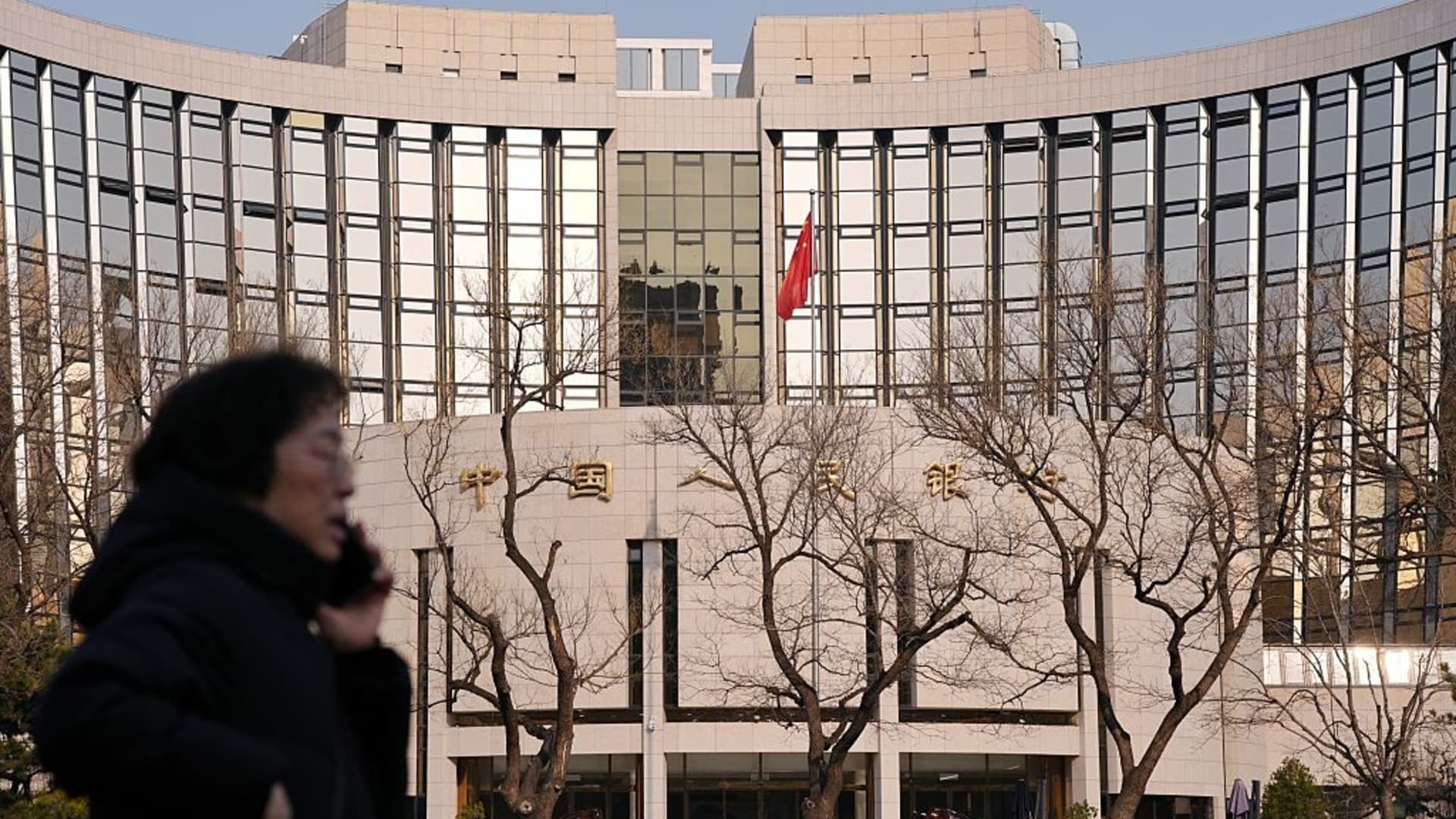
PBOC Maintains Lending Rates as Growth Momentum Tempers Stimulus Urgency

The People’s Bank of China has held benchmark lending rates steady, citing improved economic growth as a reason to delay further stimulus measures despite ongoing geopolitical risks.
Alpha Score of 47 reflects weak overall profile with moderate momentum, poor value, moderate quality. Based on 3 of 4 signals — score is capped at 90 until remaining data ingests.
Alpha Score of 55 reflects moderate overall profile with moderate momentum, moderate value, moderate quality. Based on 3 of 4 signals — score is capped at 90 until remaining data ingests.
Alpha Score of 29 reflects poor overall profile with weak momentum, poor value, poor quality, moderate sentiment.
Alpha Score of 57 reflects moderate overall profile with moderate momentum, moderate value, moderate quality, moderate sentiment.
The People’s Bank of China has opted to keep benchmark lending rates unchanged, signaling a shift in policy priority as recent economic data suggests a stabilization in growth. By holding the one-year and five-year loan prime rates steady, the central bank is acknowledging that current liquidity levels are sufficient to support the prevailing economic trajectory. This decision reflects a strategic pivot away from immediate monetary easing, as policymakers weigh the benefits of recent growth against the persistent risks posed by geopolitical instability in the Middle East.
Transmission to Credit and Liquidity
The decision to maintain rates suggests that the central bank is prioritizing the preservation of net interest margins for commercial lenders over aggressive credit expansion. With economic growth showing signs of acceleration, the immediate pressure to lower borrowing costs has dissipated. This pause allows the PBOC to observe the effectiveness of existing stimulus measures before committing to further intervention. The transmission mechanism here is clear. By keeping rates stable, the central bank aims to prevent excessive capital outflows while maintaining a floor under domestic investment. Investors should monitor how this stability influences the macroeconomic indicators and the shift in consumer discretionary spending as businesses adjust to a higher-for-longer cost of capital environment.
Geopolitical Risk and Asset Pricing
While domestic growth provides a buffer, the uncertainty surrounding Mideast supply chains remains a primary concern for commodity-linked assets. Stability in lending rates provides a predictable environment for industrial planning, yet it does little to mitigate external shocks to energy prices. If geopolitical tensions escalate, the PBOC may be forced to abandon its current neutral stance in favor of targeted liquidity injections to protect the manufacturing sector. The current environment creates a complex landscape for firms with significant exposure to global supply chains, such as those monitored in our proprietary data. For instance, AS stock page currently holds an Alpha Score of 47/100, reflecting the mixed sentiment inherent in consumer-facing sectors during periods of policy transition. Similarly, ON stock page maintains an Alpha Score of 45/100, as technology firms navigate the balance between stable domestic demand and volatile global input costs.
The Path Toward Future Policy Adjustments
Moving forward, the focus shifts to the next round of monthly economic releases and the potential for fiscal policy to complement the current monetary stance. The PBOC is likely waiting for more definitive evidence of sustained consumption growth before adjusting its policy toolkit. If the current momentum fades, the central bank will face renewed pressure to lower the five-year loan prime rate to support the property and infrastructure sectors. The next concrete marker for this policy path will be the upcoming quarterly meeting of the central bank’s monetary policy committee, where officials will likely provide more granular guidance on their tolerance for currency volatility and their response to potential external energy price spikes. Until then, the market will treat the current rate stability as a signal that the government is comfortable with the current pace of expansion, provided that global risks do not deteriorate further.
AI-drafted from named sources and checked against AlphaScala publishing rules before release. Direct quotes must match source text, low-information tables are removed, and thinner or higher-risk stories can be held for manual review.