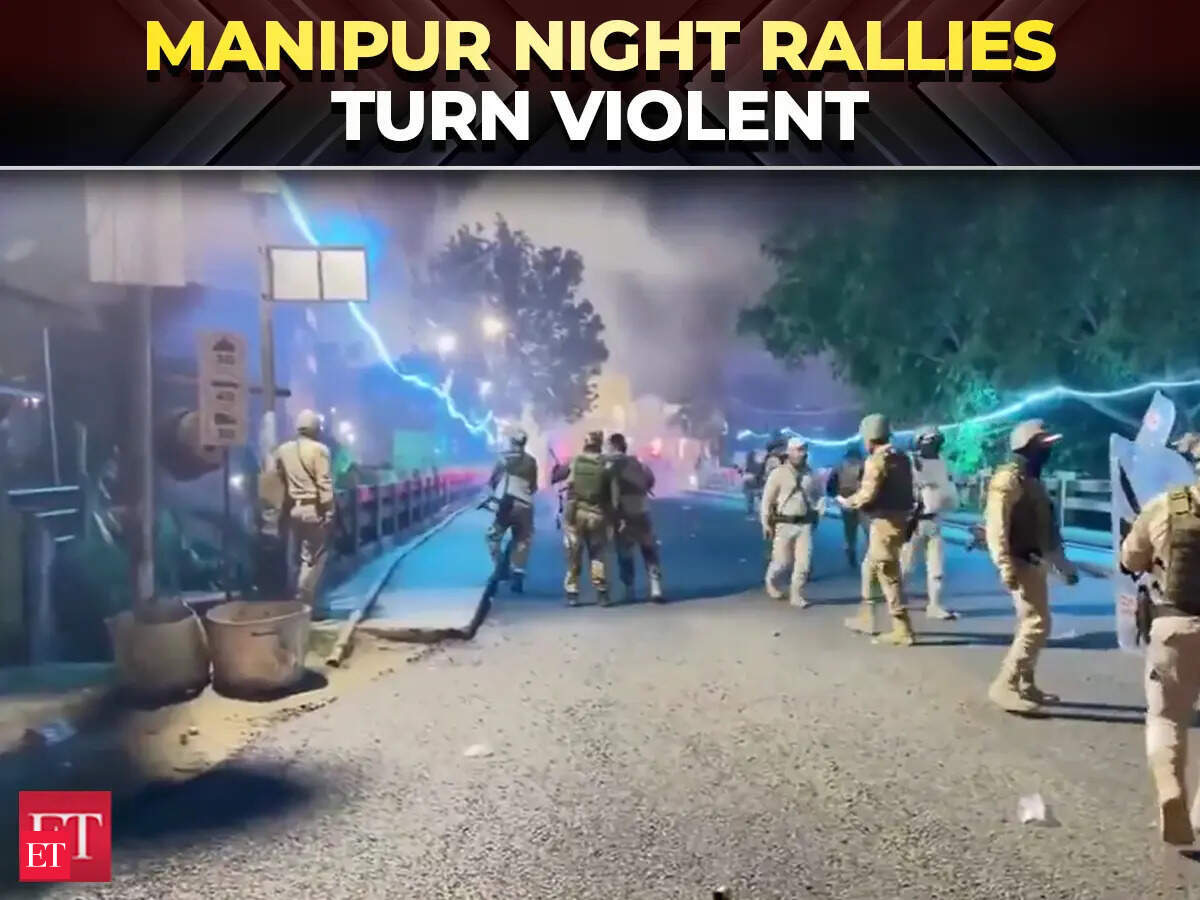
The security landscape in Manipur shifted significantly on Sunday evening as thousands of protesters took to the streets across valley districts. The demonstrations were triggered by a recent bomb attack that resulted in the deaths of two children. This event has moved the regional narrative from localized tension to widespread public outcry, forcing a direct confrontation between civilian groups and security personnel.
Regional Security and Operational Continuity
The protests centered on Imphal East, Imphal West, and Kakching districts. Key locations including Koirengei, Hatta Golpati, and Uripok saw significant gatherings that eventually devolved into clashes with state security forces. Reports indicate that authorities deployed tear gas shells to disperse crowds at multiple points, including Khabam Lamkhai and Kakching town. This escalation suggests a breakdown in the current containment strategy used to manage regional instability.
The immediate impact of these rallies is a heightened risk profile for infrastructure and personnel operating within the valley districts. While the unrest is currently focused on civil protest, the involvement of security forces indicates that the state is prioritizing the suppression of public gatherings over the restoration of normalcy. Businesses and logistics providers with exposure to these districts now face significant uncertainty regarding the stability of transport corridors and local site security.
Strategic Implications for Regional Stability
This surge in civil unrest follows a period of persistent volatility in the region. The transition from isolated incidents to coordinated night rallies across multiple districts highlights a growing capacity for rapid mobilization among the local population. For entities monitoring the IRGC Consolidation Shifts Regional Risk Profile, this development serves as a reminder of how quickly localized grievances can disrupt broader regional operations.
AlphaScala data currently monitors various sectors for volatility, including technology and healthcare, where firms like ON Semiconductor Corporation with an Alpha Score of 45/100 and Agilent Technologies, Inc. with an Alpha Score of 55/100 maintain operations. While these firms operate in different sectors, the broader stock market analysis suggests that regional instability often creates ripple effects in supply chain logistics and operational overhead. Investors should remain cautious of how such civil disruptions impact the cost of doing business in areas prone to sudden security escalations.
The next concrete marker for this situation will be the state government's response to the protesters' demands and the potential implementation of further curfew measures. Observers should monitor for official updates regarding the status of transit routes and the duration of security deployments in the affected districts. Any further expansion of these rallies into neighboring regions would signal a more profound shift in the regional security environment, potentially necessitating a re-evaluation of operational risk for all entities with physical assets in Manipur.