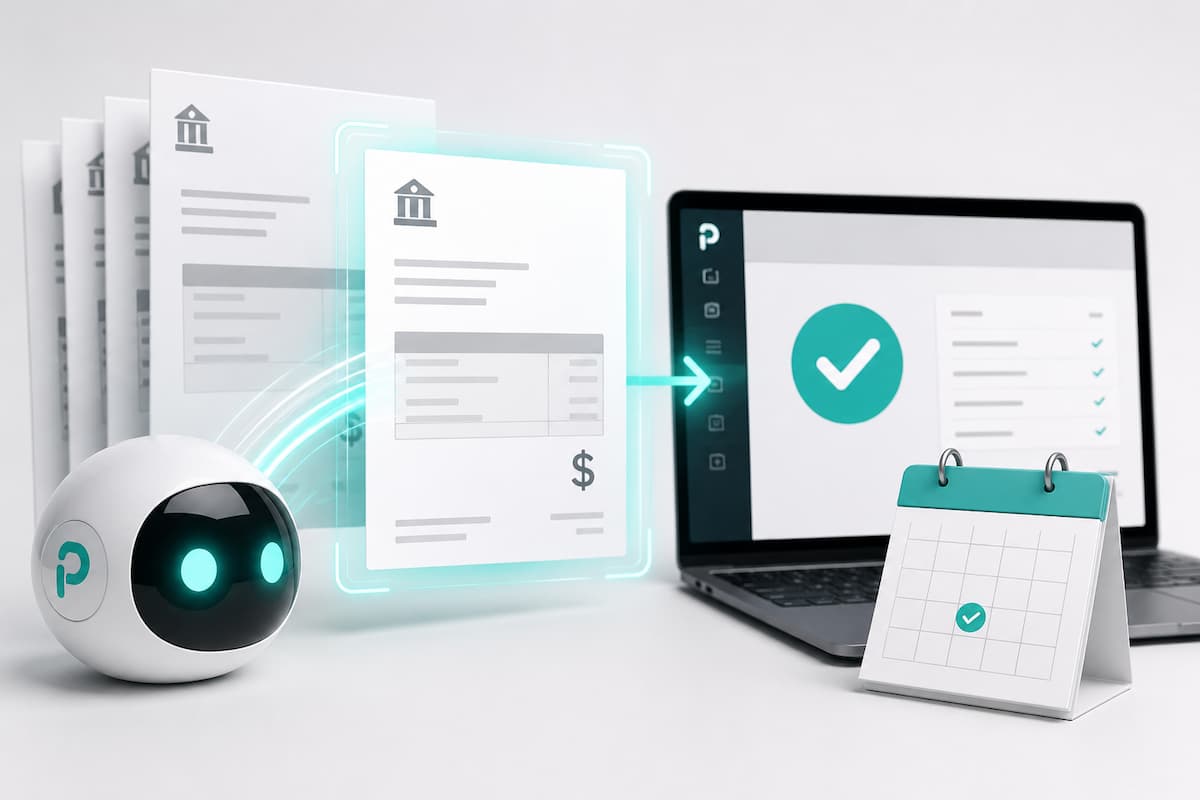
Payhawk has released Agent Fetch to all customers, a tool that automates the retrieval of invoices from vendor portals. The London-based spend management platform said more than 550 businesses activated the feature during beta, making it the most adopted beta capability in the company's history.
The problem Agent Fetch solves is narrow but costly for finance teams. Invoices for online services – software subscriptions, cloud infrastructure, digital advertising, travel – are not delivered at the point of purchase. They sit inside vendor portals. Someone must remember the invoice exists, log in, find the document, and attach it to the transaction. Payhawk estimates that process takes an average of 23.8 days under a human-only workflow. Its earlier Financial Controller Agent, which chases employees to complete the task, had cut that to 12.6 days. Agent Fetch targets two days by completing the retrieval autonomously.
In practice, the agent logs into connected vendor accounts, locates the relevant invoice, extracts and codes the data, and matches it to the corresponding payment. During beta, it retrieved invoices without human intervention in 68.6% of attempts. Payhawk has also had Agent Fetch verified through Cloudflare's Verified Bots programme, which lets websites authenticate the agent as authorised traffic rather than an unidentified scraper. That distinction matters as websites tighten access controls against automated access.
Hristo Borisov, co-founder and chief executive of Payhawk, said: “Retrieving invoices from vendor portals is what delays month end close, weakens real-time visibility, creates incomplete audit records, and can prevent businesses from recovering VAT.”
The VAT recovery argument carries weight in European markets. Businesses can reclaim input VAT on qualifying purchases but must hold the underlying invoice as evidence. UK HMRC and EU tax authorities require a valid VAT invoice for reclaim. Incomplete records are a common cause of disallowed claims. A two-day average retrieval cycle, compared with nearly 24 days previously, reduces the risk of missing an invoice before a VAT period closes. For Payhawk's mid-market and enterprise customers across the 32-plus countries it serves, that compliance argument may be as persuasive as the efficiency gain.
Agentic automation is becoming the central battleground in B2B spend management. Payhawk competes against Spendesk, Pleo, Yokoy and Airbase, alongside the broader ERP and accounts payable automation layer occupied by SAP Concur and Coupa. Most of these platforms have layered AI into workflow reminders or optical character recognition for receipt capture. Autonomous portal access is a more significant technical step: the agent acts as the employee rather than prompting the employee to act. The 68.6% autonomous success rate during beta is the most substantive performance figure in the release. It also implies a meaningful failure rate that will require human fallback in roughly three cases out of ten. Payhawk did not disclose whether the success rate has improved as the model has been refined or whether it varies materially by vendor category.