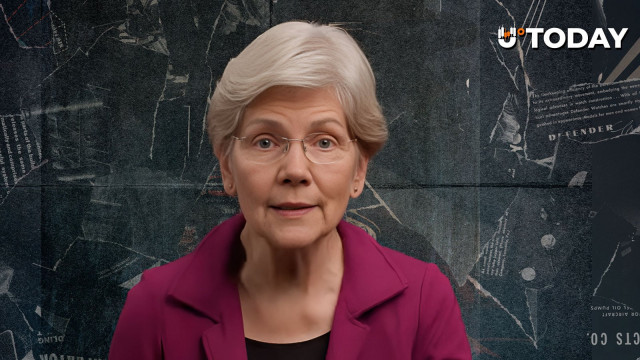
Y Combinator co-founder Paul Graham has warned the Democratic Party that courting Senator Elizabeth Warren repeats the exact miscalculation that drove Silicon Valley toward the Republican Party in 2024. Graham described Warren's hostility toward the crypto industry as a "pure own-goal" that cost Democrats support among innovators and founders.
According to a recent Axios report, high-profile Democrats including Kentucky Governor Andy Beshear and California Governor Gavin Newsom are actively seeking Warren's backing for potential 2028 presidential runs. Graham argues that cozying up to Warren ignores the damage her regulatory push has already done.
The Graham Warning: A Political Own-Goal
Graham laid out the mechanism publicly on X. "The last time this happened, it was a disaster for the Democrats," he wrote. "In return for her support, she insisted on a network of key appointments. One was Gary Gensler, who alienated Silicon Valley to such an extent that many founders switched to supporting the Republicans."
The reference to Gensler is precise. As chair of the Securities and Exchange Commission (SEC) , Gensler launched the regulation-by-enforcement campaign that targeted dozens of crypto firms – from exchanges to DeFi protocols – without clear rulemaking. The result was a wave of lawsuits, fines, and delistings that many founders saw as a direct attack on their business models.
Historically, Silicon Valley tech executives overwhelmingly favored Democratic candidates. The concentration of talent and money in California, combined with the party's stance on social issues and immigration, made it the natural home for most founders. That alignment has fractured. A hard-right conservative camp within the tech sector now pours tens of millions of dollars into Republican campaigns. The crypto regulatory crackdown is cited as a primary reason.
The Gensler Appointment as a Catalyst
Graham's claim that Warren insisted on Gensler's appointment is the core mechanism. If true, it means Warren's influence extended beyond legislation into the enforcement apparatus itself. The SEC's actions under Gensler – including lawsuits against Coinbase, Binance, and Kraken – created a regulatory environment that many founders viewed as existential. The shift in political donations from Democratic to Republican candidates followed directly.
The Warren Playbook: Anti-Crypto Army and Legislative Risk
Warren is the most recognizable crypto critic in U.S. politics. She explicitly campaigned on building an "anti-crypto army" during her 2024 Senate reelection bid. Her legislative record includes a controversial bipartisan bill that sought to extend strict Bank Secrecy Act responsibilities to digital asset wallet providers, miners, and even network validators. That bill would have effectively forced crypto infrastructure firms to comply with the same anti-money laundering rules as traditional banks – a requirement many argued would be impossible for decentralized networks to meet.
She has also consistently used congressional hearings to tie digital assets to crimes, including ransomware, drug trafficking, and sanctions evasion. Her rhetoric has shaped the Democratic Party's default posture on crypto: skeptical, punitive, and focused on consumer protection through restriction.
Beyond legislation, Warren fiercely opposed the approval of spot Bitcoin ETFs, which were eventually approved by the SEC in January 2024. Her opposition delayed market access for institutional investors and created pricing inefficiencies that crypto-native traders exploited via arbitrage.
Key Actions That Shaped the Current Political Risk
- Warren's anti-crypto bill – extending Bank Secrecy Act obligations to validators and miners
- Public opposition to spot Bitcoin ETFs
- Consistent framing of crypto as a vector for crime in hearings
- Influence over SEC appointments, specifically Gensler
- Active courting by 2028 hopefuls Beshear and Newsom, per Axios
Exposure for Crypto Traders and Founders
The immediate risk is not a single regulatory action but the sustained political headwind that Warren represents. Her influence inside the Democratic Party means any future administration with a Warren-aligned Treasury Secretary or SEC chair could revive the regulation-by-enforcement playbook. For traders, that translates into higher uncertainty around crypto market sentiment. A Warren-backed candidate winning the Democratic primary would likely trigger a repricing of risk assets – especially tokens with heavy U.S. retail exposure.
For founders, the stakes are existential. The threat of additional legislation targeting DeFi protocols or non-custodial wallets remains on the table. The Graham warning signals that a significant segment of the tech industry views Warren as a liability. Her base of progressive support remains strong. The tension between these two forces creates a binary outcome for crypto regulation in the next political cycle.
Affected Assets and Market Dynamics
Bitcoin (BTC) and Ethereum (ETH) are the most liquid proxies for U.S. regulatory sentiment. A Warren-aligned administration would likely slow institutional adoption, reduce ETF inflows, and increase the risk premium on U.S.-based crypto companies. Altcoins with heavy U.S. retail exposure – such as Solana (SOL) and Chainlink (LINK) – could face sharper drawdowns if anti-crypto legislation advances. The Bitcoin (BTC) profile tracks these macro-political shifts alongside on-chain data.
Timeline: 2026 Midterms and 2028 Primaries
The relevance of Graham's warning is not immediate but structural. The 2026 midterms will test whether crypto-focused political action committees – like Fairshake – can successfully unseat anti-crypto incumbents. A strong showing by pro-crypto candidates would reduce the risk of Warren-style legislation advancing. A weak showing would confirm her grip on the party's regulatory agenda.
The 2028 Democratic primaries are the next real catalyst. Warren herself is rumored to be considering a presidential run. Even if she does not run, her endorsement will be a prize. The courting by Beshear and Newsom shows that candidates believe Warren's progressive seal of approval is essential. If the nominee adopts Warren's anti-crypto platform, the regulatory risk for the entire sector increases dramatically.
What Would Reduce the Risk
- A Democratic candidate who publicly supports clear crypto rules and neutral regulatory treatment
- Passage of the FIT21 Act or similar legislation establishing a workable framework
- Reduced Warren influence if her endorsed candidates lose primaries or if her anti-crypto bill dies
What Would Make It Worse
- Warren wins the 2028 nomination or secures a major cabinet position
- Renewed SEC enforcement under a Gensler-style chair in a future administration
- Democratic Party platform explicitly calling for heavy-handed crypto restrictions
Graham's warning is a leading indicator of political risk. For crypto traders, the Graham-Warren divide is not a culture war sideshow. It directly affects the probability of legislation, SEC leadership, and market access. For now, the risk is priced in as a low-probability tail event. As the 2028 cycle heats up and Democratic candidates line up for Warren's endorsement, that tail could become a central scenario.
AlphaScala's crypto market analysis tracks these political shifts alongside on-chain data. The Graham critique is a reminder that the crypto vote is becoming a swing factor in U.S. elections – and that ignoring it carries a cost that both parties are only beginning to measure.