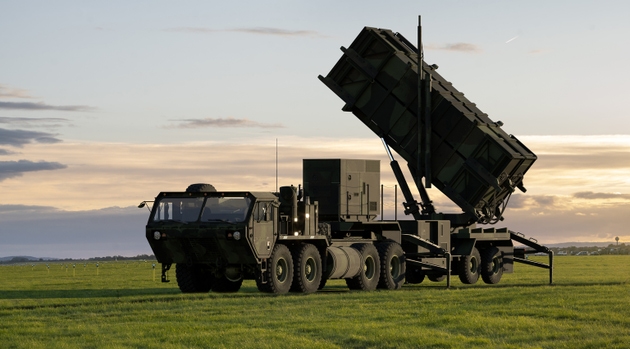
Lockheed Martin is running its Patriot PAC-3 production lines at higher rates than planned. Two active wars – Ukraine and the Middle East – plus global stockpile replenishment have created an order book that exceeds the current supply chain's capacity to fill it. The company's Missiles and Fire Control segment builds the PAC-3 Missile Segment Enhancement (MSE) and the older Cost Reduction Initiative (CRI) interceptors, both core to the Patriot system.
The demand surge is a clear near-term revenue driver. The question is whether Lockheed can deliver the units fast enough to satisfy customers before the urgency fades.
The 500-Interceptor Target Hits a Wall
Lockheed's publicly stated goal is 500 interceptors per year by 2024. That figure now looks low relative to the actual order flow. The U.S. Army has signed multi-year contracts. European allies – Germany, the Netherlands, Spain – are placing follow-on orders. Japan and South Korea are also in the queue.
The bottleneck is not design or engineering. It is solid rocket motors, seeker heads, and fin actuators. Each PAC-3 interceptor uses a single-stage rocket motor. The supply of those motors is shared across multiple Lockheed programs and competitors like Raytheon. The Ka-band seeker head requires specialized semiconductor components with long lead times.
Lockheed has responded by investing in factory automation at its Camden, Arkansas and Courtland, Alabama facilities. The company has added floor space and tooling for the MSE production line. Adding capacity takes 18 to 24 months. The order cycle moves faster than that.
Which Defense Suppliers Benefit
The Patriot demand surge does not lift all defense stocks equally. It favors companies with direct exposure to the interceptor and launcher supply chain.
Raytheon (RTX) is the Patriot system's prime contractor. Lockheed builds the interceptor; Raytheon builds the radar, the engagement control station, and the launcher. Raytheon's Integrated Air & Missile Defense segment benefits from both new system sales and upgrade packages. The LTAMDS radar replacement program is a separate revenue stream tied back to Patriot demand.
Northrop Grumman (NOC) supplies the solid rocket motors for the PAC-3 through its propulsion division. Northrop is also the sole-source provider of the M795 warhead. Any increase in PAC-3 production flows directly to Northrop's propulsion revenue.
Howmet Aerospace (HWM) and Arconic supply castings and forgings for the missile airframe and launcher components. These are smaller-dollar items per interceptor, the volume ramp still matters for their aerospace segments.
Valuation and the Duration Question
Lockheed's defense business trades at a P/E multiple in the mid-teens, below the broader market. The market has been skeptical that conflict-driven demand is sustainable. Wars end. Stockpiles eventually refill. The question is the timeline.
The U.S. Army's Indo-Pacific Command has identified Patriot as a critical capability for a potential Taiwan scenario. That creates a structural demand floor that did not exist before 2022. The Army wants to increase the number of Patriot battalions from 15 to 18. Each battalion requires multiple fire units, each fire unit needs a stockpile of interceptors.
Lockheed's Alpha Score of 48/100 reflects the mixed picture. The company has strong order momentum and pricing power. It also faces execution risk on the production ramp and the eventual normalization of conflict-driven demand. The score labels the stock as Mixed, which is fair for a name with a clear catalyst and an uncertain duration.
What confirms the setup:
- A multi-year U.S. Army contract for PAC-3 MSE beyond the current 2025-2027 procurement.
- A European ally announcing a new Patriot battery purchase.
- A quarterly filing showing interceptor deliveries above the prior-year quarter.
What weakens it:
- A ceasefire in Ukraine that reduces near-term urgency.
- A supply chain disruption that forces Lockheed to cut guidance.
- A shift in U.S. defense spending toward naval or space systems at the expense of missile defense.
The next concrete marker is the U.S. Army's FY2026 budget request, due in early 2025. That document will show the planned procurement quantity for PAC-3 interceptors. If the number is flat or down from FY2025, the demand thesis loses its edge. If it's up, the production ramp story stays intact.
For now, the Patriot missile line is running hot. The question is how long the heat lasts.