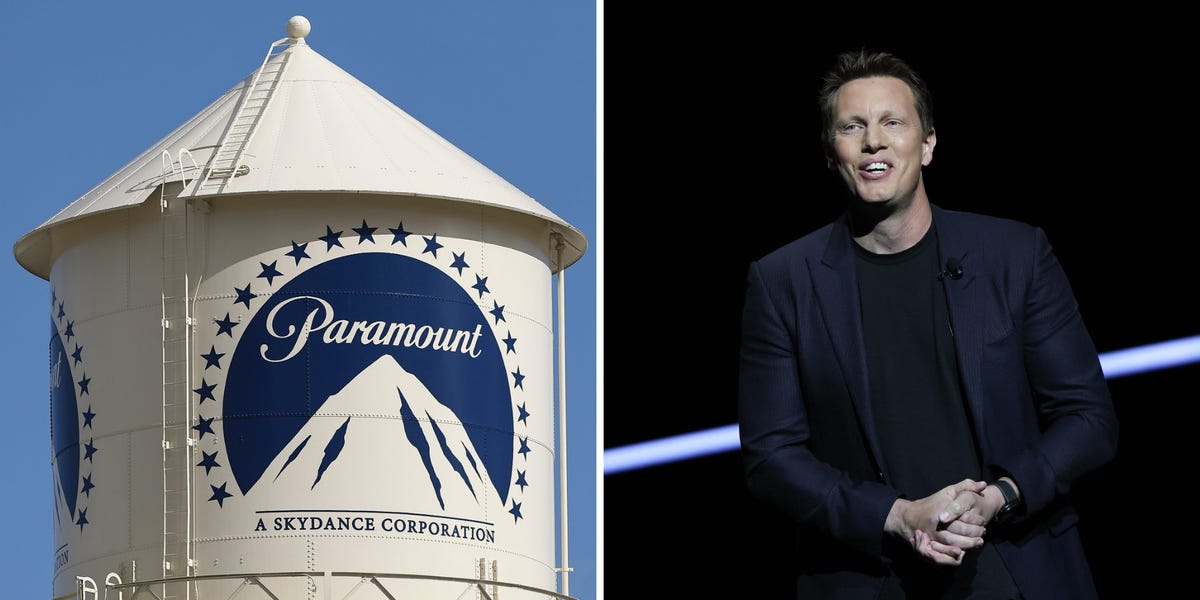
Paramount+ is exploring adding podcasts to its streaming platform, Business Insider reported, a move that would extend the service beyond video and into audio territory. The initiative follows the recent launch of a short-form vertical video feed. Both additions are part of a technology-focused strategy pushed by David Ellison, head of Skydance Media, who is merging his studio with Paramount Global (PARA). Ellison has signaled that the combined entity will invest in product innovation, aiming to reposition the streamer as a tech-forward platform rather than a passive content library. The merger, expected to close later this year, will create a combined entity with a mandate to accelerate product innovation, making the podcast exploration a potential early test case for the new management's approach.
Paramount+ Podcast Exploration Follows Netflix's Audio Playbook
Netflix has already integrated audio experiences and podcast-style shows, betting that on-demand listening can keep subscribers engaged during commutes or background hours. Paramount+ now appears to be following that playbook. The economics of podcasts are compelling: licensing or producing audio content costs a fraction of a scripted series, and production timelines are shorter. For a streaming service that must justify its price point without endless spending, a podcast library could become a low-cost retention tool.
Paramount Global already controls a deep catalog of intellectual property through CBS, Nickelodeon, and Paramount Pictures. Converting that IP into talk-show formats, companion podcasts, or audio dramas would not require the same capital commitment as a new season of a flagship show. The strategic question is whether audio content can move the needle on churn, the persistent challenge for subscription video-on-demand services.
Short-Form Video Precedent Sets the Stage for Audio
The podcast exploration arrives shortly after Paramount+ introduced a short-form vertical video feed, a format popularized by TikTok and YouTube Shorts. That feature was designed to capture younger audiences and increase the number of daily sessions. Early data on the video feed is not publicly available. The feature's existence signals a willingness to experiment with non-traditional content formats.
Ellison's emphasis on technology is a deliberate bet. Traditional media companies have struggled to make their streaming apps feel like modern software platforms. Adding podcasts and vertical video is part of an effort to increase daily active users and, by extension, ad inventory and subscription stickiness. If the user interface integrates these formats cleanly, the platform could begin to resemble a content super-app rather than a single-function video streamer.
Churn Hedge or Interface Risk? The Engagement Calculus
The central question for traders is whether audio content moves the needle on churn. Subscription video-on-demand services face a constant battle to keep users engaged between marquee releases. A podcast tab could fill those gaps, giving subscribers a reason to open the app even when they are not watching a series. Netflix has leaned on engagement metrics to justify price increases; Paramount+ needs similar levers to improve its unit economics.
The risk is that bolting on an audio experience may complicate the user interface. Spotify invested billions in podcasting, and the feature set sometimes muddied the music-focused identity. Paramount+ is primarily a video brand, so blending audio into the same app requires careful design to avoid confusing subscribers. Execution risk matters: a clunky implementation could increase frustration and, paradoxically, accelerate cancellations.
The timeline for a podcast feature has not been disclosed. The next concrete step would likely be a pilot or a product demonstration at an investor event. For market participants, the key metric will not be the launch itself but whether subsequent quarterly subscriber reports show improved engagement or lower churn. If podcasts become a sticky daily habit, the strategic payoff would justify the minimal upfront cost. If they remain an underused tab, the move will be nothing more than a feature check-box in a crowded streaming landscape.
For broader context on streaming sector dynamics, see our stock market analysis.