Paradise Lost, Government Gained
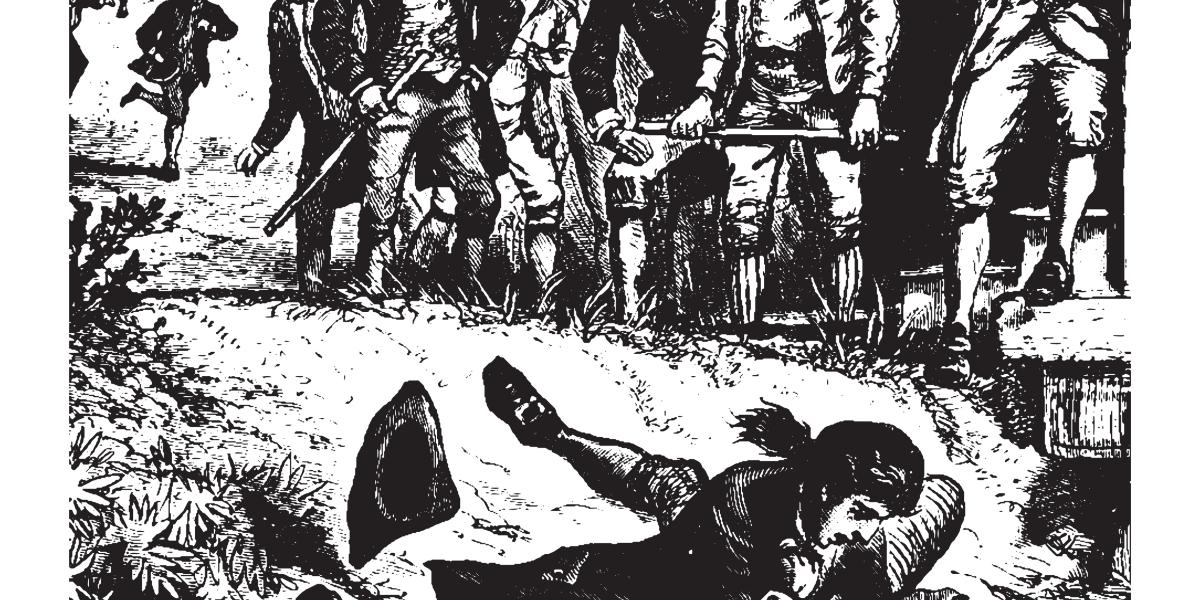
John Adams predicted celebrations, but the revolutionary spirit faded. Shays' Rebellion, wartime speculation, and the push for a stronger constitution set the stage for the government growth that Paine feared.
John Adams wrote to his wife Abigail that July 2, 1776, ought to be celebrated with pomp and parade. Consumer spending on Fourth of July fireworks hit roughly $2.5 billion this year. Many people today do not know or care why the date matters. The signers of the Declaration knew exactly what they risked. They affirmed the individual over government as the hill they would die on.
Thomas Paine called government a necessary evil. The question was how to implement individualist principles inside a system that placed the individual under the state. The Articles of Confederation, adopted in November 1777, were the first answer. They were weak by design. A faction wanted something more energetic – a government that could act without waiting for consensus. They did not have to wait long for a catalyst.
In late 1786, farmers in western Massachusetts shut down the courts to protest onerous taxes. Newspapers called them destitute. That was propaganda. For every rebel who went to court as a debtor, another went as a creditor. The real grievance was not debt itself. The new state government was trying to enrich the few at the expense of the many, as historian Leonard Richards wrote in his study of Shays's Rebellion.
The most glaring abuse was Massachusetts' decision to consolidate its war notes at face value. When issued, the notes traded at about one-fourth par and later declined to roughly one-fortieth face value. Soldiers were paid in these notes and sold them at about one-tenth par out of desperation. Boston speculators bought eighty percent of the notes. Forty percent of them were owned by just 35 men. Every one of those 35 men had served in the state house during the 1780s or had a close relative who did.
Legislators called the speculators worthy patriots who had come to the state's aid. These men did not buy the notes from the government. They bought them from farmers and soldiers at depreciated prices. Those same farmers and soldiers were now being taxed to redeem the notes at full value. The speculators, most of whom had stayed home during the war, would benefit at the expense of veterans.
Governor James Bowdoin called out the militia to suppress the rebellion. When that failed, he turned to Congress for special troops under the invented pretext of an Indian war in the Ohio Valley. Baron von Steuben, the Prussian drillmaster who trained Washington's troops, observed that Massachusetts had 92,000 militiamen on its rolls. Members were men of property with deep roots in the community. With such a force available, why would the state need outside support? His answer: only a government at war with its people.
General Benjamin Lincoln, who accepted the British surrender at Yorktown, crushed the rebellion in early 1787. The Federalist faction characterized the rebels as levelers wanting to abolish all debts and redistribute property, as historian Murray Rothbard noted. Fear of future rebellions drew state delegates to the Federal Convention in Philadelphia on May 25, 1787.
Thomas Jefferson, then minister to France, went the other direction. He wrote to Colonel Edward Carrington on January 16, 1787, that the good sense of the people would always be found to be the best army. They may stray for a moment, he said. They will correct themselves. The people are the only censors of their governors. He went further: were it left to him to decide whether we should have a government without newspapers, or newspapers without a government, he would not hesitate a moment to prefer the latter. If the people turn their backs on public affairs, the governors shall all become wolves.
Jefferson pushed Madison to add a bill of rights. What the people are entitled to against every government on earth, he wrote on December 20, 1787, and what no just government should refuse, or rest on inference. Madison complied.
The Bill of Rights did not hold. By early 1917, the Constitution had taken a beating. Representative Oscar Callaway of Texas reported in the Congressional Record that the J. P. Morgan interests, the steel, shipbuilding, and powder interests had purchased control of twenty-five major newspapers to push American entry into World War I. After Congress voted for war on April 6, the draft forced men overseas to kill and die. Involuntary servitude in the military was not unconstitutional, according to the state. Jefferson's opinion of the people had been replaced by experts who would shed no blood for their decisions.
War became a major engine of state growth. Overseas wars became a perpetual backdrop to American life, all in violation of the Constitution.
On January 6, 1789, Paine wrote from London to his friend Kitty Nicholson Few, expressing homesickness for his adopted country and worry about its future. A thousand years hence, perhaps in less, America may be what England now is, he wrote. The innocence of her character that won the hearts of all nations in her favor may sound like a romance, and her inimitable virtue as if it had never been.
Drafted by a large language model from the source reporting linked above, then screened by automated publishing checks. It is not read by a journalist before publication. Some articles cite our Alpha Score. Verify prices and figures against the original source. Educational coverage, not personalized advice.