Panda Express is attempting a high-stakes re-entry into the Indian market, committing to a ₹400-crore investment to establish 100 outlets by 2027. This move marks the American-Chinese chain's second attempt to penetrate the region, following a failed 2016 partnership with JSM Corporation. The expansion will be managed by Trimex Foods, an operator currently overseeing brands like Chili’s and PAUL, which recently secured $40 million in private equity funding from Siguler Guff. For investors tracking the broader stock market analysis, this rollout represents a test of whether a global fast-casual model can displace the deeply entrenched Indo-Chinese segment that currently dominates the local landscape.
The Competitive Positioning Challenge
The fundamental hurdle for Panda Express is not a lack of market size, but a misalignment of consumer expectations. India’s organized Asian cuisine segment is valued at approximately $12–15 billion, yet nearly 80 percent of that volume is captured by 'Desi Chinese' formats. These outlets rely on aggressive spice profiles, dark gravies, and value-based pricing, typically ranging from ₹150 to ₹400 per person. In contrast, Panda Express is expected to position itself as a premium mall-dining or weekend-consumption brand, likely pushing price points well above the local neighborhood standard.
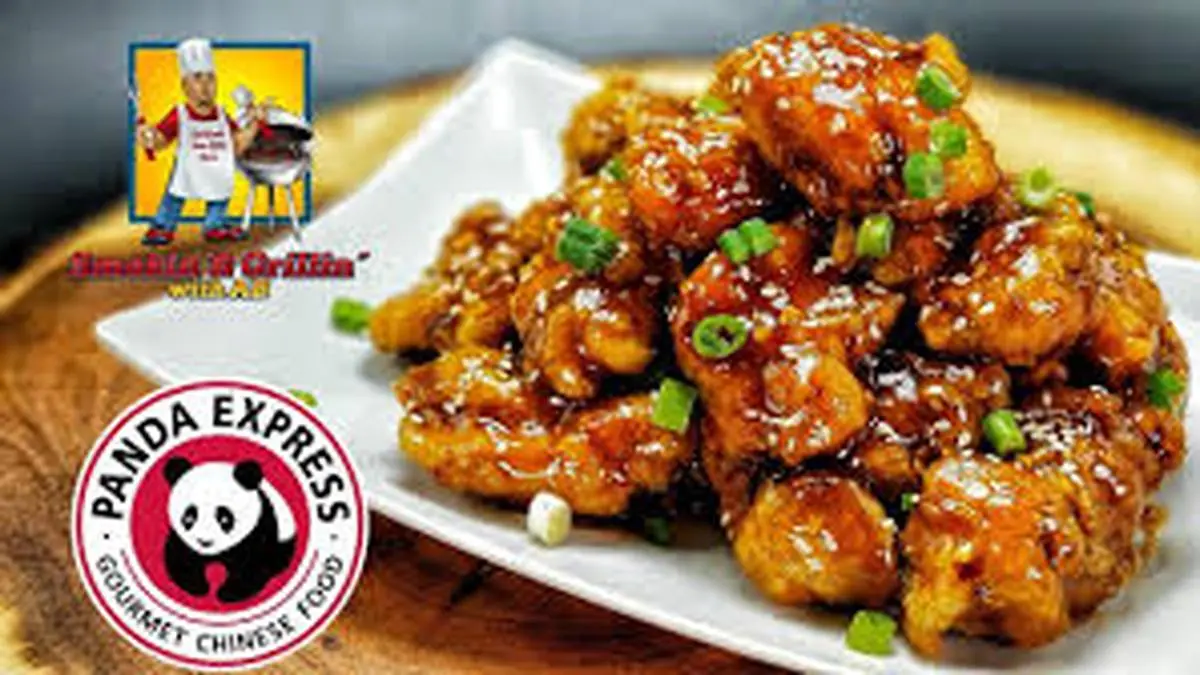
While urban Indian diners are increasingly gravitating toward sushi, ramen, and Korean cuisine, these categories succeed by offering novelty and authenticity. Panda Express faces a different dynamic: it is attempting to introduce a version of Chinese food that is already 'localized' in the minds of the consumer, but in a direction that contradicts the prevailing preference for heat over sweetness. The signature Orange Chicken, which accounts for nearly one-third of the company's global sales, features a citrus-glaze profile that prioritizes crunch and sugar over the fiery Schezwan-led flavor profiles that define the Indian palate.
Operational Discipline and Margin Pressures
The success of this expansion hinges on the operational capabilities of Trimex Foods. The Indian restaurant sector has recently emerged from a period of intense volatility, where an estimated $2.5–3 billion in venture capital was written down or trapped in failed cloud kitchens and delivery-led models. As food-delivery aggregator commissions have surged from 15 percent to over 30 percent, store-level profitability has become the primary metric for survival. Trimex has distinguished itself by scaling through internal accruals rather than venture capital, a measured approach that contrasts with the aggressive, cash-burning strategies that defined the previous cycle.
For Panda Express, maintaining consistency is the core operational risk. The brand relies on standardized sauces, specific battering systems, and precise wok-based cooking techniques. In an environment where fuel costs, cooking oil prices, and rental overheads remain elevated, the ability to maintain these standards while managing the margin compression inherent in the Indian food-service market will determine the viability of the 100-outlet target. The company is entering at a time when investors are prioritizing unit-level economics over rapid, delivery-heavy expansion.
Market Read-Through and Sector Context
This expansion is a litmus test for the 'third lane' of Asian dining in India. The market is currently bifurcated between low-cost, high-spice Indo-Chinese comfort food and high-end, authentic Japanese or Korean dining. Panda Express is attempting to occupy the middle ground, betting that the next generation of urban consumers will embrace an American-Chinese fast-casual format.
If the rollout succeeds, it could signal a shift in how international chains approach the Indian consumer, moving away from purely localized menus toward a 'global-appeal' strategy that relies on brand equity rather than menu adaptation. However, if the brand fails to gain traction against the familiarity of local Indo-Chinese staples, it may reinforce the narrative that the Indian market remains uniquely resistant to standardized global fast-casual concepts that do not cater to the local preference for heat and gravy. For those monitoring the FAST stock page or the WELL stock page, the performance of this venture will provide a proxy for the health of the premium casual dining segment in emerging markets, where infrastructure and supply chain control remain the most significant barriers to entry.