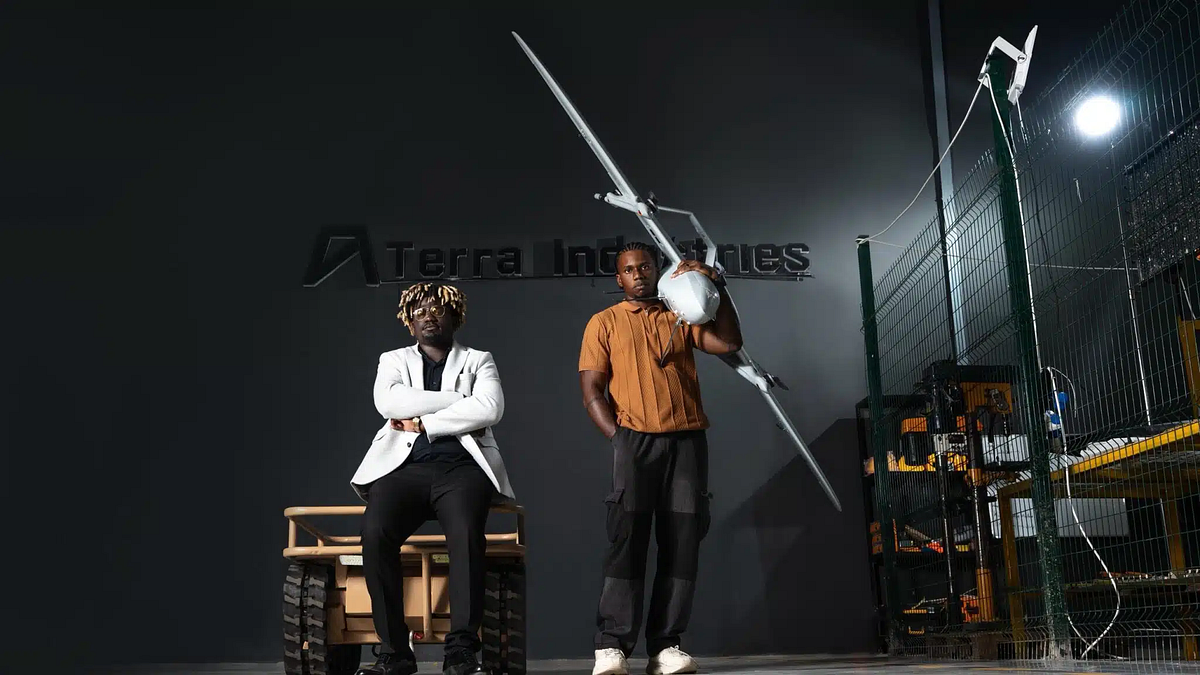
Terra Industries raised $11.75 million in venture capital on January 12, 2025, through a round led by 8VC, a U.S. firm founded by Palantir co-founder Joe Lonsdale. The company, founded in 2024, describes itself as Afrika's first homegrown defence technology company, producing autonomous drones and sentry towers built by African engineers.
The financing followed Palantir board director Alex Moore joining Terra's board last year. Palantir Technologies, a U.S. defense contractor with longstanding CIA and Department of Defence contracts, holds no direct equity stake, analysts note. 8VC's Palantir ties give the U.S. firm indirect influence over Nigeria's emerging security infrastructure.
CEO Nathan Nwachukwu said the mission is "to give Africa the technological edge to protect its industrial future and defeat terrorism." CTO Maxwell Maduka emphasised that the intellectual property for their ArtemisOS platform "stays on the continent." The financial equity leaves the continent.
Palantir's track record adds context. Founded with CIA seed funding in 2003, Palantir provides AI targeting software used by the Israeli military against Palestinians, compressing targeting decisions from hours to seconds, according to reports. It also supplies data surveillance infrastructure to U.S. Immigration and Customs Enforcement under a contract that began in 2011. These deployments position Palantir as a political actor, not a neutral technology provider.
AFRICOM, the U.S. military command for Africa, in February 2026 launched CURTAIN CALL, an initiative to develop low-cost aerial drones. Lt. Col. Jared Bindl, chief of Science, Tech and Innovation at AFRICOM, said the program responds to "today's rapidly evolving threat landscape" and aims for "agile and affordable solutions to protect our forces on the continent." Terra builds autonomous drone systems. AFRICOM wants low-cost drone infrastructure. The overlap raises a question: Is Terra building for Nigeria, or becoming a node in a U.S. military ecosystem?
The December 2025 statement by U.S. Secretary of State Marco Rubio on "anti-Christian violence" in Nigeria, framing Fulani militias and Islamic actors as threats, historically precedes deeper U.S. military engagement, observers note. That narrative, combined with capital flow from a Palantir-linked VC into Nigeria's defence sector, suggests a pattern where U.S. influence operates through technology investment and strategic framing acting in concert.
Structural adjustment programs of the 1980s convinced African states that only private capital could solve their infrastructure gaps. The same logic now applies to defence. Nigeria cannot finance its own security innovation. It turns to foreign investors. Terra may be engineered by Africans, the financial architecture runs on Palantir's terms.
Palantir's Alpha Score sits at 57/100, reflecting moderate market positioning. The company's valuation and contract pipeline remain tied to U.S. and allied military spending. Terra's founders and engineers may be genuinely committed to African security. The structural reality remains: foreign ownership of defence infrastructure constrains sovereignty. The question for investors and policymakers is whether Terra represents African interests or serves as a conduit for external strategic priorities.