The Case for Palantir Beyond the Selloff
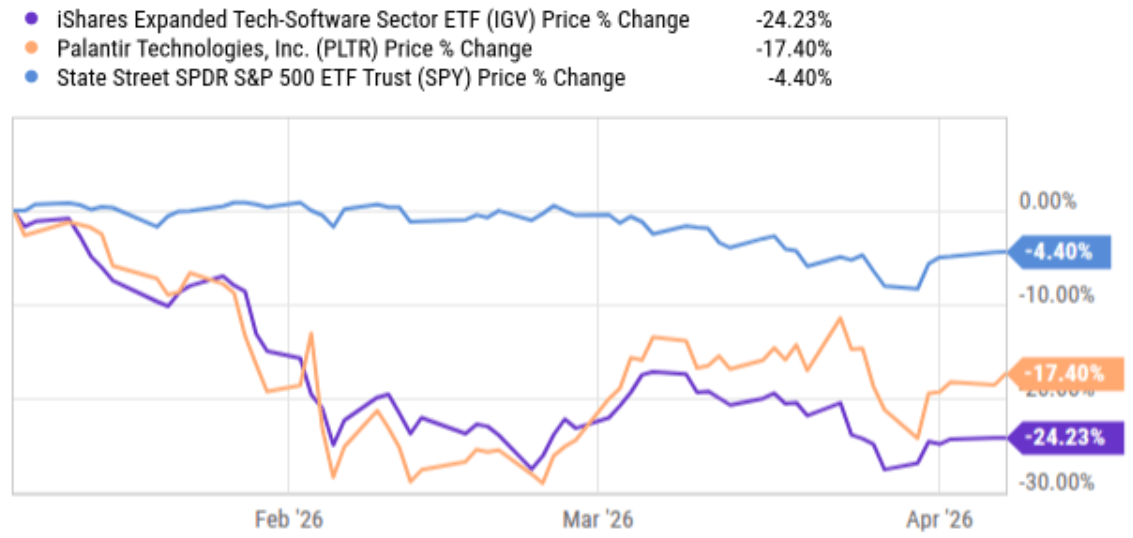
Palantir Technologies (NASDAQ: PLTR) has spent the better part of the last month navigating a volatile landscape, with recent equity selloffs triggering questions regarding the firm’s long-term sustainability in a crowded artificial intelligence market. However, the latest revelations from the company’s DevCon5 event suggest that the market’s bearish sentiment may be fundamentally misreading Palantir’s strategic trajectory. Rather than being disrupted by the rapid proliferation of large language models (LLMs) and generative AI, Palantir is positioning itself as the central architect of the 'agentic AI' transition.
Orchestrator: The New Engine of Enterprise Autonomy
The centerpiece of the company's recent announcements is the unveiling of 'Orchestrator,' a platform designed to move beyond passive AI chatbots and into the realm of true enterprise autonomy. While much of the industry remains fixated on conversational interfaces, Palantir is shifting the focus toward actionable, multi-step workflows that can navigate complex enterprise environments without constant human intervention.
For institutional investors and traders, the distinction is critical. Passive AI tools are often viewed as commoditized utilities; agentic AI, conversely, represents a shift toward high-margin, mission-critical infrastructure. By enabling AI agents to execute complex, multi-stage tasks across siloed enterprise databases, Palantir is effectively embedding itself deeper into the operational 'nervous system' of its clients. This is not merely an incremental feature update; it is an attempt to define the standard for how global corporations will interact with their data in the coming decade.
Market Implications: Why the Selloff May Be Overdone
Recent price action in PLTR has been characterized by sharp pullbacks, largely driven by broader concerns regarding valuation multiples and the sustainability of high-growth tech stocks in a high-interest-rate environment. However, the DevCon5 disclosures provide a tangible pillar for growth that the market may be currently discounting.
Historically, Palantir has faced skepticism regarding its ability to scale its 'Foundry' and 'Gotham' platforms across the commercial sector. The introduction of Orchestrator suggests that the company is successfully bridging the gap between bespoke government contracting and scalable, commercial-grade AI deployment. For traders, this creates a potential divergence between short-term technical volatility and long-term fundamental expansion. If the company can demonstrate that these new tools lead to higher retention rates and increased Average Revenue Per User (ARPU), the current consolidation phase may be reframed as an accumulation zone for long-term holders.
The Road Ahead: What to Watch
As the market digests the implications of DevCon5, institutional focus will likely shift to the company’s upcoming quarterly guidance. The primary metric to watch is not just revenue growth, but the adoption rate of the new agentic toolset among non-government clients.
Furthermore, investors should monitor how competitors respond to this shift. If Palantir can successfully defend its moat through proprietary integration and superior security protocols—the hallmarks of its historical success—the company may solidify its status as a foundational player in the AI ecosystem rather than another speculative growth play. The narrative is no longer about whether Palantir can survive the AI disruption; it is about whether they are the ones driving it.