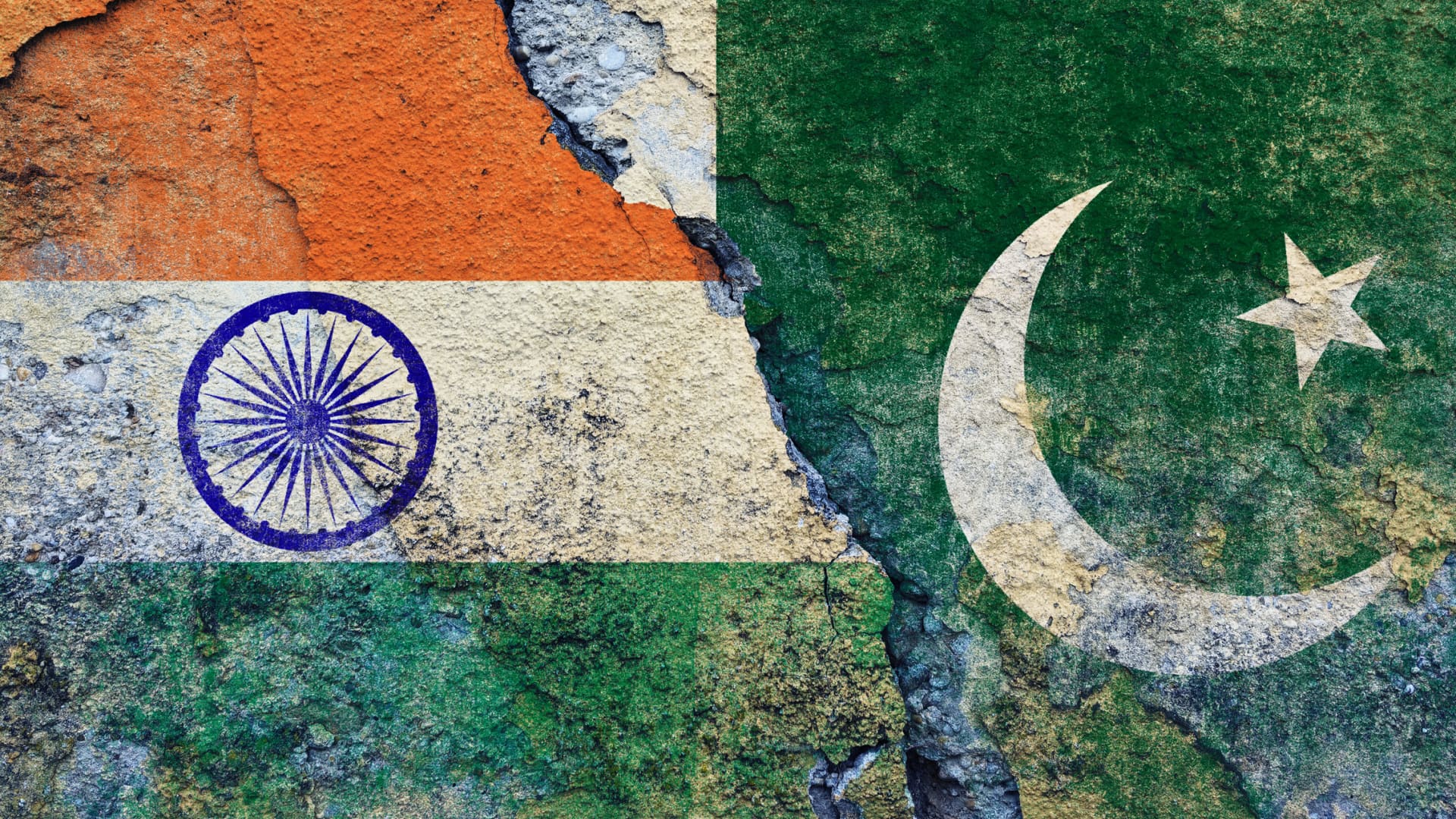
Pakistan's defense minister warns water security could trigger war as India pushes to terminate the Indus Water Treaty. The dispute adds geopolitical risk to Indian equities.
Pakistan's defense minister said his country could go to war with India if water security is threatened. Khawaja Muhammad Asif made the warning in a local media interview Friday. He added that current developments do not warrant military action.
The remarks come as India pushes to terminate the 66-year-old Indus Water Treaty, suspended since last year's military conflict. India's foreign ministry said June 5 the treaty would stay suspended until Pakistan stops cross-border terrorism. Days later, water resource minister C.R. Patil hardened the position, saying New Delhi was working to ensure "the flow of Indus water to Pakistan will stop" and that Pakistan would not get a "single drop of water" in coming years.
India's ability to immediately cut flows remains technically limited, said Reema Bhattacharya, head of Asia research at Verisk Maplecroft, in an email to CNBC. The rhetoric is consequential because it suggests water could become a tool of coercion, she said.
The Indus Water Treaty governs use of the Indus basin rivers shared by India, Pakistan, Afghanistan, and China. Under the agreement, India has unrestricted access to the eastern rivers while Pakistan receives rights to the western rivers.
The stakes are highest for Pakistan. Nine in every 10 Pakistanis live within the Indus Basin, according to the Center for Strategic and International Studies. Its rivers irrigate more than 90% of the country's crops and generate most of its hydroelectric power. All 21 of Pakistan's hydroelectric plants sit within the basin.
"These aren't marginal dependencies – they are load-bearing pillars of a fragile economy already in IMF bailout territory," said Arpit Chaturvedi, South Asia advisor at Teneo. He said India does not even need to cut all flows to inflict damage. Manipulating the timing of releases from dams on the western rivers could flood Pakistani farmland during planting seasons, while withholding water during critical irrigation windows could devastate harvests. "Pakistan has already written to India twice in 2025 and once in May 2026 about abnormal, abrupt flow variations on the Chenab," Chaturvedi added. The window to settle the issue through dialogue and diplomacy is reducing, he said.
For Indian equities, the direct near-term risk is low. The military status quo has not changed, and neither country appears ready for another conflict. The water weaponization rhetoric injects a tail risk that markets underweight. If India takes concrete steps to reduce flows or alter release schedules, the reaction in Pakistani water-dependent sectors would be immediate. The broader Indian market would likely see a valuation reset on the sudden reappearance of a geopolitical risk premium that had been written off. The Nifty 50 has rallied on strong domestic flows and corporate earnings. The index does not currently price in an escalation along the western border. A sustained diplomatic breakdown would hit sectors tied to agriculture and hydropower on both sides.
No hearing on the treaty is scheduled. The next concrete data point is Pakistan's IMF review, due in October, which could be complicated by any water-related instability.
Prepared with AlphaScala editorial tooling from the source reporting linked above. Indexable analysis may include a cited Alpha Score value. Publishing checks screen each story before release. Educational coverage, not personalized advice.