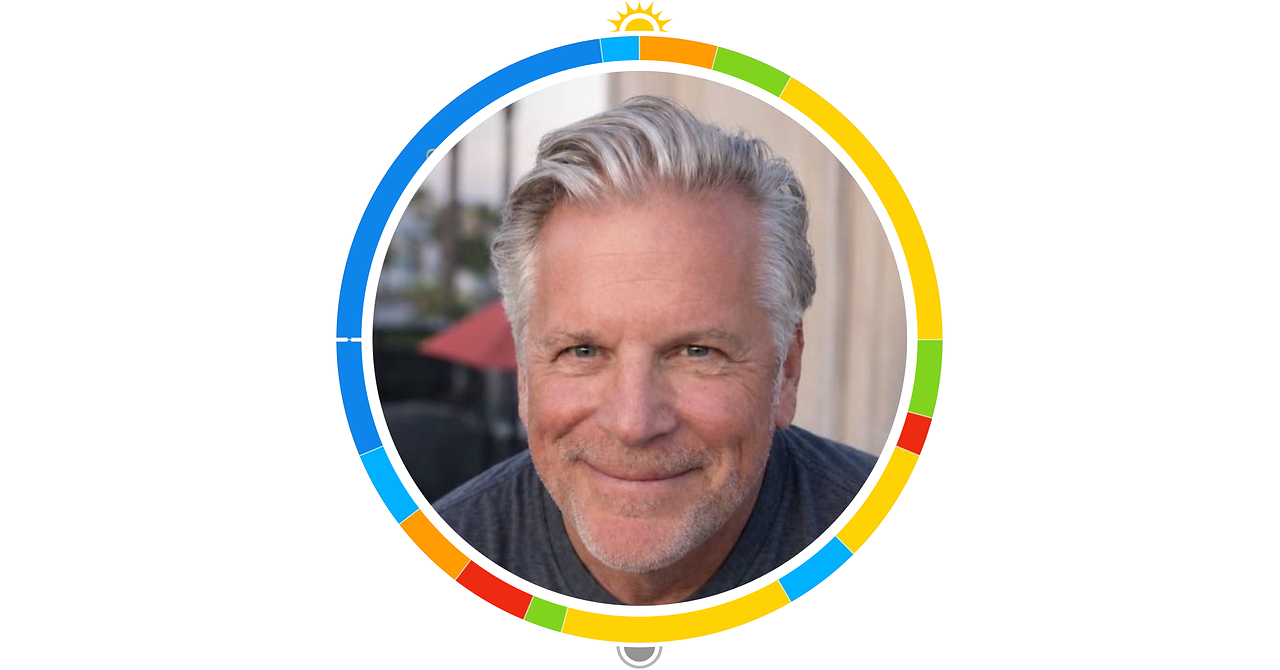
Owaves, the creator of BodyClock AI, has named Brian Niznik to its advisory board. Niznik brings more than 30 years of intellectual property strategy, business development, and technology licensing experience from senior roles at Qualcomm, ResMed, SAIC, and General Dynamics. The appointment signals a shift from product-market fit to defensible commercial structure for the circadian wellness platform.
Niznik will focus on IP development, partnership structuring, and long-term value creation as Owaves accelerates the institutional rollout of BodyClock AI. The platform has logged over 620 million activities across 1.3 million organic downloads, generating what the company describes as one of the world's richest behavioral-rhythm datasets. That dataset is now the central asset Niznik is tasked with protecting and monetizing.
Why the Advisory Board Appointment Matters Now
The Shift from User Growth to IP Governance
Owaves has already achieved consumer traction – a #1 Health & Fitness ranking on iPad in more than 135 countries – and clinical validation through partnerships with UC San Diego's Center for Circadian Biology and Medicine and Scripps Research Digital Trials Center. The next phase requires converting that scientific and user base into a moat.
Niznik's role is to structure that moat. At Qualcomm, he led strategic alliances and licensing engagements spanning major pharmaceutical companies, clinical development organizations, and medical device manufacturers. He also served as General Manager of an internal business unit. At ResMed, he served as Head of IP Strategy and Licensing. That combination – licensing in regulated health markets and internal business unit management – maps directly onto what Owaves needs: a framework for patent acquisition, partnership governance, and revenue structuring around proprietary data.
The Mechanism: Why Behavioral Data Requires a Different IP Strategy
Most healthtech companies protect a device or a drug formulation. Owaves protects a behavioral dataset – the sequence and timing of user activities logged against circadian biology. That is a different class of asset.
Practical rule: A behavioral dataset's value is proportional to its longitudinal depth and its exclusivity. Niznik's job is to ensure that the 620 million activities cannot be replicated by a competitor with a similar app and a marketing budget.
Patent protection for a method of use – aligning daily schedules to circadian rhythms – is one layer. Trade secret protection for the proprietary algorithms that translate raw activity data into personalized guidance is another. Licensing structures that allow academic partners to use the data for research while Owaves retains commercial rights are a third. Niznik's experience at ResMed, where IP strategy directly supported a medical device company's competitive position, is directly applicable.
What Niznik Brings: A Three-Decade Track Record in Healthtech Commercialization
The Qualcomm and ResMed Years
At Qualcomm, Niznik led strategic alliances and licensing engagements across the pharmaceutical and medical device supply chain. He also served as General Manager of an internal business unit, giving him operational experience beyond pure IP law. At ResMed, he spent more than five years, most recently as Head of IP Strategy and Licensing, where he would have overseen patent portfolios covering sleep apnea devices, cloud-connected health platforms, and digital therapeutics.
He also served as founding president of Quake Global, a satellite communications technology company, and has advised multiple health and technology ventures through his consulting practice, JBNiz Group, which focuses on business development and licensing in medtech and healthtech. He holds an MS in Industrial Engineering from Texas A&M University.
The Specific Fit for Owaves
Owaves founder and CEO Royan Kamyar, M.D., MBA, framed the appointment around the dataset's value: "Brian understands how to build durable value around proprietary data and technology in highly competitive health markets. As we grow BodyClock AI and expand our partnerships across healthcare, academia, and consumer platforms, his counsel on IP strategy and commercial structure will be directly applicable."
Niznik himself emphasized the scientific foundation: "Owaves intersects rigorous behavioral science with practical technology, transforming how people structure their lives by honoring circadian biology. Their platform rewires how individuals think about time and routine, creating measurable improvements in productivity and wellness."
The Circadian Wellness Market: Scientific Momentum Meets Commercial Pressure
Why the Category Is Attracting Attention
Circadian biology has moved from academic sleep research into mainstream health optimization. The mechanism is well-understood: the body's internal clock regulates sleep-wake cycles, hormone release, metabolism, and cognitive performance. Disruption – from shift work, jet lag, or poor daily structure – correlates with higher risks of metabolic disease, mood disorders, and reduced productivity.
Owaves competes in a category that includes wearable-based sleep trackers (Fitbit, Apple Watch), meditation apps (Calm, Headspace), and productivity planners. Its differentiation is the behavioral dataset: 620 million logged activities create a feedback loop that improves personalization over time. A competitor starting from zero would need years of user engagement to match that data depth.
The Risk: Execution on Partnership Structure
The advisory board appointment does not change the product or the user base. It changes the company's ability to negotiate partnerships that preserve long-term value. The risk is that Owaves enters licensing or research agreements that give away too much data access or IP control before Niznik's governance framework is in place.
What Confirms or Weakens the Thesis
Confirmation Signals
- Patent filings: A public patent application from Owaves covering a method for circadian-based daily planning would confirm that Niznik's IP strategy is active.
- Licensing deal: A commercial partnership with a health system, employer wellness program, or pharmaceutical company that references Owaves' proprietary dataset would validate the monetization path.
- Clinical publication: A peer-reviewed study using Owaves data from the UC San Diego or Scripps partnerships would strengthen the scientific credibility that supports IP claims.
Weakening Signals
- No IP activity within 12 months: If no patents are filed and no licensing structure is announced, the advisory board appointment was a signal without substance.
- Data-sharing agreement without governance: A partnership that grants broad data access without clear commercial terms would suggest the IP strategy is not yet operational.
- Competitor dataset parity: If a well-funded competitor (Apple, Google, a digital health startup) launches a similar circadian planning tool with comparable user engagement, the dataset moat narrows.
The Next Decision Point for Owaves
The company has three parallel tracks: consumer growth (maintaining the app store ranking), clinical validation (deepening the UC San Diego and Scripps relationships), and commercial structure (Niznik's mandate). The next concrete marker is a partnership announcement that includes specific IP or licensing terms – not just a press release about joining an advisory board.
For readers tracking the digital health space, the appointment is a signal that Owaves is moving from a science-backed consumer app toward a platform company with defensible assets. The execution risk is in the partnership structuring, not the science. Niznik's track record at Qualcomm and ResMed suggests he understands the mechanics of that transition. Whether Owaves can execute on it will determine whether the 620 million activities become a revenue-generating asset or a footnote in the circadian wellness category's history.
For broader context on how healthtech companies build around proprietary data, see AlphaScala's stock market analysis coverage of the sector. The QCOM and GD stock pages (QCOM, GD) offer reference points for the commercial environments Niznik navigated in his prior roles.