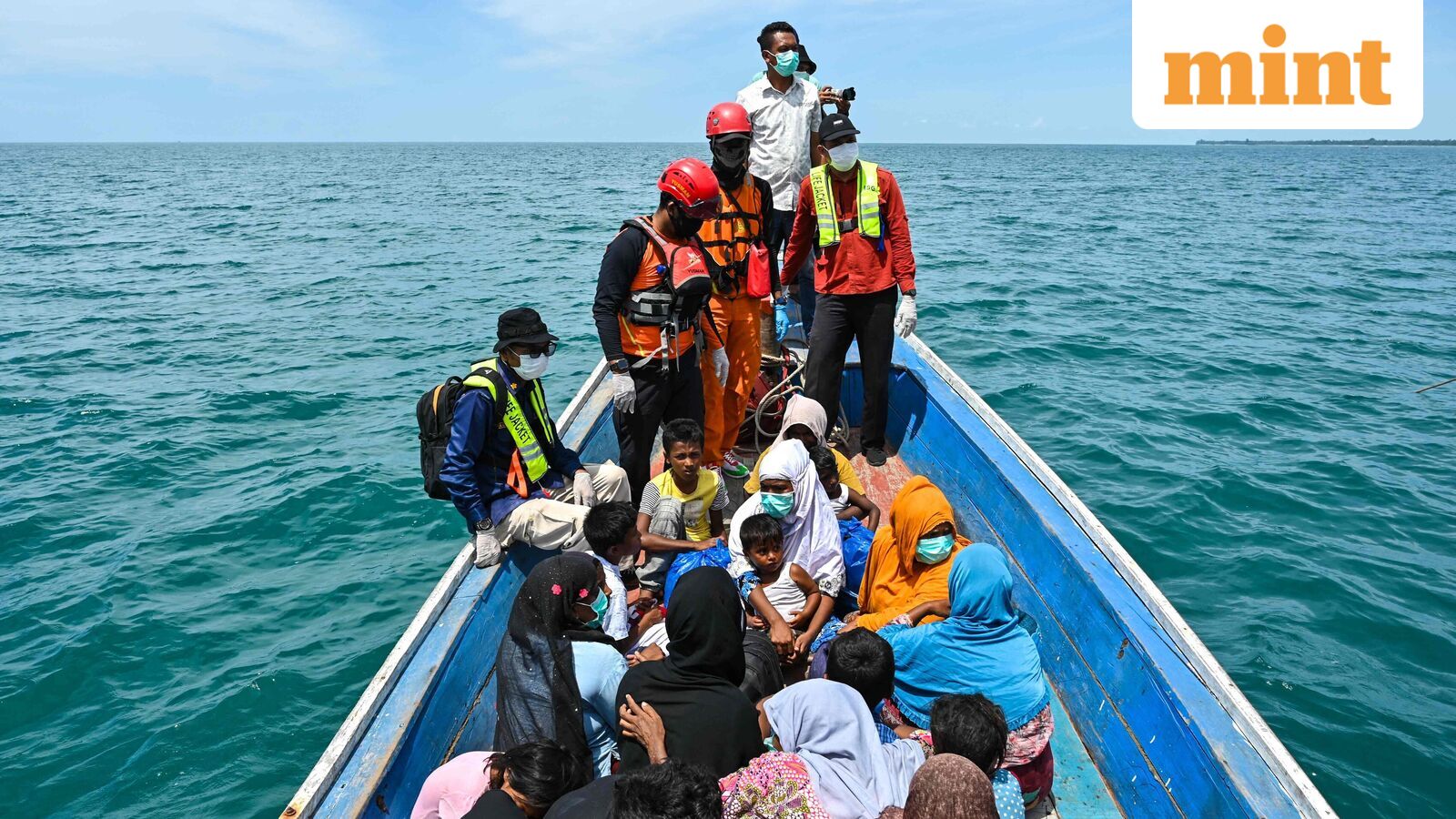
Two boats carrying Rohingya refugees are believed to have capsized in the Bay of Bengal, leaving more than 500 feared dead. The UN says the tragedy shows a lack of solutions for the persecuted minority.
More than 500 people are feared dead after two boats carrying Rohingya refugees capsized in the Bay of Bengal, the International Organization for Migration and the United Nations High Commissioner for Refugees said Thursday.
The boats left Myanmar's western state of Rakhine in late June, the agencies said in a joint statement. One vessel, carrying about 250 people, lost contact shortly after departure. A second boat, with 280 people on board, is believed to have sunk off Myanmar's Ayeyarwady coast on July 8.
"While the incidents and casualty figures have yet to be officially confirmed, UNHCR and IOM are gravely concerned by the potentially devastating loss of life," the statement read.
The Rohingya, a predominantly Muslim minority, have faced persecution in Myanmar for decades. About 1.2 million stateless Rohingya remain in overcrowded refugee camps in Bangladesh after fleeing violence in 2017, which the United States declared a genocide. The military that carried out the killings remains in power in Myanmar. Rohingya still inside the country face severe restrictions, and many are confined to internment camps.
Recent torrential rain and flooding across the region made the sea journey especially risky, the agencies said. Rohingya typically avoid such boat trips during the monsoon season.
Steep cuts to foreign aid by the U.S. and other countries have led to ration cuts in Bangladesh's camps. Fighting between Myanmar's ruling military and an ethnic armed group in Rakhine has also driven more Rohingya to attempt the dangerous crossing to Malaysia on rickety boats. Thousands have died in the process, including babies, children and pregnant women. Local maritime authorities have frequently abandoned Rohingya at sea, often ignoring reports of boats in distress.
More than 6,500 Rohingya fled by boat in 2025, and nearly 900 were reported dead or missing, the UNHCR said. That year had the highest mortality rate of any major sea route for refugees and migrants globally.
The IOM and UNHCR called on the international community to support Rohingya trapped in Bangladesh's camps. "Stronger regional and international efforts are needed to prevent further loss of life along one of the world's deadliest maritime routes, including through enhanced search and rescue efforts, access to asylum and protection, and actions against smuggling and trafficking networks," the agencies said.
Drafted by a large language model from the source reporting linked above, then screened by automated publishing checks. It is not read by a journalist before publication. Some articles cite our Alpha Score. Verify prices and figures against the original source. Educational coverage, not personalized advice.