Quebec's pre-election fiscal update shows how quickly fiscal room can vanish, with a tariff-driven recession potentially erasing almost $11 billion in revenue over five years.
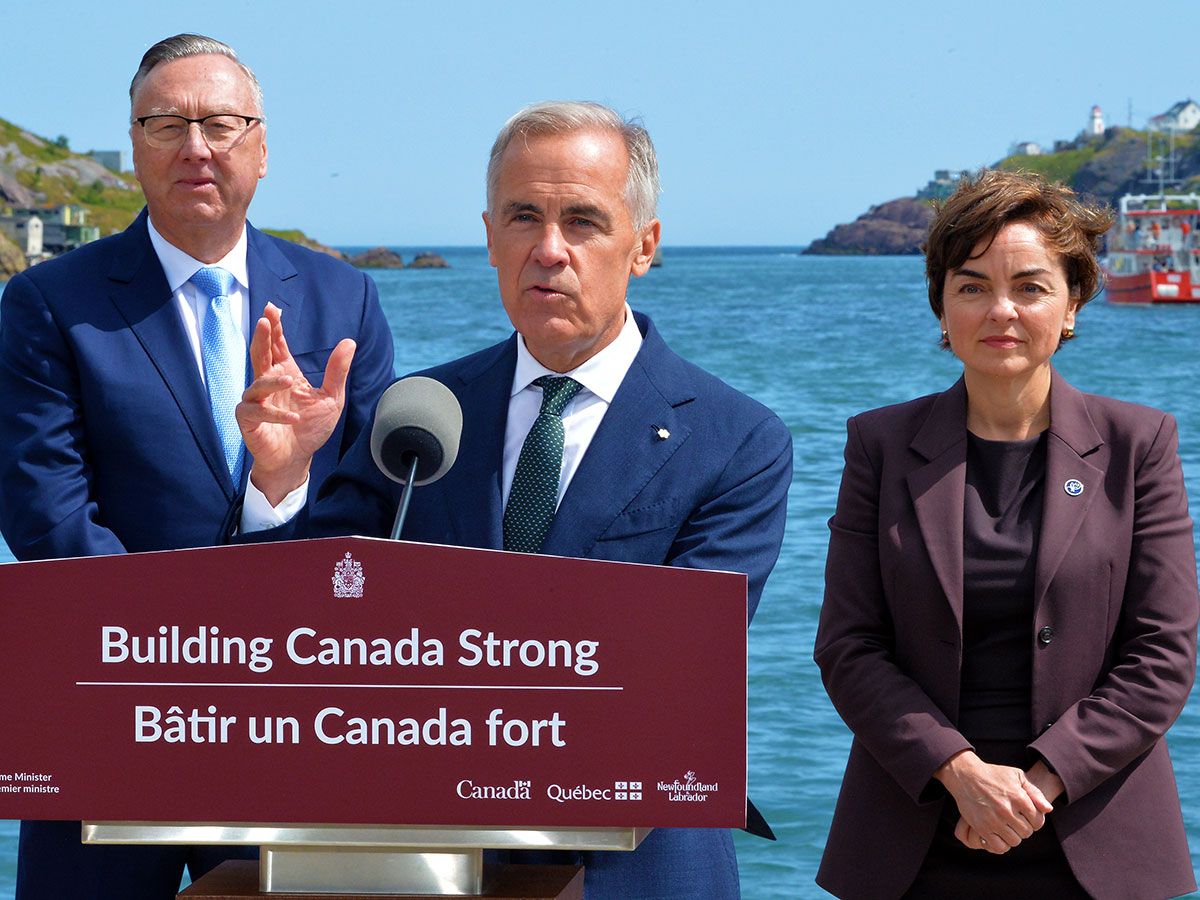
The federal government's agreement this week to provide up to $10 billion in financial support for the Gull Island hydroelectric project is more than a single infrastructure deal. It offers a glimpse of how the Carney government's broader economic agenda will have to be financed, according to a Financial Post column.
For decades, Ottawa has relied on a familiar model: it puts money on the table and uses that funding to leverage additional investment and action from provinces. That model depends on provinces having the fiscal capacity to come along. Provincial finances are becoming increasingly constrained.
The Carney government is pursuing an unusually ambitious agenda, with plans to mobilize hundreds of billions of dollars in investment in infrastructure, energy, housing, defence and other areas. The combination of ambitious federal goals and tightening provincial budgets could force a significant change in the traditional federal-provincial bargain, the column said. Ottawa may have to assume a larger share of the cost and financial risk of Canada's growth agenda rather than relying as heavily on provincial governments to match its ambitions.
There are signs that shift is already underway. In Newfoundland and Labrador, Ottawa has committed up to $10 billion tied to the redevelopment and expansion of Churchill Falls, the Gull Island hydroelectric project and associated transmission infrastructure. British Columbia's recent agreement with Ottawa also illustrates the shift. The federal government has committed billions toward major transportation, energy and economic-development projects, while B.C. will contribute to workforce training and childcare investments. Instead of relying on the province to shoulder a proportional share of project financing, Ottawa is assuming a larger role in providing upfront capital.
Quebec's pre-election fiscal update, released this week ahead of the provincial campaign, offers a clear illustration of the emerging constraints. Returning to balance depends on significant spending restraint and economic assumptions that leave little room for disappointment. With population growth expected to remain weak, the province is counting on strong per-capita economic growth. Quebec warned that a tariff-driven recession could erase almost $11 billion in revenue over five years.
The Newfoundland deal is the clearest example so far of Ottawa carrying more of the cost. The $10 billion commitment is a direct bet on national energy infrastructure, with the federal government assuming a larger role. If Quebec and Ontario also face budget pressure, the federal share of national investment will only grow. The $11 billion tariff risk in Quebec's forecast is a reminder of how quickly fiscal space can vanish.
Prepared with AlphaScala editorial tooling from the source reporting linked above. Indexable analysis may include a cited Alpha Score value. Publishing checks screen each story before release. Educational coverage, not personalized advice.