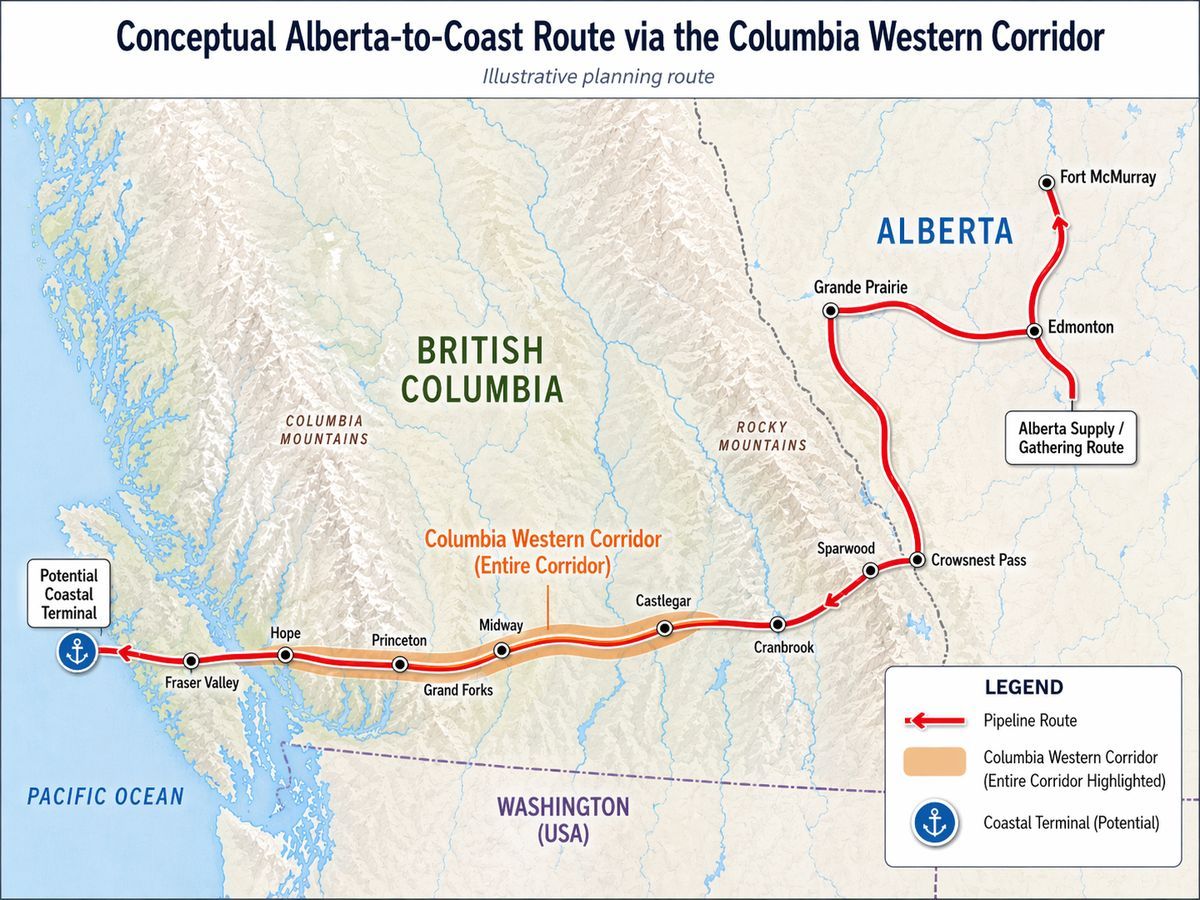
Optimus Group has formally submitted a proposal to the Finance Committee advocating for federal intervention and financial support for the Columbia Western Corridor. The submission positions this specific geographic region as a critical pilot for national infrastructure resilience. By linking economic development to emergency access and clean power integration, the company is attempting to reframe the corridor as a strategic asset rather than a localized project.
Strategic Integration of Infrastructure and Resource Development
The core of the proposal centers on the dual necessity of wildfire mitigation and resource extraction. Optimus Group argues that the current state of the Columbia Western Corridor creates a bottleneck for both emergency response teams and industrial logistics. By securing federal backing for clean power infrastructure, the firm aims to lower the operational costs of resource development while simultaneously upgrading the grid to support high-demand emergency services. This approach suggests a shift toward public-private partnerships where infrastructure utility is measured by its ability to facilitate both safety and commercial output.
For investors, the proposal highlights a pivot in how industrial firms are approaching capital-intensive projects. Rather than relying solely on private funding, the push for federal support suggests that the project's viability may be contingent on government-backed sustainability mandates. The integration of clean power into the corridor's development plan is likely intended to align the project with broader environmental policy goals, potentially unlocking access to specific federal grants or tax incentives that are currently unavailable to standard infrastructure developments.
Sector Read-through and Economic Impact
The focus on the Columbia Western Corridor serves as a bellwether for how infrastructure firms are navigating the intersection of climate risk and industrial growth. If the Finance Committee adopts the framework proposed by Optimus Group, it could establish a precedent for similar projects across the country. This would likely benefit firms involved in grid modernization and heavy construction, as the model prioritizes projects that demonstrate a clear link between environmental resilience and economic utility.
AlphaScala data currently reflects a mixed sentiment across the technology and consumer sectors, with NOW stock page holding an Alpha Score of 52/100, while SHOP stock page and AS stock page both sit at 47/100. These scores underscore the broader market volatility that infrastructure projects must overcome to secure long-term capital commitments. As the stock market analysis continues to favor companies with clear paths to operational efficiency, the ability of Optimus Group to secure federal support will be a primary indicator of the project's long-term sustainability.
The next concrete marker for this narrative will be the Finance Committee's response to the submission. Any indication of a formal review or the inclusion of the Columbia Western Corridor in upcoming budget discussions will serve as the primary catalyst for further market evaluation. Investors should monitor subsequent legislative filings to determine if the proposed federal support is structured as direct funding, loan guarantees, or regulatory relief, as each outcome carries distinct implications for the project's internal rate of return.