Crypto▲ Bullish
$45M Seized in Operation Atlantic: Crypto Enforcement Escalates
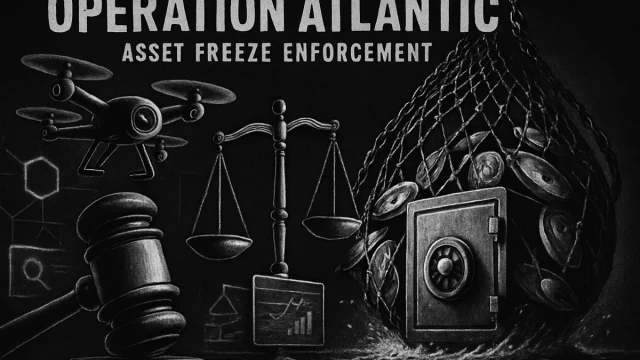
Authorities in the U.S. and U.K. intercepted $45 million in illicit funds, signaling a shift toward global, cross-border oversight of digital assets.
Continue with
A Coordinated Blow to Cybercrime
In a significant escalation of international efforts to police the digital asset ecosystem, U.S. and U.K. authorities have successfully executed 'Operation Atlantic,' a coordinated enforcement action that has resulted in the freezing of more than $45 million in stolen cryptocurrency. This operation underscores a deepening collaboration between government regulators and private sector blockchain security firms, signaling a maturing regulatory landscape for the crypto industry.
While the specific identities of the entities targeted or the sources of the illicit funds remain under investigation, the scale of the recovery highlights the increasing effectiveness of law enforcement in tracing funds across decentralized ledgers. By leveraging sophisticated forensic analysis, agencies in both Washington and London were able to intercept assets before they could be fully laundered through mixing services or decentralized exchanges.
Bridging the Gap: Public-Private Partnerships
The success of Operation Atlantic relies heavily on the integration of blockchain intelligence firms and central authorities. Unlike traditional banking, where transactions can be reversed or blocked through central clearinghouses, crypto assets often move through pseudonymous wallets. However, the ability to 'freeze' these assets suggests that authorities are increasingly capable of identifying 'choke points'—specifically, centralized exchanges or custody providers that act as gateways between the crypto world and the fiat banking system.
For the broader crypto market, this development is a double-edged sword. On one hand, it validates the industry’s push for increased institutional oversight, suggesting that the 'Wild West' era of crypto-enabled fraud is facing a more robust defense. On the other, it serves as a stark reminder that anonymity in the digital asset space is becoming more theoretical than practical, particularly when high-value illicit transfers are involved.