OpenAI's GPT-5.6 leak reveals a shift from centralized clusters to client-side model sharding, with 70% of inference running locally via WebGPU to bypass datacenter bottlenecks.
A leaked checkpoint configuration for OpenAI's GPT-5.6 reveals the company is moving from massive centralized clusters to client-side model sharding and distributed token routing, according to configuration manifests reviewed by multiple developers.
The shift addresses a hard physical limit. Grid operators cannot provide enough megawatts to keep monolithic models scaling linearly, and the giant datacenters built to train frontier models are hitting capacity constraints. Instead of executing the entire model calculation inside a centralized datacenter, OpenAI is sharding the model's attention weights, shipping them directly to browsers, and executing co-inference locally using WebGPU.
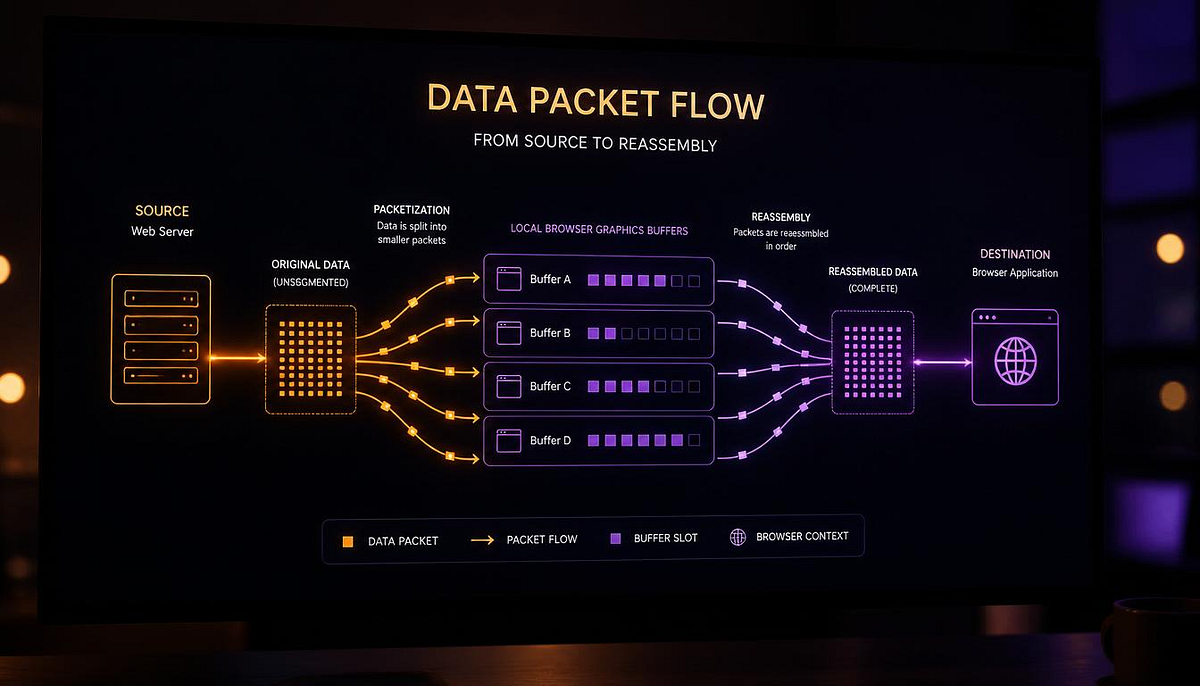
This is called client-side attention sharding. When a user opens a session, the web client downloads tiny, highly optimized attention-sharded weight matrices cached inside the browser's persistent storage. When a prompt is typed, the local GPU computes the initial attention vectors via WebGPU, processing up to 70% of the initial inference pass. The intermediate keys and values are then compressed and sent to OpenAI's central cloud servers, where the heavy foundational reasoning weights complete the token selection.
The architecture bypasses datacenter queue bottlenecks. By pre-processing the heavy context window queries locally on the device's raw shaders, the size of the payload sent over the internet drops exponentially. Instead of transmitting megabytes of raw text tokens on every chat turn, the browser sends only a highly dense, sharded attention vector. Because 70% of the mathematical computation occurs on client hardware, OpenAI's hosting overhead is slashed, allowing the company to route requests instantly.
Most developers assume distributing model weights across a client and a server would introduce crippling network latency. The configuration leak shows attention sharding actually reduces overall latency, the developers said. This is how OpenAI scales a frontier model to hundreds of millions of simultaneous users without blackouts or throttling.
The era of the massive, single-server centralized model is ending. The centralized hosting monopoly is cracking, and this distributed client-server co-inference model will make frontier intelligence accessible to every device on earth for free, the developers said.
A practical Python script showing how to shard a prompt, run local attention checks, and only proxy the dense intermediate representations to a central API endpoint is available on the developers' GitHub repositories.
Drafted by a large language model from the source reporting linked above, then screened by automated publishing checks. It is not read by a journalist before publication. Some articles cite our Alpha Score. Verify prices and figures against the original source. Educational coverage, not personalized advice.