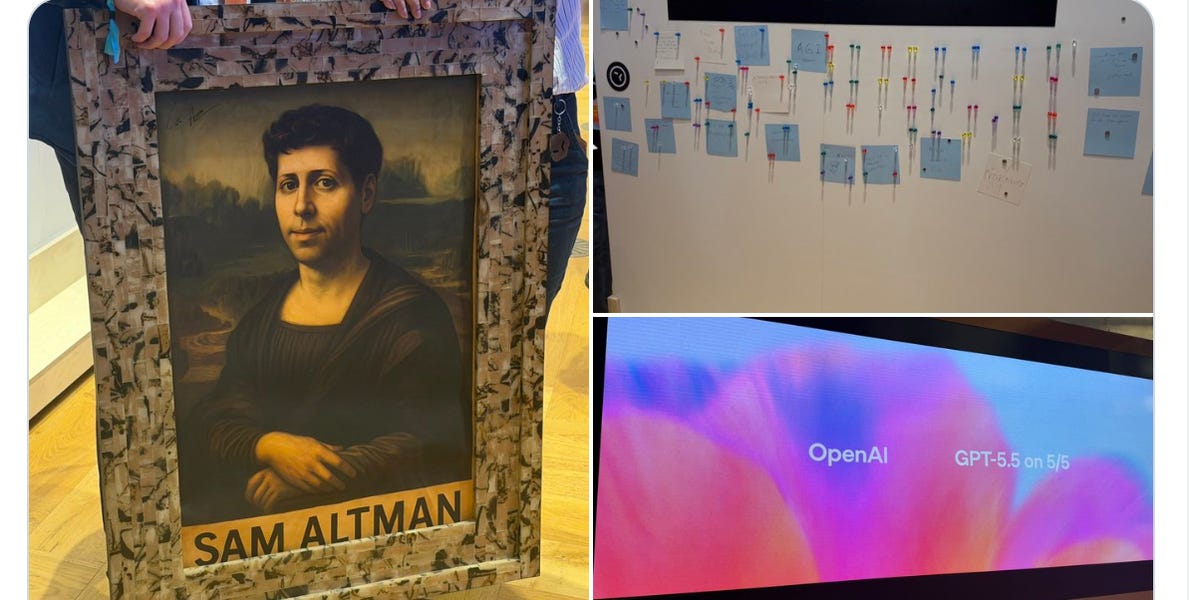
OpenAI tasked ChatGPT 5.5 with planning its own launch event in San Francisco. The experiment tests the model's ability to manage complex, real-world logistics.
OpenAI recently hosted an exclusive launch event at its San Francisco headquarters to celebrate the release of its latest model, ChatGPT 5.5. The event was notable not only for the presence of CEO Sam Altman and a select group of developers but for the fact that the model itself was tasked with planning the gathering. This experiment in operational autonomy highlights a shift in how the company integrates its generative tools into its own corporate workflows.
By allowing ChatGPT 5.5 to dictate the logistics of its own launch, OpenAI moved beyond simple text generation into the realm of event coordination and resource management. The model was responsible for setting the tone, which was described as an intimate and low-key gathering. This approach serves as a practical demonstration of the model's ability to handle multi-step planning tasks that typically require human administrative oversight. For observers of the broader stock market analysis, this represents a tangible use case for AI in enterprise efficiency, moving from theoretical capability to operational reality.
The event hosted a few hundred developers, creating a feedback loop between the creators and the users of the new model. By using the model to plan the environment in which it was introduced, OpenAI signaled a high level of confidence in the system's reasoning capabilities. This is a departure from traditional corporate event planning, where human teams manage every detail. If the model can successfully manage the logistics of a high-stakes product launch, the implications for business process automation are significant. The shift suggests that future enterprise software may increasingly rely on AI agents to manage their own deployment and marketing cycles.
While the event was centered on a celebration, the underlying mechanism is a test of the model's reliability in real-world scenarios. The ability to coordinate drinks, swag, and guest management requires a level of contextual awareness that goes beyond standard chatbot interactions. For those tracking the evolution of large language models, this event serves as a benchmark for how these systems handle physical-world constraints. The success of this experiment will likely influence how other firms approach the integration of AI into their internal operations, potentially reducing the need for traditional administrative layers.
Investors and industry analysts should monitor how these internal experiments translate into external product offerings. If OpenAI can demonstrate that ChatGPT 5.5 is capable of managing complex, multi-variable tasks, the valuation of such tools will likely shift toward more robust enterprise-level pricing models. The next concrete marker will be the public release of these planning features, which would allow external organizations to test the model's efficacy in their own operational environments. This transition from a novelty to a functional business tool remains the primary catalyst for the sector's long-term growth.
AI-drafted from named sources and checked against AlphaScala publishing rules before release. Direct quotes must match source text, low-information tables are removed, and thinner or higher-risk stories can be held for manual review.