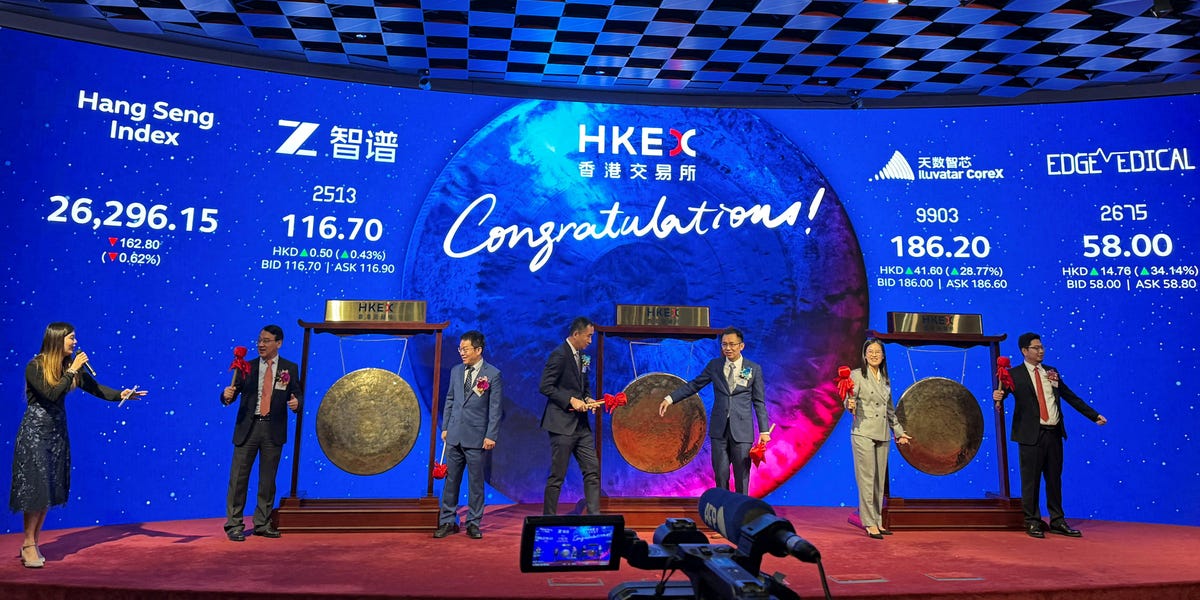
Z.ai, the lab behind the GLM 5.2 model, lost nearly $500 million last year on revenue of about $107 million. Shares are down more than 40% in the past month.
MiniMax, another publicly traded independent lab, lost $250 million on $79 million in revenue. Its stock has fallen more than 50%.
The financial results lay bare the business problem with open-weight AI models. William Blair analyst Arjun Bhatia described the path to profit as "challenging." He compared the situation to open-source software, where companies like Red Hat (acquired by IBM for $34 billion) built sustainable businesses around freely shared code. Open-weight AI does not work the same way.
The Inference Cost Gap
Software distribution costs practically nothing. Once code is written, sending another customer a copy is nearly free. Profit margins improve as companies grow.
AI does not follow that model. Every answer generated by a model requires expensive NVIDIA chips and data-center capacity. The next unit of software is almost free. The next unit of intelligence is not.
Moonshot AI illustrated the problem last week. Its new Kimi K3 model impressed the industry with frontier-level performance. Days after launch, the company halted new customer sign-ups. It did not have enough computing power to run the model.
The structure of the open-weight market makes the business situation worse.
Labs give away their trained parameters. Companies can download and run them. Cloud giants like Microsoft (Alpha Score 62/100), Amazon, Google, and Alibaba host the workloads. Specialist providers such as Fireworks AI rent capacity from the cloud giants. IBM (Alpha Score 44/100), which bought Red Hat, represents the older open-source model that these AI labs are failing to replicate.
Only the labs' own inference services generate reliable revenue for the model maker. Most Western corporate customers avoid hosting data on a Chinese lab's service for security reasons. In the other three scenarios – cloud giants, specialists, or self-hosting – the lab that spent hundreds of millions training the model receives little or no ongoing revenue.
A Challenger's Strategy
Open technology is a classic tool for challengers trying to catch market leaders. A late starter can spread its technology widely and attract developers. This makes the leader's product harder to sell at premium prices.
The actions of China and its AI labs fit this strategy. Open-weight models put pressure on OpenAI, Anthropic, and other US leaders by offering capable alternatives at lower prices. Even if the Chinese labs make little money themselves, they can force American competitors to cut prices and make it harder to recover training costs.
Bhatia said Chinese labs may be releasing open-weight models with "little regard for near-term profitability." In his view, openness can turn advanced AI into a commodity.
Barclays analyst Raimo Lenshow recently returned from China. "Intense domestic competition has also led to more aggressive pricing competition," he told investors. "Some major models remain open-source or open-weight, accelerating the pricing pressure throughout the system. While this helps drive faster commercialization, it is also adding uncertainty to long-term profitability for those AI labs."
Government Alignment
President Xi Jinping recently encouraged "open-source, openness, collaboration, and sharing" in a speech in Shanghai. The statement is more than a casual policy suggestion.
Chinese technology companies are expected to align with the government's strategic priorities. After Xi put openness at the center of China's AI strategy, companies such as Moonshot, Zhipu, and MiniMax face strong pressure to follow that direction. It comes even if the strategy makes their own path to profit much harder.
Alibaba's stock is up about 13% over the past month. Zhipu and MiniMax shares have been crushed.
Bhatia's note summed up the structural gap. Inference workloads, he wrote, will flow to whoever operates the infrastructure most efficiently. The model provider is usually not the winner.