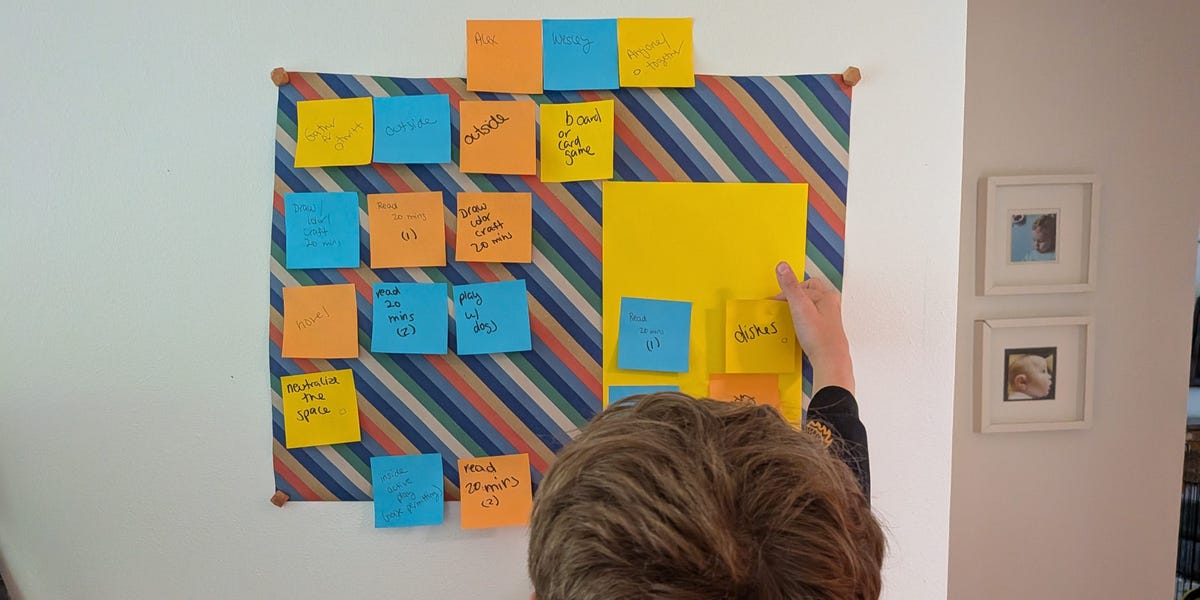
A mother of two turned to the Kanban workflow system, developed by Toyota, to manage summer chaos. The visual task board helped her children, including those with ADHD, stay organized and reduce stress.
A family of four turned to a manufacturing workflow system to break the cycle of summer disorganization. The Kanban method, developed by Toyota in the 1940s, uses visual signals to manage tasks across multiple people and steps. The mother, an independent journalist who also works at a play festival, said she had been struggling to keep the house orderly while working from home and caring for two children aged 10 and 12. A babysitter helped during theatre hours. The mother said she still needed a system. "I was still struggling to come up with a system for keeping my home and sanity intact while the kids are home," she said.
She began researching workflow methods online and settled on Kanban, which means "signboard" in Japanese. She made what she called the "unpopular household decision" to implement the method this summer. The system breaks projects into smaller, concrete actions. Instead of the vague goal "keep the house clean," the family's board listed specific tasks such as "wipe countertops" and "put away dishes." The mother, who has a background in teaching, said chunking into smaller tasks was especially helpful because her children have ADHD and other learning barriers. "Chunking is an especially good strategy for students with ADHD or other barriers to learning," she said.
She built a board using sticky notes on a pinned piece of wrapping paper after the notes kept falling off the wall. A solid piece of paper marked the "done" section. Each child got a color: one for the artsy middle schooler, another for the energetic elementary schooler. A third color designated tasks anyone could do, such as putting away clean dishes or playing a board game. The older child's tasks included writing a novel. The younger child's tasks included playing with the dogs. Both children had two 20-minute reading slots. Screen time was not on the board. The mother said she allowed it in the morning and afternoon. "Once the allotted morning screentime is up, I expect kids to be doing work from the board," she said.
The children were reluctant at first. "They got on board when they saw that each task took relatively little time compared to their expectations," she said. The mother said she considered adding her own tasks to the board to build empathy. She decided against it for now. The system helped the family manage the summer without the usual chaos.
The Kanban method, originally designed for automotive assembly lines, has been adapted for household management. The principle of visual task tracking, supported by Post-It notes and a wall board, can apply beyond the factory floor. The mother said the method gave her "some help, and some hope, for a summer we could all survive."
Drafted by a large language model from the source reporting linked above, then screened by automated publishing checks. It is not read by a journalist before publication. Some articles cite our Alpha Score. Verify prices and figures against the original source. Educational coverage, not personalized advice.