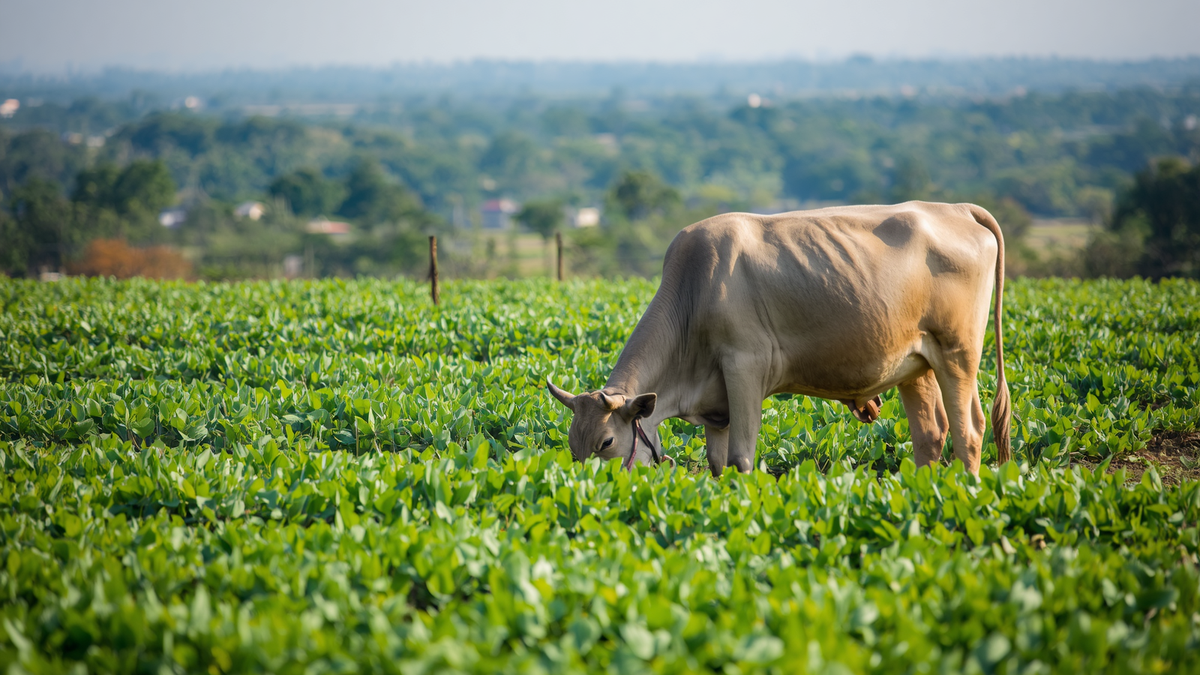
Dahod farmer Narendrabhai Hatila uses one cow to farm 30 acres with no chemicals. The ATMA project provides ₹10,800 annual support and training. The model's economics could reshape agricultural subsidies.
Dahod farmer Narendrabhai Hatila has been using a single indigenous cow to support natural farming on 30 acres. He prepares Jeevamrut and Ghan Jeevamrut from the cow's dung and urine instead of buying chemical fertilisers. Speaking to ANI, Hatila said the practice requires minimal expenditure and one cow is enough for that acreage. He earns a good annual income without synthetic fertilisers or pesticides.
His five-layer farm includes vegetables and fruit crops. Taluka Project Manager Chetan Kumar Rathod said Hatila has been with the Agricultural Technology Management Agency (ATMA) Project for seven years and received district-level training and model-farm support. The ATMA Project provides technical guidance, model farms, and financial assistance to farmers adopting cow-based methods.
Technology Manager Ramsinh Chauhan said farmers in Dhanpur Taluka get ₹10,800 per year under the ATMA Project. The project also sets up Bio-Resource Centres (BRCs) to ensure local availability of natural formulations like Jeevamrut, Ghan Jeevamrut, Agni Astra, and Brahmastra. A BRC unit costs ₹1 lakh under the Mission Cluster Scheme, or ₹60,000 under the Non-Mission category.
Hatila said excessive chemical fertiliser use had damaged soil fertility. Natural farming reversed that. The soil recovers over two to three seasons. The financial assistance is small – ₹10,800 per farmer – but the leverage on the state's agricultural budget is large. A farmer who previously spent ₹15,000–₹20,000 per acre on fertilisers can cut that to near zero. The government spends ₹10,800 and gets a reduction in long-term fertiliser subsidy burden, soil degradation costs, and healthcare expenses tied to chemical runoff.
The model is still limited in reach. Dahod's ATMA project covers a few hundred farmers. The per-farmer cost is low, and the training infrastructure already exists. If the state scales it to tens of thousands of farmers, the savings on fertiliser subsidy alone could run into hundreds of crores. For a smallholder with two acres, ₹10,800 in aid plus zero fertiliser spend means a net income gain of roughly ₹30,000 a year. That is enough to make the practice stick.
Prepared with AlphaScala editorial tooling from the source reporting linked above. Indexable analysis may include a cited Alpha Score value. Publishing checks screen each story before release. Educational coverage, not personalized advice.