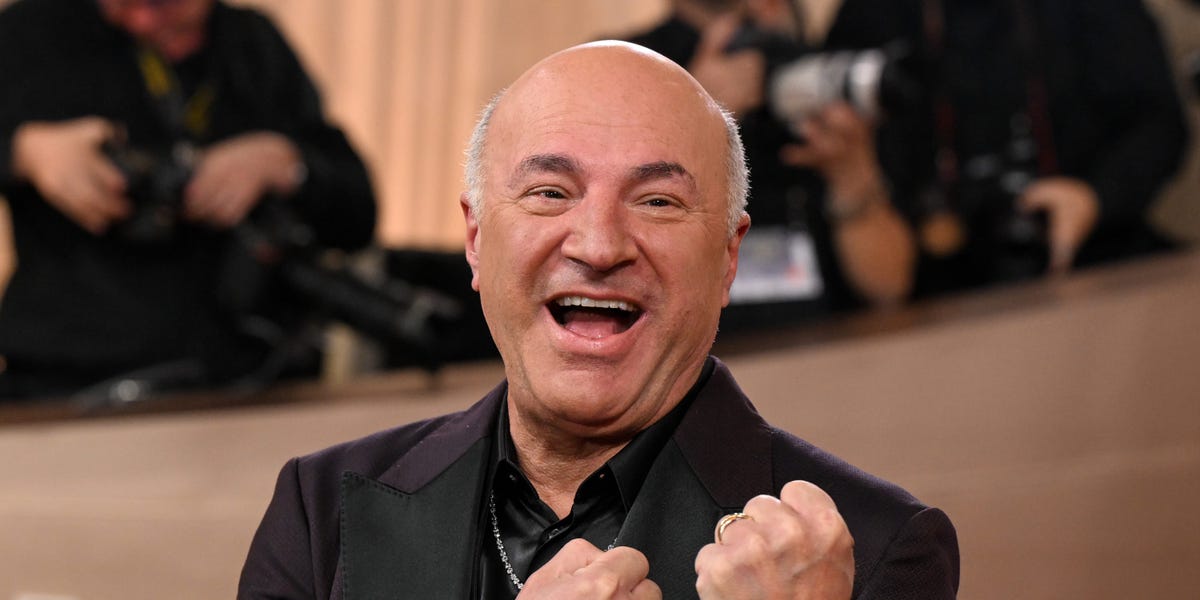
Kevin O'Leary thinks one force will override the trade fights dividing the U.S., Canada and Mexico: fear of China.
The "Shark Tank" investor posted a clip Sunday on X and Instagram arguing that the threat China poses in AI, technology, warfare and power generation will drive the three countries to collaborate. “As the race for AI, energy, and critical infrastructure accelerates, economic reality will outweigh political disagreements,” O'Leary wrote in the post. “Canada has the energy and critical minerals, the United States has the scale and innovation, and Mexico plays a vital role in the North American economy.”
He is not alone in sounding the alarm. SpaceX CEO Elon Musk told The Economist recently that China already produces far more electricity than the U.S. and could become the world's AI leader if it had enough computing power. OpenAI and Anthropic have both warned that Chinese labs are closing the gap in large-language model capabilities. Moonshot AI's latest Kimi K3 model was praised for performing tasks with frontier capabilities, the companies said.
Auto executives including Ford CEO Jim Farley, Rivian CEO RJ Scaringe and Uber CEO Dara Khosrowshahi have repeatedly flagged Chinese automakers' edge in building electric vehicles.
The push for cooperation comes as North America grows more fractured. President Donald Trump imposed another round of tariffs in July, this time 50% on some Canadian goods. O'Leary's own firm, O'Leary Ventures, is developing massive data centers in Utah and Canada despite local opposition.
For markets, the risk is that continued tariff escalation and political friction weaken the region's ability to compete with China in AI, energy and manufacturing. The upside case O'Leary describes – integrated supply chains, shared critical minerals and energy – would benefit sectors from technology to automotive to infrastructure. The next concrete catalyst is the ongoing tariff negotiation; any de-escalation could shift sentiment toward North American equities.