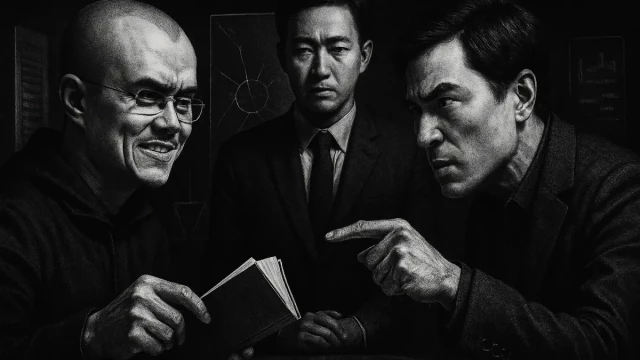
Old Wounds Reopen: OKX’s Star Xu Labels Binance Founder ‘Habitual Liar’ Over Memoir Claims

OKX founder Star Xu has publicly labeled Binance co-founder Changpeng Zhao a 'habitual liar' following the release of Zhao's memoir, reigniting a long-standing feud rooted in their shared time at OKCoin.
A Public Confrontation Reignites Industry Tensions
The long-standing friction between two of the cryptocurrency industry’s most prominent figures has boiled over once again. Star Xu, the founder of the exchange OKX, publicly rebuked Binance co-founder Changpeng Zhao (CZ) following the release of the latter’s memoir on April 8. In a sharp rebuttal, Xu categorized Zhao as a "habitual liar," citing long-standing grievances dating back to their shared history during the early years of the OKCoin exchange.
The conflict centers on specific narratives presented in Zhao’s recent literary work, which revisits the formative era of the crypto exchange landscape. For industry observers, the public spat serves as a stark reminder of the fragmented history behind some of the world’s largest digital asset platforms, where early partnerships often dissolved into intense professional and personal rivalries.
The Roots of the Dispute: The OKCoin Era
The animosity between Xu and Zhao is not a new development; it is the culmination of years of underlying tension. Before their separate paths led to the creation of industry giants OKX and Binance, both executives were deeply involved in the operations of OKCoin. The current disagreement stems from how Zhao characterizes his departure and the subsequent events that transpired at the company in his memoir.
Star Xu’s decision to label Zhao a "habitual liar" specifically targets the accuracy of the claims made regarding the internal governance and the nature of the disagreements that occurred during their tenure together. By challenging the narrative of the memoir, Xu is attempting to correct the historical record from his perspective, suggesting that the version of events presented by Zhao is a distortion of reality intended to bolster his own brand.
Why This Matters for the Crypto Ecosystem
For professional traders and institutional market participants, public feuds between exchange founders represent more than just corporate drama—they signify potential instability or shifting power dynamics within the infrastructure of the market. The crypto industry relies heavily on trust, and when the leaders of the most liquid exchanges engage in public mudslinging, it invites questions regarding the integrity of the historical narratives that underpin these firms.
Furthermore, this dispute highlights the "wild west" origins of the crypto sector. As the industry moves toward greater regulatory scrutiny and institutional adoption, the past actions and associations of its "founding fathers" are increasingly coming under the microscope. Investors often look for transparency, and when the history of the platforms they use becomes a matter of public debate and accusation, it can create uncertainty regarding the governance culture of these massive, centralized entities.
Market Implications and Sentiment
While the exchange of words between Xu and Zhao is unlikely to cause immediate price volatility in Bitcoin or other major tokens, it contributes to a broader atmosphere of skepticism. Binance remains the largest exchange by volume, and OKX continues to be a major player in derivatives and spot markets. Any instability in the leadership or public image of these firms is followed closely by risk managers and those monitoring counterparty risk.
Investors should note that this public confrontation underscores the highly competitive and often adversarial nature of the top-tier crypto exchanges. With global regulators demanding more accountability, the ability of these leaders to maintain professional decorum and provide clarity on their corporate history is becoming an increasingly important factor for institutional stakeholders assessing long-term viability.
Looking Ahead: A Sustained Feud
As the crypto community digests the claims made in Zhao’s memoir, the focus will likely remain on whether other industry veterans step forward to challenge or corroborate his account. For market participants, the priority remains the operational security and liquidity of these exchanges. However, the "habitual liar" charge leveled by Xu ensures that the history of the 2010s crypto boom will remain a contested narrative for the foreseeable future. Traders should watch for any further retaliatory statements, as they could signal deeper, unresolved issues within the competitive landscape of centralized exchanges.