Stocks● Neutral
Oil Traders Eye Pakistan's Iran Visit for Risk Signal
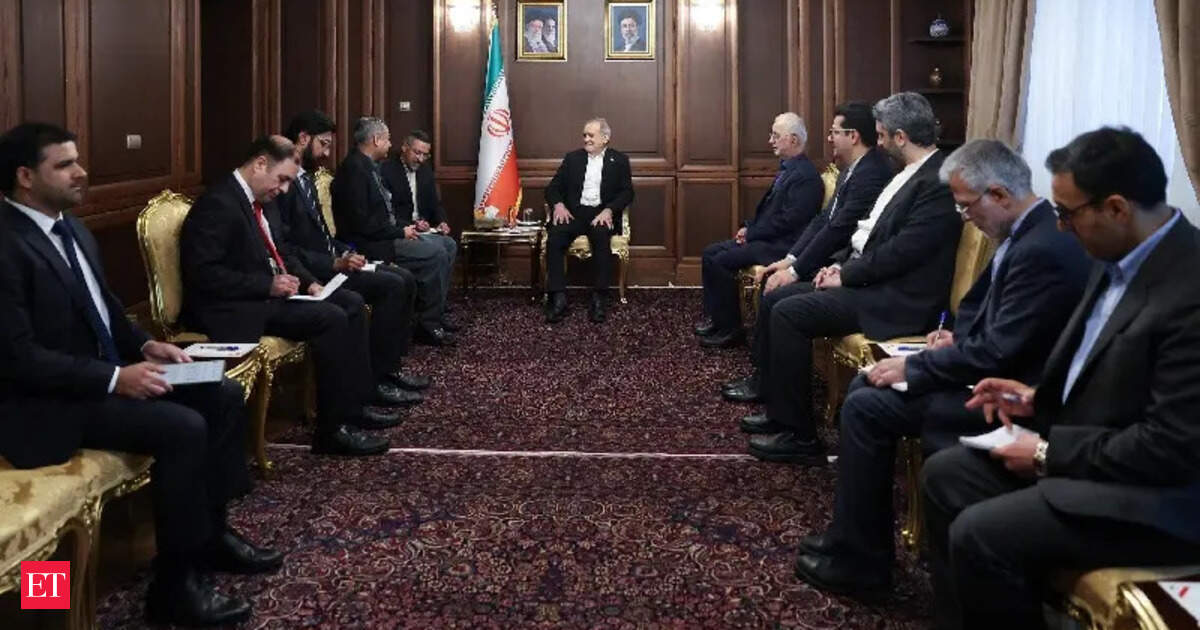
The Naqvi visit to Tehran following failed April talks could widen or compress war risk premiums in Gulf shipping and crude futures.
Continue with
AlphaScala Research Snapshot
The Naqvi visit to Tehran following failed April talks could widen or compress war risk premiums in Gulf shipping and crude futures.
NEWS CORP currently carries an Alpha Score of n/a, giving AlphaScala's model a neutral read on the setup.
Pakistan's Interior Minister Mohsin Naqvi arrived in Tehran on Saturday for a fresh round of negotiations with Iranian officials, carrying a message on behalf of the United States. The visit comes as regional tensions remain elevated after the February 28 military strikes by the United States and Israel on Iran, which prompted retaliatory action from Tehran, according to a CNN report.
Naqvi is scheduled to meet Iranian Foreign Minister Abbas Araghchi, the semi-official Tasnim News Agency reported. Separately, the Iranian Students' News Agency (ISNA) reported that Naqvi is carrying a letter from Pakistani Army Chief Asim Munir to Iran's Supreme Leader Ayatollah Mojtaba Khamenei, who has maintained a low public profile since taking office in March.
This visit follows an earlier round of direct talks between US and Iranian officials facilitated by Islamabad in April. Those discussions concluded without reaching a breakthrough agreement.
Before departing, Naqvi met Prime Minister Shehbaz Sharif and briefed him on the planned discussions, according to a statement from the Prime Minister's Office reported by Dawn. Sharif provided guidance related to the visit.
The April talks failed because neither side moved on core demands: Iran wants sanctions relief and a guarantee against further strikes. The US wants Iran to halt its nuclear enrichment program and stop proxy attacks on Israel. The same structural gap exists today.
The length of the conflict now exerts cumulative economic pressure. Iran's oil exports have fallen about 15% since February, based on tanker-tracking data from independent analysts. The US faces insurance and shipping costs that compound inflation in goods transiting the eastern Mediterranean. A diplomatic channel reopening after a failed round is the market's first signal that both sides still see negotiation as viable.
Pakistan shares a ~560-mile border with Iran and has a working military relationship with both Washington and Tehran. Munir's letter to Khamenei is the structural tell. The Pakistani army chief communicates directly with the Iranian supreme leader, bypassing the foreign ministry track. That means the channel is secure and senior enough for substantive negotiation.
Practical rule: The diplomatic channel matters more for oil than any single OPEC+ production cut. A strait closure is a binary event no producer can offset. Production cuts are a lever. Geography is a constraint.
War risk premiums for vessels transiting the Persian Gulf and Gulf of Oman are quoted as a percentage of the hull's insured value. After February 28, those premiums jumped from about 0.05% to 0.5-1.0% per transit. For a Very Large Crude Carrier (VLCC), that adds about $250,000 to $500,000 per voyage.
Insurers price probability, not certainty. A credible diplomatic track compresses the perceived probability of a prolonged conflict. Even a framework agreement, not a final deal, would narrow the premium by an estimated 5-10% on tanker routes.
The Strait of Hormuz is the 21-mile-wide chokepoint through which about 20% of the world's oil transits. Iran has threatened to close the strait in past crises. A sustained disruption would cut off crude from Saudi Arabia, Iraq, Kuwait, the UAE, and Qatar.
The simple read: talks reduce risk, oil falls. The better market read: the risk premium embedded in Brent and WTI futures reflects a binary hazard that cannot be fully hedged. A diplomatic success would compress that premium by an estimated $2-4 per barrel on Brent. A failure or a non-event would leave the premium intact or widen it.
Brent crude has carried a structurally higher volatility skew since February. Call options at strikes above $85 remain expensive relative to puts, reflecting the market's fear of a supply disruption. A diplomatic breakthrough would flatten that skew, and the most exposed positions are in October and November futures, where peak seasonal demand meets the highest geopolitical uncertainty.
Very Large Crude Carrier rates on the Persian Gulf-to-China route show elevated costs relative to pre-conflict levels. The Baltic Exchange assessments track this. If Naqvi's visit produces a joint statement with Iran that mentions continued dialogue, tanker rates should ease within two sessions. If the meeting is described as
Drafted by a large language model from the source reporting linked above, then screened by automated publishing checks. It is not read by a journalist before publication. Some articles cite our Alpha Score. Verify prices and figures against the original source. Educational coverage, not personalized advice.