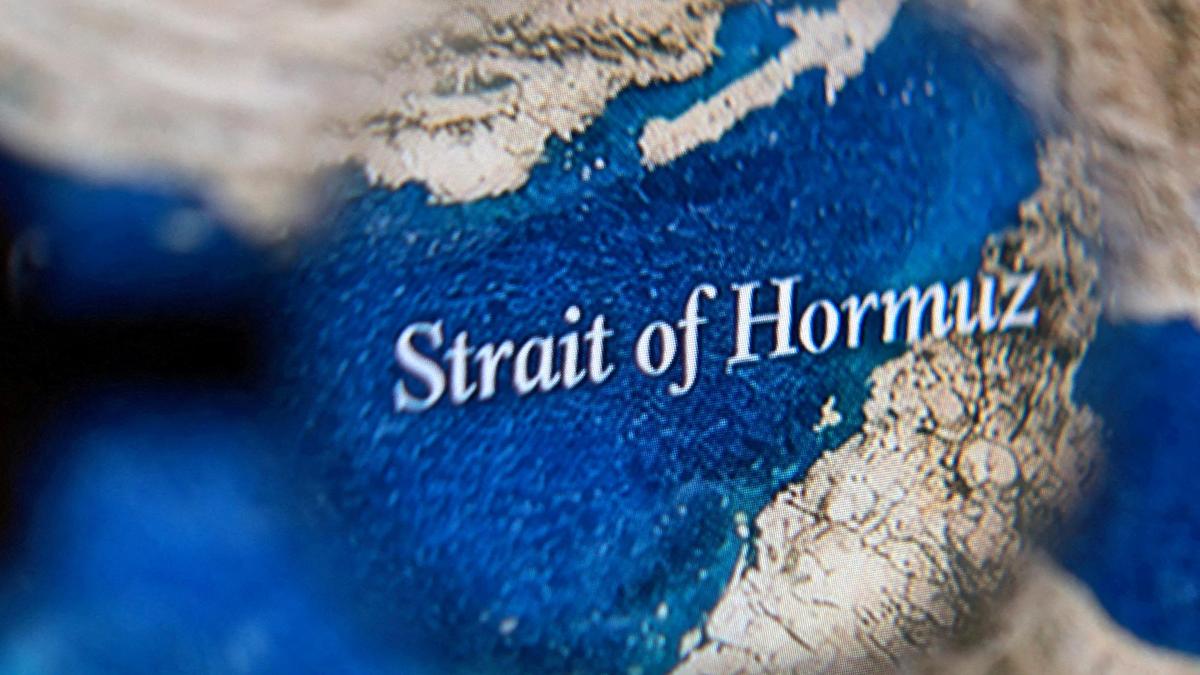
The IRGC says the Strait of Hormuz is closed to all vessels after U.S. strikes on Bandar Abbas and Qeshm Island. 20 million barrels of daily oil flow is at stake. Here is the trade-management framework, not the headline.
Iran's Islamic Revolutionary Guard Corps said the Strait of Hormuz is closed to all vessels after new U.S. strikes hit Bandar Abbas, Qeshm Island, and other coastal locations, CNN reported. The IRGC warned any ship attempting to transit "will be targeted." Heavy clashes were reported between U.S. forces and IRGC naval units in the strait itself, according to Al Jazeera citing Iranian media.
The strait handles roughly 20 million barrels of crude and petroleum products per day, about a fifth of global oil consumption. The last time Iran threatened to close it was 2019, during the tanker-sabotage and drone-shootdown cycle. That threat was a bluff. This time the IRGC is reporting live fire from both sides in the waterway, two vessels struck, and seven coastal positions hit by U.S. strikes. The mechanism is different: a blockade enforced with active naval combat is harder to walk back than a warning issued through state media.
Crude oil futures jumped 6% in Asian trade on the initial headline, with Brent pushing through $88 a barrel. The spike was sharp but contained – traders who lived through 2019 and the 2020 Saudi-Russia war have seen false-alarm spikes before. The question is whether this escalation resolves within hours or turns into a sustained chokepoint closure.
Three variables decide the path. First, whether the U.S. Fifth Fleet attempts to escort tankers through the strait. CENTCOM said the strikes are self-defence responses to Iranian aggression. If naval escorts begin, the risk of a direct ship-to-ship engagement rises fast. Second, the storage overhang. Commercial OECD inventories sit above the five-year average by about 30 million barrels, and the U.S. Strategic Petroleum Reserve holds 372 million barrels. That buffer buys time – roughly 15 days at current global demand – but not indefinite cover if the closure stretches to weeks. Third, the Saudi and UAE spare capacity, roughly 4.5 million barrels a day combined, could partly replace lost Iranian supply but not the full 20-million-barrel chokepoint volume, because oil from Iraq, Kuwait, and the UAE also transits the strait.
The second-order effect hits refined products faster than crude. Asian refineries depend on the strait for naphtha, gasoil, and fuel oil from Iran and Iraq. Japan, South Korea, and India import about 70% of their crude through Hormuz. Spot tanker rates for VLCCs west of the strait went bid-only within an hour of the IRGC announcement. Container shipping costs, already elevated from Houthi attacks in the Red Sea, face another rerouting risk: ships that normally pass through the Suez Canal and the Red Sea cannot use the Gulf as an alternative if Hormuz is blocked, pushing more volume around the Cape of Good Hope and extending voyage times by 10–14 days.
For traders building a watchlist, the concrete markers are: daily U.S. Fifth Fleet status updates, which come through CENTCOM releases; the Suezmax and VLCC rate spreads for Gulf-to-Asia versus Gulf-to-Europe; and the prompt-month Brent contango or backwardation shift, which tells you immediately whether the market believes this is a buying opportunity or a real supply loss. A move from the current flat structure into steep backwardation would confirm the market is pricing in a multi-week closure, not a one-day headline.
The IRGC's Telegram statement is explicit. So is CENTCOM's. The gap between them is now measured in live fire, not diplomatic cables. That gap is the trade.
Prepared with AlphaScala research tooling and grounded in primary market data: live prices, fundamentals, SEC filings, hedge-fund holdings, and insider activity. Each story is checked against AlphaScala publishing rules before release. Educational coverage, not personalized advice.