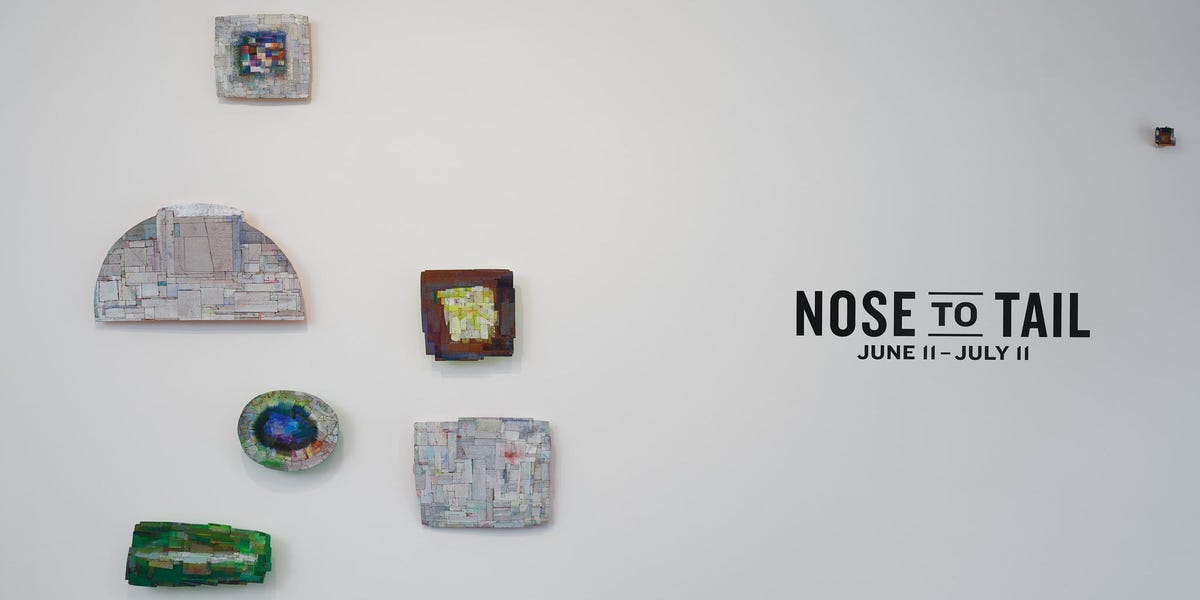
The Nose to Tail exhibition turned studio scraps — metal offcuts, paint-stained rags, and brush-cleaning paper — into gallery works, as five NYC artists described how they adapt to rising costs.
A group of New York City artists has found a way to turn the city's cost pressures into a creative constraint. The Nose to Tail exhibition at Equity Gallery on the Lower East Side ran from June through July, showing works made from studio scraps – metal offcuts, paint-stained rags, and brush-cleaning paper that would otherwise have been thrown away.
The show's title borrows from the culinary practice of using every edible part of an animal. Curators Patricia Fabricant and Jeanne Heifetz assembled eleven artists living in the city, each of whom brought work sourced from what the exhibition description called "studio process by-products, down-time doodles, and happy accidents."
Gabrielle Shelton, a 53-year-old metal sculptor, brought leftover scrap from previously sold pieces. She runs Shelton Studios Inc., a business producing custom architectural metalwork for homes, hotels, and commercial spaces. The business model was deliberate, she said: "I specifically placed myself and started a business that could feed my art without me having to come up with another way to make money." For years, she worked 70 to 80 hours a week, splitting her time between the business, her own sculpture, and family life with her husband and two children in Williamsburg, Brooklyn, where she has lived for 31 years.
Damien Olsen Berdichevsky, a 65-year-old sculptor and musician originally from Argentina, submitted "The Book of the Comfort Zone." He started the piece when he used an issue of The Brooklyn Rail journal to wipe his paintbrushes. "It all started with a stain," he said. From February to May, he painted every page of the magazine, then paired the book with a music video. Berdichevsky works mainly in wood and cardboard, materials the city supplies for free. "The streets are piled with those materials," he said, noting that a lumberyard near his Greenpoint home discards wood regularly. He buys paint, paper, and glue. His wife inherited a 150-year-old family home in Greenpoint, which gives him studio space without rent. "I've never had to interrupt my work because I couldn't afford it financially," he said. "How much of your merit is at play, or is it simply good luck?"
Jessica Nissen, 59, a native New Yorker, works as a scenic artist for film and television to support herself. For the show, she exhibited small oil paintings on blocks of wood – pieces she makes when stuck on larger works. "They help me keep moving and painting and thinking," she said. "The material I'm using is expensive, and I don't have endless funds, so I don't want to waste the material on my palette." Nissen said the city's creative community depends on a balance between producers and consumers. "If we're forced to move elsewhere, what do you end up with in the city? You just end up with consumers."
Jason Rohlf, 56, moved to New York from Milwaukee in 1999. He and his family have lived in the same Williamsburg loft for roughly 27 years, protected by the NYC Loft Law, which shields artists living in industrial spaces. The protection has not come cheap. "Every time the state says, 'Oh, we're going to revisit the loft law,' you get an email, and everybody's panicking," he said. "I don't think many people's lifestyles involve having a housing lawyer on their phone." During the 2008 financial crisis, many of his peers relocated. Rohlf stayed. For the exhibition, he presented muslin shop towels he uses to clean paintbrushes – he has made and stored thousands over 20 years. For the show, he and co-curator Heifetz selected 42.
Oriane Stender, a textile artist originally from San Francisco, began placing scrap paper beneath her loom to catch dripping paint. The paper captured impressions of the threads. "When I realized the prints were really beautiful themselves, I started doing them on nice, large watercolor paper," she said. Stender lives frugally: no car, few new clothes, a Brooklyn apartment that doubles as her studio. "It sort of depends how much you want to be part of it and what you're willing to give up," she said. "I don't have children – there's a lot of things that I don't do that people think they might want to have with their life. You give up some of that if you want to be an artist."
Drafted by a large language model from the source reporting linked above, then screened by automated publishing checks. It is not read by a journalist before publication. Some articles cite our Alpha Score. Verify prices and figures against the original source. Educational coverage, not personalized advice.