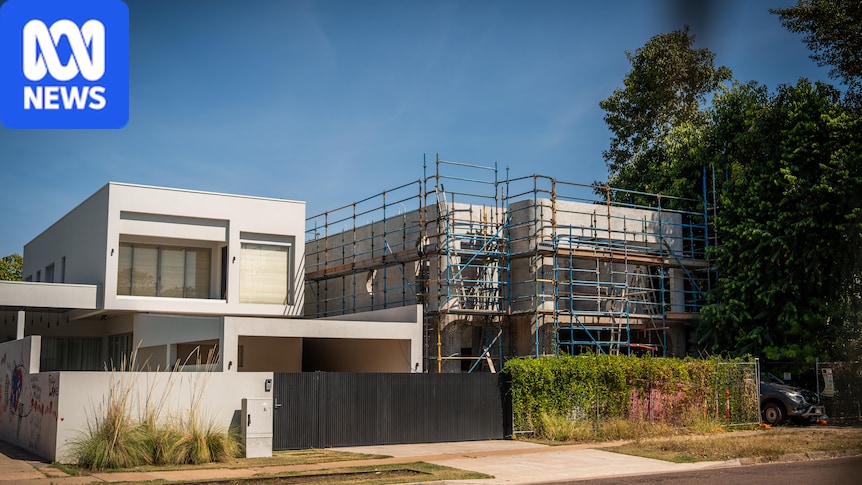
The Northern Territory government prepared a legislative amendment to reduce the minimum block size in low-density suburbs from 800 to 450 square metres. The move drew sharp reactions from residents and industry groups. Housing advocates also weighed in.
NT Lands, Planning and Environment Minister Josh Burgoyne this week confirmed an amendment to the Planning Act had been drafted. The change would allow home owners in zones such as Darwin's northern suburbs to subdivide their land or build an additional dwelling. Demolishing an existing home and building two new properties would also be permitted, as long as each new lot meets the 450-square-metre minimum.
"Exploring housing diversity, including smaller homes on smaller lots, will help boost housing supply and improve affordability," Burgoyne said.
Data from the National Housing Supply and Affordability Council showed the NT was lagging behind other states and territories in meeting its obligations under the National Housing Accord. Approvals rose over the past year. Completions fell.
Residents who called ABC Radio Darwin this week said they feared the changes would erode the character of established suburbs. "If you want to live on a minuscule 450 square metre block, they're all out there already in the new suburbs, so why destroy those beautiful old suburbs with their beautiful gardens?" one caller said. Another said: "We live outside; when we have friends over, we entertain outside because we get that beautiful breeze through the garden, if we just build wall-to-wall houses, Darwin won't be that beautiful, tropical, liveable city anymore."
Deputy Opposition Leader Ed Smelt, whose electoral division of Nightcliff is mostly low-density residential, said his constituents shared those concerns. "They love the larger blocks, the trees, the sea breeze, having space around them, that's why people choose to live here," he said. Smelt criticised the government for relying on the "ad hoc" decisions of home owners to address housing supply. "This government doesn't have a plan for affordability or growing our housing stock," he said.
Burgoyne said subdivision would be entirely optional. "Our government is creating new opportunities for Territorians who want to subdivide their land. No-one will be forced to subdivide their block," he said.
Darwin-based infrastructure planner Graeme Finch said densification made sense near commercial centres. He warned of practical hurdles. "We need to do it in a managed way where we don't overload the existing infrastructure in terms of traffic volumes, power, water, and sewer," he said.
Industry groups were broadly supportive. Master Builders NT president Jim Eadie called it "a great opportunity for small developers and families to develop and sell their blocks and provide much-needed work for our industry." Eadie noted that electricity and water connection costs could deter some home owners. "The Power [and] Water authority and the NT government could provide some supports to incentivise those developments," he said.
Chief executive of housing and homelessness body NT Shelter, Annie Taylor, said the social services sector backed the changes if they produced more affordable housing. She urged the government to adopt mandatory inclusion zoning, requiring social and affordable homes alongside new builds. "It's all well and good to build more housing. It needs to be affordable for the people who live in it, otherwise our essential workforce will leave the NT," she said.
The proposal will be open for public exhibition for 28 days starting Friday, July 24. Territorians can give their feedback during that period.