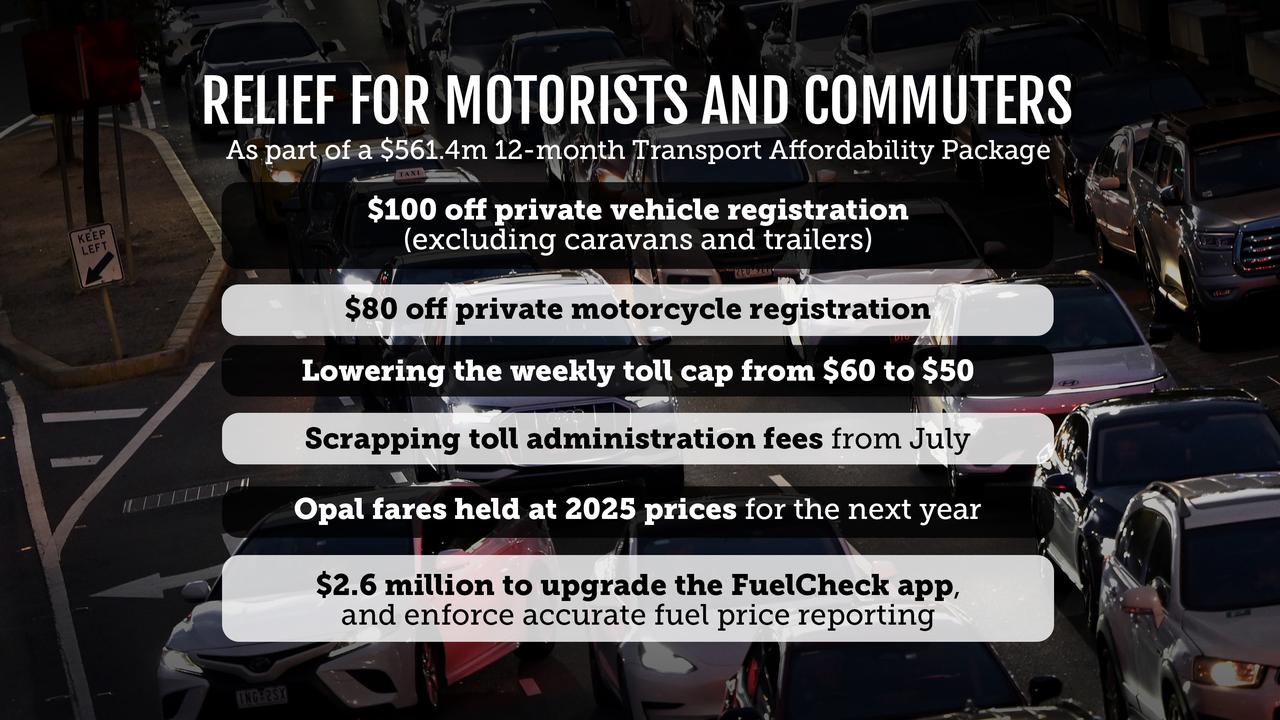
NSW's $550M transport package cuts rego $60, caps tolls at $60/week, and sets Opal fare cap at $50/week. Savings of $1,500/year for some households.
There is something for everyone in the NSW Labor government's 2026/27 budget transport affordability package, worth more than $550 million.
Motorists in Australia's most populous state will pay less for car registration and save on road tolls after months of intense pain at the bowser.
The NSW government said the package targets households that have been squeezed by rising living costs. Car registration fees will drop by $60 per vehicle, a cut that applies to all light vehicles registered in the state. The reduction is the first in more than a decade.
Toll relief will come through a new cap on weekly toll spending. Drivers who spend more than $60 a week on tolls will get a rebate for the excess, capped at $400 per year. The government estimates the measure will benefit roughly 400,000 households in Sydney's outer suburbs, where commutes are longest and toll roads are concentrated.
Public transport users also get a break. A new weekly fare cap of $50 on Opal card travel will replace the current distance-based system for heavy users. The change means anyone who takes more than eight trips a week on trains, buses, or ferries will effectively ride free after hitting the cap. The government expects the cap to cut weekly costs by as much as 30% for regular commuters.
Treasurer Daniel Mookhey said the package was designed to put money back into household budgets without adding to inflation. "We are targeting the costs that hit families hardest – getting to work, dropping kids at school, and buying groceries," he said in a statement.
The package also includes a one-off $250 fuel voucher for households that hold a concession card. The voucher can be used at any service station in the state and is redeemable against petrol, diesel, or LPG. The government allocated $180 million for the voucher program, which it expects to reach about 720,000 households.
Critics said the package was a pre-election sweetener. The opposition's transport spokeswoman, Natalie Ward, called it "a band-aid on a broken system" and noted that toll road operators had not been asked to contribute. "Labor is spending taxpayer money to fix a problem it created by signing bad toll contracts," Ward said.
The government pushed back, arguing the package was fully funded from the budget surplus and did not require new borrowing. Mookhey said the toll cap was negotiated with Transurban and other operators, who agreed to administer the rebate at no cost to the state.
The measures take effect July 1, 2026, and run for two years. The government said it would review the program before the 2028/29 budget.
For households already feeling the pinch, the math is straightforward. A family with one car, a weekly toll bill of $80, and two adult Opal users could save roughly $1,500 a year – $60 on rego, $400 on tolls, and about $1,040 on public transport fares.
Prepared with AlphaScala research tooling and grounded in primary market data: live prices, fundamentals, SEC filings, hedge-fund holdings, and insider activity. Each story is checked against AlphaScala publishing rules before release. Educational coverage, not personalized advice.