Nova Minerals Ships Antimony Refinery Equipment to Alaska Site
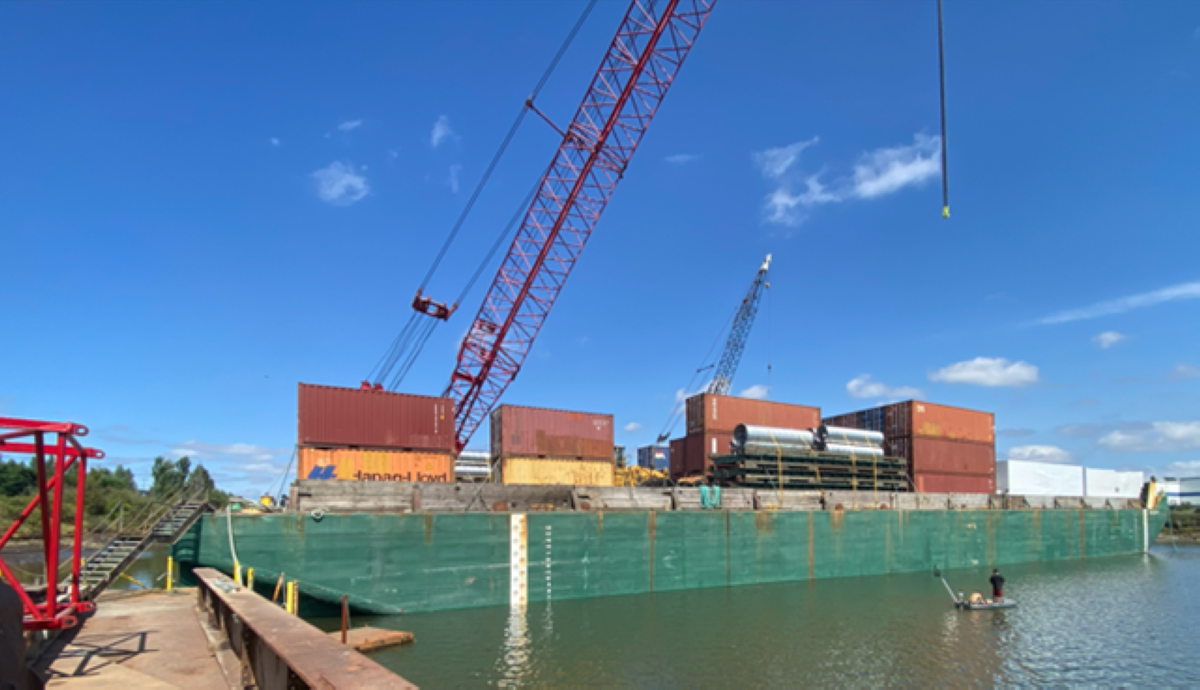
Nearly 500 tons of crushing and milling equipment left Seattle by barge Aug. 26 for Nova's Alaska site. The shipment, funded by a $43.4 million U.S. Department of War award, puts first antimony production on track for 2027.
Alpha Score of 58 reflects moderate overall profile with strong momentum, poor value, strong quality. Based on 3 of 4 signals — score is capped at 90 until remaining data ingests.
A barge carrying nearly 500 tons of crushing, ore-sorting, milling, flotation and refining equipment left Seattle on Aug. 26, bound for Nova Minerals' processing site at Port MacKenzie, Alaska. The shipment includes more than 40 containers and multiple oversized loads, the company said Monday.
The equipment was acquired from a recently decommissioned processing facility in North America, with additional components sourced from across the continent. After consolidation in Seattle, the barge is scheduled to arrive in Alaska by early September.
Nova Chief Executive Officer Christopher Gerteisen called the shipment "an important milestone as Nova advances from exploration and development toward antimony production at Estelle."
The decision to repurpose existing equipment rather than design and fabricate a new facility was deliberate. "That decision allowed us to move faster and more cost-effectively as we construct our processing plant at Port MacKenzie and work toward first antimony production in 2027," Gerteisen said.
The Port MacKenzie plant is designed to process stibnite-bearing material into antimony trisulfide under a U.S. Department of War project. The facility is modular and scalable, with plans to expand into antimony metal and trioxide production. The site offers deepwater port access, as well as proximity to the proposed West Susitna Access Road and the Port MacKenzie rail spur.
Nova's antimony development is fully funded by a $43.4 million DoW award that supports the establishment of a domestic antimony supply chain. Production is targeted for 2027.
Antimony is classified as a critical mineral in the U.S., used in defense, energy storage, and electronics. The company is also advancing the Estelle Gold and Critical Minerals Project in Alaska, which hosts two defined multi-million-ounce gold resources along a 35-kilometre trend in the Tintina Gold Belt.
Drafted by a large language model from the source reporting linked above, then screened by automated publishing checks. It is not read by a journalist before publication. Some articles cite our Alpha Score. Verify prices and figures against the original source. Educational coverage, not personalized advice.