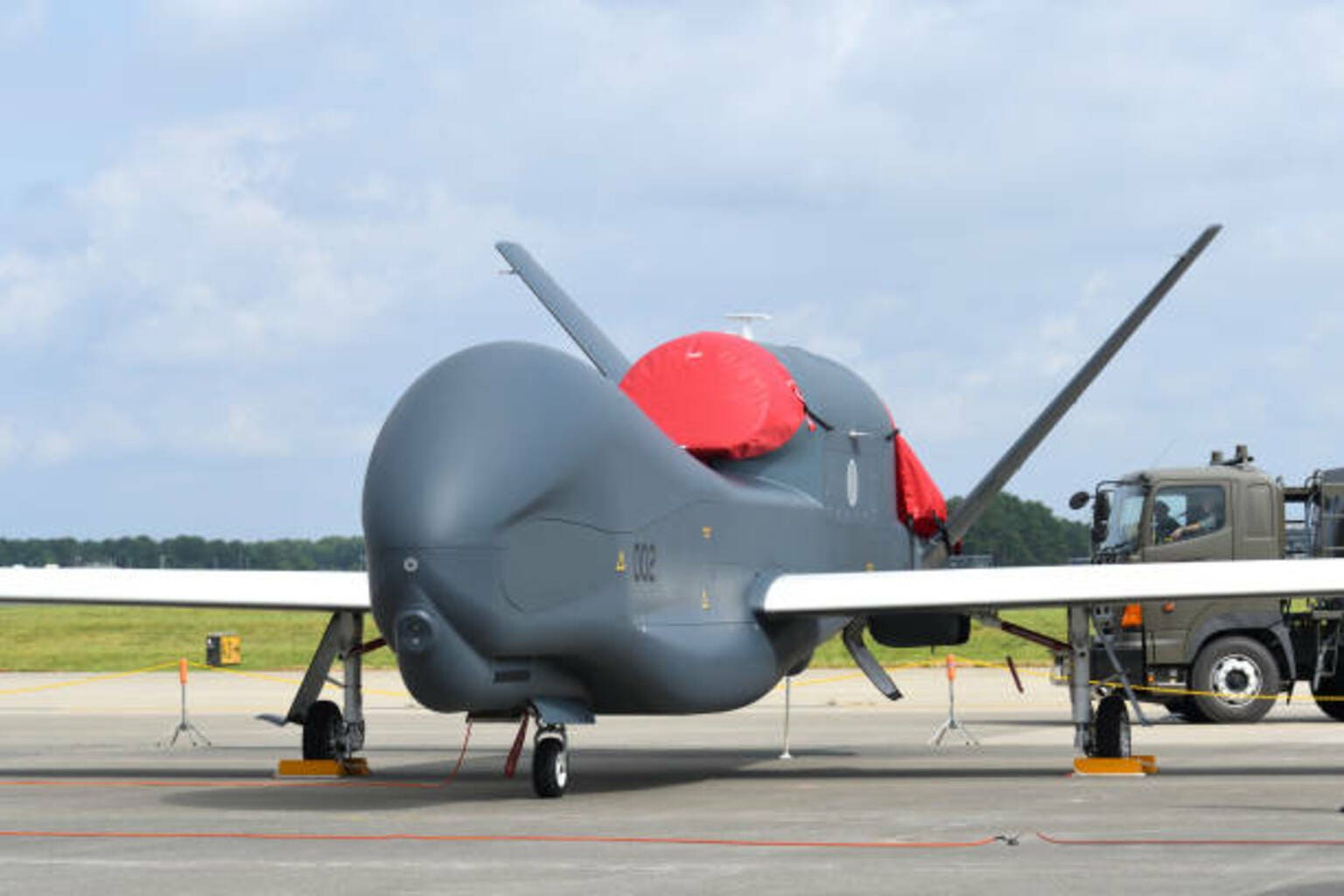
Northrop Grumman (NOC) is repositioning its portfolio toward low-cost, attritable drone systems. The strategic shift acknowledges the battlefield lessons from Ukraine, where inexpensive FPV-type platforms have proven decisive. The defense prime, long associated with high-end platforms like the B-21 bomber and Global Hawk, is now competing for contracts in a segment where unit cost, not sensor payload, is the primary design constraint. For investors, the question is whether this pivot can sustain margins that have historically relied on low-volume, high-price programs.
The simple read is that Northrop is following the money. The U.S. Department of Defense is pushing for mass production of low-cost uncrewed systems under initiatives like the Replicator program, which targets thousands of attritable platforms rather than dozens of exquisite ones. Northrop's move into FPV-type and smaller drone categories positions it to capture a share of that procurement wave. The better market read introduces margin compression risk. Northrop's operating margin in its Aeronautics Systems segment has averaged about 11% over the past three years. Low-cost drone programs typically carry margins in the single digits. A shift in program mix could drag segment-level profitability lower.
Why the Unit Cost Math Changes the Defense Investment Thesis
Northrop's traditional competitive advantage has been systems integration on complex platforms where barriers to entry are high and the customer base is a single buyer. The drone pivot shifts the competitive landscape. In the low-cost segment, barriers are lower, and the buyer has more options. Competitors like Kratos Defense & Security Solutions and General Atomics already have production lines for attritable systems. The Pentagon's emphasis on open architectures and modular payloads further reduces the lock-in effect that has historically protected prime contractors.
The mechanism here is procurement volume versus unit margin. On a $100 million bomber contract, Northrop might earn $12 million in profit. On a $100 million drone contract, the profit might be $8 million. The contract value itself is smaller because the unit cost is lower. To maintain the same absolute profit, Northrop would need to win significantly more contract value in the drone segment. That is possible if the Replicator program scales. It is not guaranteed. The risk is that Northrop trades high-margin backlog for low-margin backlog without a commensurate increase in total addressable market.
The Replicator Program Timeline Creates a Catalyst Window
The Replicator initiative is the key demand-side catalyst. The Pentagon has set an initial target of fielding thousands of attritable systems within 18 to 24 months. That timeline compresses the development cycle and favors contractors with existing production capacity. Northrop has manufacturing facilities in California and Florida that could be retooled. The company has not disclosed specific capital expenditure plans for drone production. Investors should watch the next quarterly earnings call for guidance on capex allocation toward drone-specific tooling and facilities.
A second catalyst is the Army's Future Tactical Unmanned Aircraft System (FTUAS) program. The program is expected to award a production contract in 2025. Northrop is competing with a design based on its Bat air vehicle. A win would validate the company's low-cost strategy. A loss would suggest that the pivot has not yet gained traction with the customer.
How the Supply Chain Changes for Low-Cost Production
Northrop's supply chain is optimized for low-volume, high-complexity production. The drone pivot requires a shift to high-volume, lower-complexity manufacturing. That means sourcing commercial-off-the-shelf components rather than mil-spec parts. The supplier base changes. Northrop will need to qualify new vendors for motors, flight controllers, and data links that are common in the commercial drone industry. This introduces execution risk during the transition period.
The second-order effect is on inventory management. High-volume production requires just-in-time inventory practices that are different from the build-to-order model used for major platforms. A misstep in supply chain management could lead to delivery delays or cost overruns on fixed-price development contracts. The Defense Contract Management Agency tracks contractor performance on cost and schedule. Any negative audit findings on Northrop's drone programs would be a red flag.
AlphaScala Data Points to Cautious Positioning
Northrop Grumman carries an Alpha Score of 34 out of 100. That places it in the Weak category within the Industrials sector. The score reflects the tension between the company's strong franchise in high-end defense and the uncertainty around the drone pivot. The market has not yet priced in the margin risk. The stock's valuation at about 17x forward earnings assumes a smooth transition. A miss on drone program margins would compress that multiple toward 14x, the sector average for contractors with lower profitability.
For a deeper look at how compliance costs are reshaping defense supply chains, see Why CMMC 2.0 Compliance Creates Two-Tier Defense Supply. The same margin dynamics that affect Northrop's drone pivot also apply to smaller subcontractors facing cybersecurity certification costs.
The next decision point for Northrop investors is the fourth-quarter earnings report, expected in late January. The key line items are the Aeronautics Systems segment margin and any new contract announcements under the Replicator program. If management guides for segment margins below 10% on the back of drone program mix, the stock will face a re-rating. If the company announces a major FTUAS win, the market will give the pivot more time to prove out. Until then, the risk-reward is skewed to the downside for a stock trading at a premium to its historical margin profile.