Commodities● Neutral
North Stawell Minerals Tests High-Grade Gold Shoot at Darlington
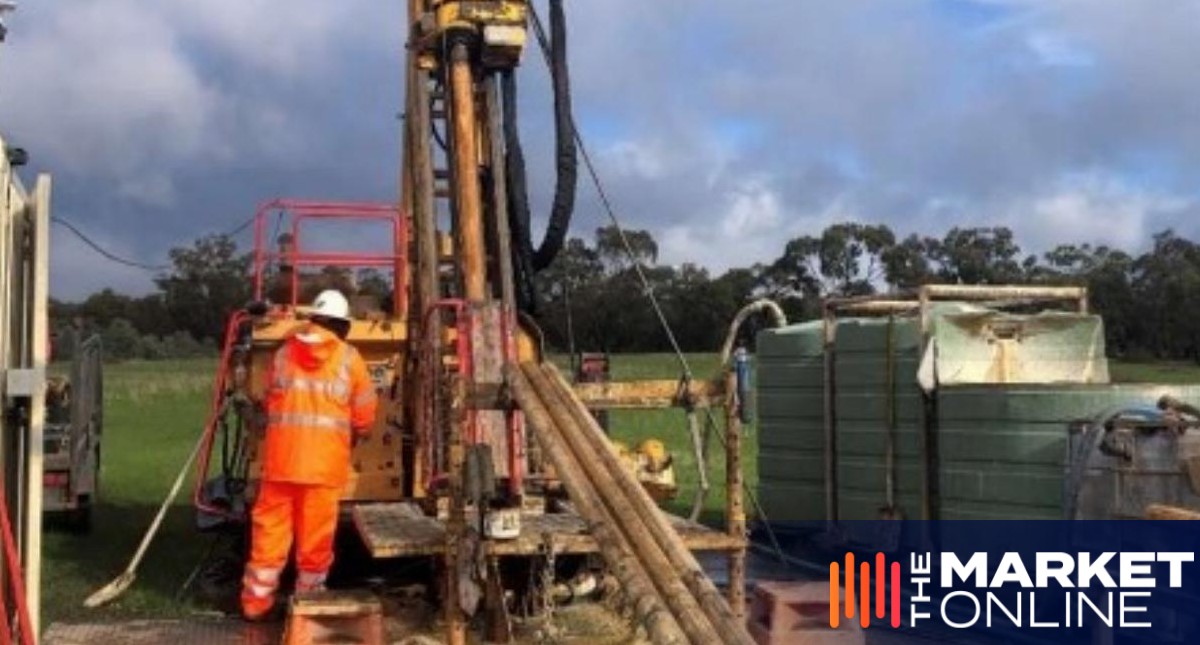
North Stawell Minerals drills 600-800m at Darlington to test high-grade gold shoot. Historic production at 18.2 g/t. Market cap $10.08M. Results in 4-8 weeks.
Continue with
North Stawell Minerals (ASX: NSM) has started a follow-up diamond drilling program at the Darlington prospect in Victoria. The company is targeting extensions beneath high-grade gold intersections from earlier campaigns completed between January 2025 and May 2026.
The program consists of two to three holes for 600-800 metres of NQ diamond drilling. The holes will be placed 70 metres along strike from the previous high-grade results, which came from 300 metres south of the historic Darlington mine. The goal is to test for a northern plunge to the high-grade shoot within a vertical, planar lower-grade vein system that remains open at depth and along strike.
Why the Darlington Prospect Matters Now
The Geological Setting
The Darlington prospect sits in a gold-prospective structural corridor that runs from Stawell in the south, through Darlington, and up to the Caledonia prospect two kilometres to the north. The controlling basalt at Darlington is the northern continuation of the same geology that hosts the Stawell Gold Mines operation.
Executive director Bill Reid described the target as a possible high-grade gold shoot within a larger plane of lower-grade mineralisation. The target geology is a repeat of a brecciated quartz-carbonate vein first intersected at approximately 90 metres vertical depth in the previous diamond drill hole.
Historic Production Context
Darlington includes two parallel northwest-trending veins spaced 100 metres apart, hosted in sedimentary rocks above a drill-confirmed basalt. Historic mine production from the eastern vein is recorded as 2,347 ounces at 18.2 g/t gold. That grade is well above the typical open-pit cutoff and signals the potential for narrow-vein, high-grade mining if the system extends.
Practical rule: High-grade gold in Victoria has drawn significant investor interest at other projects in recent years. The market is pricing in optionality on grade continuity, not just ounces in the ground.
The Drilling Program: What It Tests
Hole Placement and Targeting
The drill holes are positioned 70 metres along strike from the high-grade intersections returned 300 metres south of the historic mine. Drill targeting is supported by more recent air core drilling, which adds structural context beyond the earlier diamond results.
What Would Confirm the Thesis
- Intersection of the brecciated quartz-carbonate vein at or near the modelled depth of 90 metres vertical
- Grade continuity above 10 g/t gold over a minimum 1-metre core length
- Evidence of the northern plunge continuing beyond the current drill pattern
What Would Weaken the Setup
- The vein pinches out or drops below 5 g/t gold at the target depth
- Structural complexity disrupts the interpreted shoot orientation
- The lower-grade envelope does not thicken as modelled
The North Stawell Project Footprint
Land Position
The North Stawell project covers a 445 square kilometre contiguous package of ground. It incorporates the gold-prospective structural corridor immediately north of Stawell Gold Mines' operation at Stawell. That proximity to a producing mine gives NSM a geological analogue for its target styles.