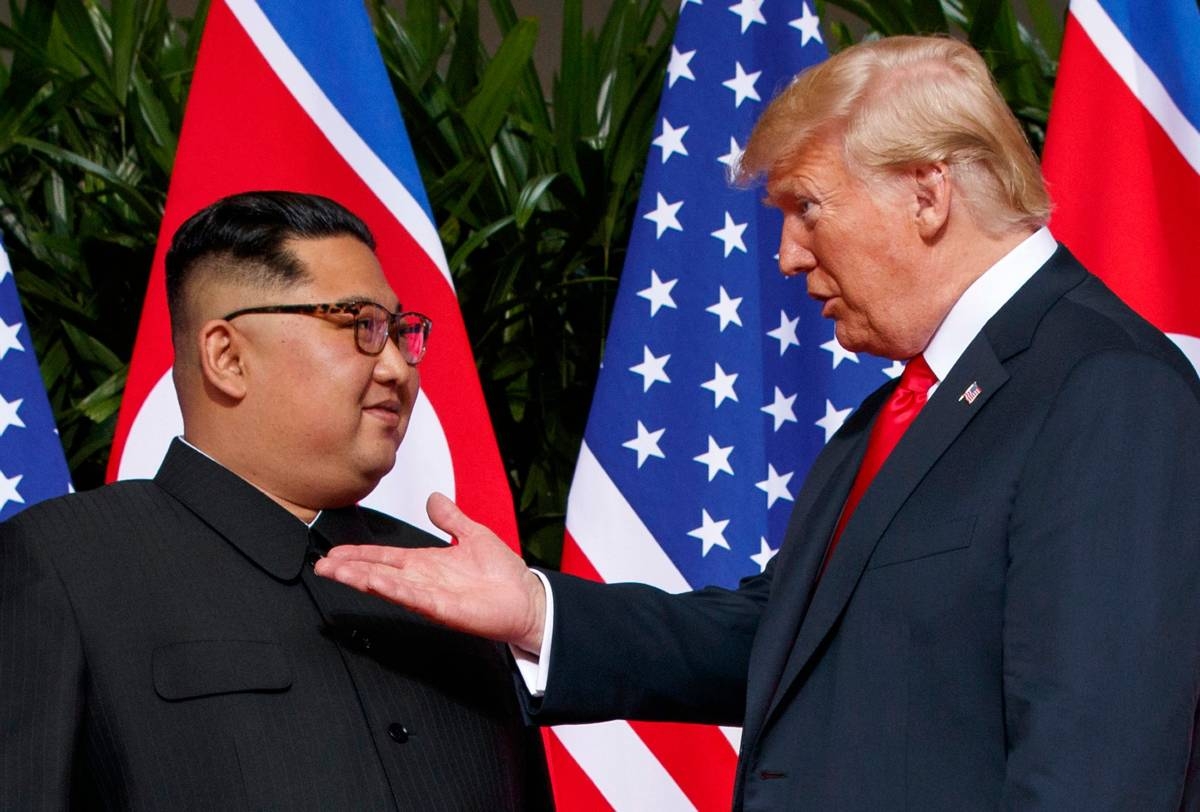
Kim Yo Jong says scaled-back U.S.-South Korean exercises still 'provocative,' dashing hopes for renewed talks. Trump ordered cuts days before drills began.
SEOUL – North Korea's first official response to President Donald Trump's decision to sharply reduce U.S.-South Korean military exercises was a flat dismissal, undercutting hopes the concession could revive stalled diplomacy.
Kim Yo Jong, the powerful sister of leader Kim Jong Un, said in a state-media statement Wednesday night that the scaled-down drills still carry the same "provocative, aggressive nature." She added: "We think it's not worth making comments on that and we have no any interest in it."
The reaction came hours after South Korean and U.S. officials confirmed they were truncating the Ulchi Freedom Shield exercises. Trump ordered the Pentagon to "substantially reduce" the drills just before they began Monday, citing his relationship with Kim and South Korea's refusal to support him over Iran.
South Korea's military said the allies agreed to end the exercises Friday, not Aug. 27 as planned. Some joint field training events were also downsized or canceled, it said. South Korean officials described Trump's announcement as a surprise that came without prior notice, a move that baffled many in the country and raised concerns about joint defense readiness.
The Pentagon defended the cuts. "These adjustments preserve essential readiness and training objectives. There will be no degradation to U.S. training objectives," a statement said. Certain events were converted to simulations, it said.
Analysts warned that a sustained reduction could weaken the decades-long alliance. Yang Uk, an analyst at Seoul's Asan Institute for Policy Studies, said a one-year suspension of drills would mean "commanders unfamiliar with the procedures of the drills would be taking part when they resume," eroding deterrence.
Ulchi Freedom Shield is a computer-simulated command post exercise designed to prepare for potential North Korean aggression. The allies typically hold field training alongside it. The exercises, along with a similar springtime event, are a central pillar of the U.S.-South Korea alliance dating to the 1950-53 Korean War. They are also a long-running source of tension with Pyongyang, which calls them a rehearsal for invasion.
Days before this month's drills began, North Korea launched two ballistic missiles into the sea, continuing a pattern of responding to allied exercises with weapons tests. Kim Yo Jong's statement suggests Pyongyang views Trump's concession as insufficient to restart talks.
Negotiations between Trump and Kim collapsed after a 2019 summit in Hanoi ended without a deal. The two leaders exchanged letters afterward, but no follow-up meeting has been scheduled. North Korea has not issued any direct message to Washington since Kim Yo Jong's statement.
Prepared with AlphaScala editorial tooling from the source reporting linked above. Indexable analysis may include a cited Alpha Score value. Publishing checks screen each story before release. Educational coverage, not personalized advice.